



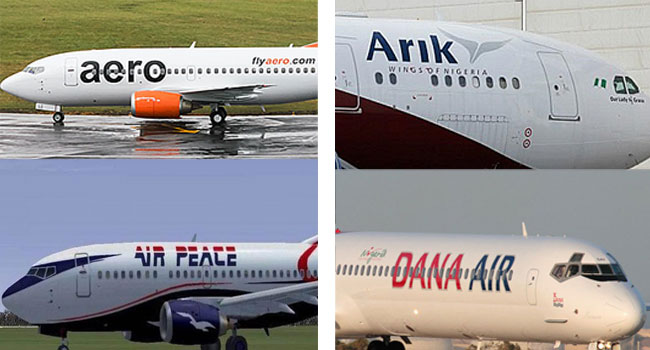
The traffic figures from the Federal Airports Authority of Nigeria (FAAN) for 2022 to 2024 reveal a tale of two skies.
While international travel has hit a three-year high, the domestic sector is in a steady decline, exposing profound structural weaknesses in the nation’s aviation economy. Recent data from FAAN reveals a stark contrast between international and domestic air travel.
The data show a clear divergence: the “upper class” and international travellers are flying more, while the domestic middle class is being priced out of air travel.
A shrinking fleet size worsens the decline. Local airlines are struggling to source foreign exchange for spare parts and maintenance, leading to frequent flight cancellations and delays (one in four flights in 2024 faced disruptions). Lagos and Abuja remain the primary hubs, accounting for over 90% of international traffic and a significant portion of domestic movement in 2024.
While international terminals are processing record numbers of travellers, the domestic market is shrinking, with total local passenger movements falling to their lowest level in three years. In 2024, total domestic movements dropped to 12.54 million, from 14.52 million in 2022. Conversely, international travel has defied broader economic pressures, growing from 3.75 million to 4.33 million over the same period.
For the years 2022 to 2023, domestic traffic fell from 14,519,565 to 13,409,701, representing a 7.6 per cent decrease. From 2023 to 2024, traffic fell further to 12,543,153, a 6.4 per cent decrease. The total three-year impact indicates that since 2022, the domestic aviation market has declined by 13.6 per cent, resulting in a loss of nearly 2 million passengers.
The international sector shows a more optimistic trend in airport revenue and global connectivity. In 2022 and 2023, the international sector presents a much more robust market, rising from 3, 752, 746 to 4, 070, 833, an 8.4 per cent increase. Analysts attribute the rise in international travel to the entry of additional African and international airlines into Nigeria, a resilient upperclass demographic and increased migration. Local travel has dropped for the second consecutive year.
Experts point to the devaluation of the naira, which caused a spike in aviation fuel (Jet A1) and maintenance costs, leading to record high ticket prices that have priced out the middle class.
An airline official who preferred anonymity said the underbelly exposure is that of an industry that is becoming increasingly elitist. Without a stable currency or a strategy to make the 19 subsidy dependent airports viable through trade and tourism, the domestic sector risks further contraction.
He further stated that, as the naira plummeted from approximately N450 per $1 in 2022 to over N1, 500 per $1 in 2024, airlines’ operating costs increased sharply.
He noted that many domestic airlines currently operate with “ghost fleets”—a large number of their aircraft are grounded because their owners cannot afford the foreign exchange required to return them from overseas maintenance.
He reported that in 2024, domestic seat capacity fell by nearly 10%, noting that fewer planes mean fewer flights, which drives up the price of the remaining seats.
He also stated that airline operators have frequently complained that they are taxed into poverty, alleging that domestic tickets are subject to up to 18 charges imposed by agencies such as FAAN, NCAA, and NAMA. Analysts estimate that taxes and surcharges can account for 40%-70% of the total ticket price paid by passengers.