
EVINCE UHUREBOR examines the mixed reactions and competing demands triggered by President Bola Tinubu’s recent declaration of security emergency
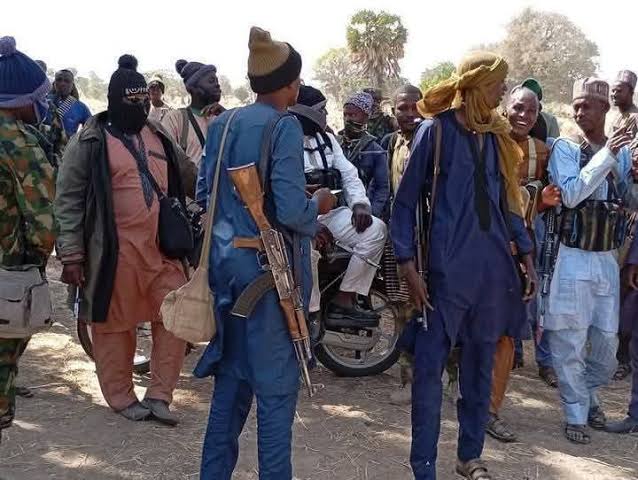
In a move to combat the devastating surge in banditry, mass abductions, and communal violence that have shaken the nation these past weeks, President Bola Tinubu, last week, declared a nationwide security emergency.
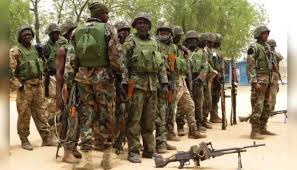
This decisive action signaled by an immediate order for mass recruitment of 50,000 police and military personnel, redeployment of officers from VIP protection and authorisation to use National Youth Service Corps (NYSC) camps as temporary training depots, marks an unambiguous acknowledgement by the Federal Government that Nigeria’s security challenge has reached a critical and existential point.
While many Nigerians have cautiously welcomed the urgent, muscular response as a long-overdue measure to restore public safety and reclaim government legitimacy, some opposition parties and security experts have raised grave concerns over whether expanding security manpower without deeper reforms can produce lasting results, especially given long-standing issues such as weak intelligence structures, corruption, inadequate welfare for operatives, and the social conditions that fuel unrest.
Corruption, Nigeria’s real enemy –Baba-Ahmed
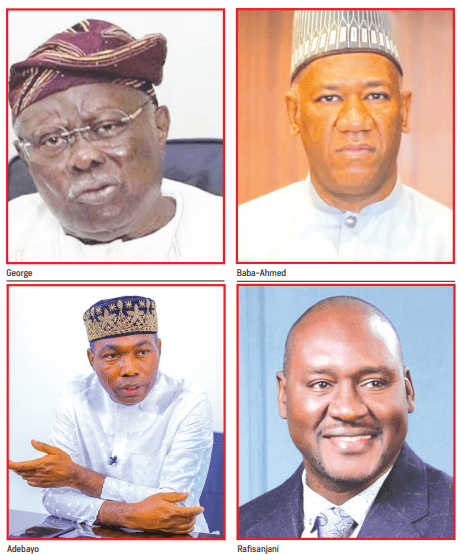
The Labour Party’s 2023 vice-presidential candidate, Yusuf Datti Baba-Ahmed, who described President Tinubu’s nationwide security emergency as a strategy that overlooks the core issues fuelling insecurity, said Nigeria’s insecurity persists not because of manpower shortages, but because corruption and political interference undermine operations and weaken institutions. “It’s not about increasing personnel. The real issue is corruption within the security architecture.
How much of the security budget is actually used to fight insecurity? How much ends up in private pockets or for political purposes? That is the problem, he said. He further argued that a reformed and fully empowered police force could tackle banditry and terrrism without reliance on the military. “If you remove corruption and political interests, the Nigerian police can wipe out insecurity in two months,” he said.
Emergency declaration merely academic –Adebayo
The 2023 presidential candidate of the Social Democratic Party (SDP), Prince Adewole Adebayo, described the President’s declaration of a national security emergency and the directive for fresh army and police recruitment as an academic exercise that will not produce meaningful results. He argued that past administrations had repeatedly declared security emergencies since 2008, when Boko Haram launched its insurgency, yet such declarations were never effectively implemented.
According to him, the President is focusing on the wrong issues as Nigeria’s security problems are rooted not in manpower shortages but in weak command and control structures. “The problem is not just the number of personnel; it is command and control. The president is the commander-in-chief, but he has not been an effective one. Recruitment should be part of a structured expansion process. You must deploy existing personnel properly and give them the tools they need to operate optimally,” he said.
Adebayo called for improved troops motivation and closer engagement with communities affected by insecurity. He stressed that the commander-in-chief must make himself accessible to the armed forces and provide consistent encouragement to soldiers, saying that countering insurgency requires deeper community involvement than terrorists or bandits can achieve. He also urged the government to maintain consistent military funding and longterm planning.
“Budgeting for the military must be steady and targeted. Recruitment should have been systematic over time, with clear command and control structures. “If they had done this in 2023, we would not be dealing with President Donald Trump’s public declarations to, which they are now responding to. The approach should be systematic, intentional, and well-organised. There should be proper diplomatic representation in all key world capitals,” he said.
Establish state police now –George
In his reaction, elder statesman and chieftain of the Peoples Democratic Party (PDP), Chief Olabode George, reiterated his call for the establishment of state police, insisting that the Federal Government’s plan to recruit more soldiers will not resolve the nation’s worsening insecurity.
George argued that the military is trained to confront external threats, not to perform domestic policing duties, and that Nigeria’s centralised security structure can no longer cope with rising internal challenges.
His words: “We don’t need any more soldiers or federal police. As a retired general, I can tell you that what we need is the establishment of state police. Policing is fundamentally community-based.” He maintained that Nigeria’s national policing model—patterned after the United States—has become ineffective because it ignores local dynamics. He questioned the practice of posting officers to regions whose language and culture they do not understand.
According to him, state police will better address domestic security concerns because officers would understand local languages, customs, and security needs. He added that community-based policing will enable faster identification of criminals, reduce violent crime, and provide jobs for the country’s educated but unemployed youths.
Addressing concerns that state governors might misuse state police during elections, George dismissed such fears as selfish and unfounded. “We are looking for solutions to insecurity, yet some people are talking about elections.
This is getting us to Armageddon.” He noted that even under the current system, the military is often deployed during elections, challenging claims that state police would be weaponized against political opponents. George also recalled deliberations at the 2014 National Conference of which he was a member, where delegates unanimously endorsed the need for state police.
Situation calls for immediate action –legal experts
Some legal luminaries, who questioned the declaration’s legal clarity, described its timing as “too late, too little” given the protracted crisis.
Senior Advocate of Nigeria (SAN), Francis Amobi Nzelu, who expressed bewilderment over the specifics of the presidential pronouncement, stated that the language used is strange to him as a lawyer.
“Emergency on what Is it emergency on the security situation in Nigeria or emergency on how to combat those killing people in Nigeria?” Nzelu questioned. He added: “I don’t understand the language. I’m yet to understand what the President meant by security emergency.”
Nzelu decried what he views as a longstanding refusal by authorities to proactively address the root causes of the insecurity. “If you allow issues to speak to you, you become a victim before the door,” he posited, suggesting the current crisis stemmed from a failure to “speak to issues at the appropriate time.”
He made a startling assertion regarding the proliferation of armed groups, saying: “These people, they call the bandits or herdsmen, are everywhere. They know them. I believe a thorough interrogation would reveal the truth. They are not faceless.” Nzelu suggested that a reluctance to act is fueled by individuals who are “benefiting from this time.”
He strongly implied that huge budget allocations to security, which he claims run over two decades, are being exploited. Echoing the concerns over delay, another senior lawyer and rights crusader, Chief Malachy Ugwunmadu, acknowledged the President’s attempt at being responsive but stressed that the action was insufficient and belated.
“I think the President is, at least, trying to be responsive, but it is coming too late,” he said, adding that given Tinubu’s significant role within the previous administration, he should have acted with urgency immediately upon assuming office, not after approximately two and a half years.
“He ought to have hit the ground running, not after two years. He ought to have arrested the situation, stemmed the tide, and made these profound reforms. Not any other time,” Ugwunmadu maintained. He specifically recalled a cardinal component of Tinubu’s campaign promise to significantly boost the numerical strength of law enforcement agencies, mentioning a figure of 100,000 new recruits.
Emergency on security not enough –Rafisanjani
Also reacting, the Executive Director of Civil Society Legislative Advocacy Center (CISLAC), Comrade Auwal Rafisanjani, urged President Tinubu to roll out more policies and initiatives that will support the state of emergency on national security. He said: “I think the President has taken the right step by declaring a state of emergency and security in Nigeria.
It has always been a major challenge in the last two decades. The insecurity is escalating in this country in different forms, and the killings and destruction of lives and property of Nigerians across the country by different criminals pretending to be representing different interests and entities is of great concern.
“So, for the President to have declared this, it means that he has yielded to the advice that many Nigerians have been giving him, but this declaration should not just be a mere declaration. It should come with more commitment, more seriousness, more policy, you know, initiative and implementation.
“For example, you need to carry out a thorough security sector reforms in the country. You need to prioritize. Security in this country, you need to ensure that the process in which you do recruitment is not contaminated by corruption, you know, nepotism. You need to ensure that people who deserve to be promoted and be given the necessary welfare and facilities are given. “You need to make sure that you clearly define roles and responsibility.
For example, now the Nigerian Army has been dragged to virtually every security challenge in the country, you know, internally, this shouldn’t have been the case.
They should have been the last resort to compliment the work that other internally security organisations supposed to be doing, but they are overwhelmed and a lot of people have been put off. “So, what I expect Mr. President to do as he declared this emergency is to ensure that we set up a committee that will fashion out security sector reforms,. If we do that, then we know that the government is really committed and serious about the state of emergency in the security sector.”
Regional cooperation needed –Okeleye
Convener of Omoluabi Parapo Conservative Group, Aderonke Okeleye, who applauded President Tinubu for declaring a state of emergency on insecurity, described his swift response to the recent wave of abductions of schoolchildren ias a decisive and necessary step towards restoring peace and stability across Nigeria.
She stated that the President’s directive reflects a strong political will to protect citizens and ensure that national development is not undermined by the “increasingly audacious activities of criminal elements.”
Okeleye called for improved regional cooperation, better funding for security formations, and the adoption of technology-driven solutions such as drone monitoring and rapid response mechanisms. She explained that traditional rulers, community leaders and civil society organisations need to work closely with the government to strengthen security at the grassroots, noting that safety remains a shared responsibility.