

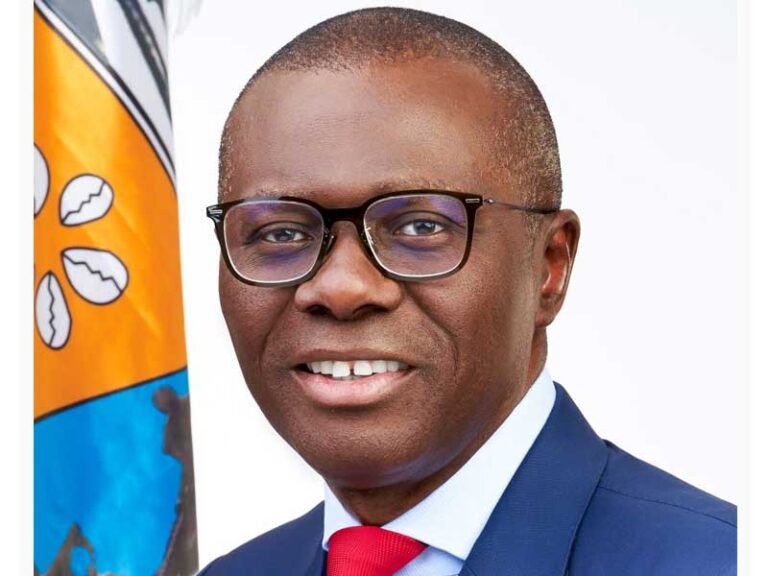
Lagos State Governor, Mr Babajide Sanwo-Olu, has reaffirmed his administration’s commitment to transparency and accountability in the implementation of the $500 million Human Capital Opportunities for Prosperity and Equity (HOPE) Governance Programme.
Speaking on Thursday at a public sensitisation and presentation of Lagos State’s progress in implementing the HOPE initiative at Lagos House, Marina, Sanwo-Olu stressed that his government has prioritised transparency and efficient resource management since inception.
The HOPE programme, a $500 million facility supported by the World Bank and the Federal Government, is being implemented across the 36 states and the Federal Capital Territory to improve service delivery in governance, primary healthcare and basic education.
The governor expressed satisfaction with the programme’s progress, noting that Lagos has embraced the HOPE framework to strengthen capital management systems and shift from input-based spending to outcome-driven performance.
He said: “So for us in Lagos, this programme is about people, it’s about our city, about ensuring that the child has access to the right learning materials and the mother can receive quality care at our primary health institution without a heavy financial burden.
“And to ensure that public resources are managed in a way that every Lagosian can see, they can understand, and they can go on to trust.
“Today’s event is therefore not only about implementation, policies, and programmes, it is about showcasing practical results, giving public awareness, and encouraging every citizen to be resilient, to take full advantage of this opportunity.”
Sanwo-Olu added that the initiative is designed to improve governance outcomes and service delivery.
He said, “So this initiative is an advantage to all our children and their families. Because of the growth of employment, the most important objective is to make sure that government works better, the government plans better, the government spends better, and government can deliver better outcomes for all its policies and for its people.
“Under this framework, literacy has made a remarkable impact. We have sustained economic performance consistently above 80% in our year-on-year success rate.”
On governance reforms, he noted: “Citizen-Friendly Project Publications strengthens our medium-term expenditure framework, and it helps us expand our digital platforms, including the legacy project model and other focused financial management, which enables our citizens to track government spending and predict what we are doing in real-time.
“We also have an advanced workforce at the local government level through the domestication and adoption of the national type of accounts… and we have supported it by continuous training and the provision of tools to ensure that we are sustainable at a high level of finance.”
In the health sector, the governor disclosed that over 330 functional primary healthcare centres are now operational across the state.
“Many of these have been rehabilitated or upgraded under our ongoing health sector reforms… ensuring that more residents and especially women and children can receive timely and quality care,” he said.
In his remarks, World Bank procurement specialist Akin Onimole commended Lagos for its performance under the programme.
He said: “However, what we are celebrating today goes beyond mere processes; we are celebrating the tangible impact of reform on the lives of the people of Lagos. The HOPE programme was designed to tackle the systemic bottlenecks that often hinder service delivery in the education and health sectors.
“From a procurement and systems perspective, Lagos State has demonstrated an exemplary commitment to the programme’s core mandate.”
Earlier, the Commissioner for Economic Planning and Budget, Ope George, said the HOPE project aims to strengthen financial and human resource management while improving service delivery.
He said: “So it’s a $500 million national initiative using the programme for result instruments where funds are often dispersed to achieve these possible linked results.
“And it serves for us as a vital system for us to drive public financial management reforms, transparency and data-driven governance.
“We’ve ensured that the prudent allocation of public resources has been provided to enable the framework to support our broader human capital objectives.”