
…pledges fair and transparent process
The Revenue Mobilisation Allocation and Fiscal Commission (RMAFC) has commenced the process of settling long-standing dispute trailing states that own oil wells and gas, and the conflict over 13 per cent derivation funds shared among oil-producing states.
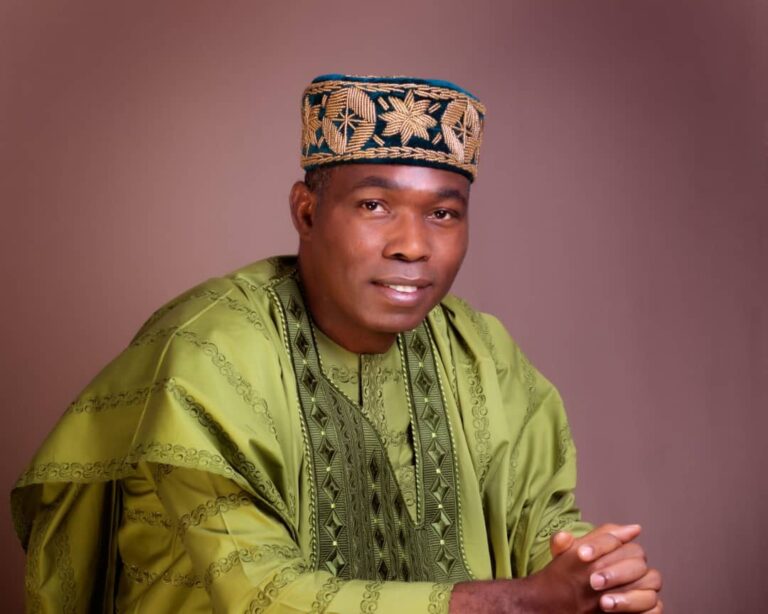
The Chairman of the Commission, Dr Mohamed Bello Shehu, said the exercise covers all oil-producing areas, including Akwa Ibom, Cross River, Bayelsa, Edo, Ondo, Rivers, Delta and offshore locations.
He explained that the law requires that states where minerals are produced must receive 13 per cent of the revenue, especially from crude oil and gas. Because of this, the Nigerian Upstream Petroleum Regulatory Commission, NUPRC, asked RMAFC to help verify the exact locations of new and disputed oil wells.
He said the Commission responded by setting up an Interagency Technical Committee made up of NUPRC, the Office of the Surveyor General of the Federation, the National Boundary Commission and RMAFC itself.
The committee was formed in July, and after months of preparation, the team moved into the field around September and October to begin taking physical coordinates of oil and gas wells.
“I was there myself at the opening ceremony, and we went actually to the field to take those coordinates,” the Chairman said.
He added that the work was done alongside the Surveyors General of all the oil-producing states so that every state could witness the process. According to him, the teams went to difficult places, including the open sea, creeks and deep-water areas, to make sure no location was left out.
The fieldwork, he said, ended last week, and the next stage is to begin plotting the coordinates using the data collected. This stage, which is expected to take about five days, will help clearly show where each oil well is located and which state is entitled to receive the derivation funds linked to it.
“There have been traditional disputes between states in terms of who owns what,” he said. “Whenever new oil fields start producing, they want to know which state actually owns that or which state should get that 13 percent. We intend to do this fairly, justly and equitably, without any bias.”
The Chairman said the Commission is using advanced equipment, including drones, to capture coordinates in areas that are hard or unsafe to reach physically. He said the data will be analysed in the presence of representatives of all the affected states so that the outcome will be accepted by everyone.
“My message for the states is to thank them for cooperating with the Commission,” he said. “They have been there, they have witnessed everything. Whatever coordinates we take, we give to them, and they are there to see it.”
On whether there are serious conflicts between any states, he said no state is openly at odds with another at the moment, but admitted that every state naturally wants to claim ownership when a new oil field is discovered.
“If they say there is a new oil field between this state and that state, every state will want to claim it,” he said. “But it is the facts on the ground that will reveal who actually owns it. And if it has to be shared between two states, then so be it.”
He said the results of the exercise should be ready by next week, as long as there are no legal challenges or court cases.
Speaking at the same event, Dr Khadijah Sulaiman Kumo, Director of Crude Oil at RMAFC and Chairman of the Interagency Technical Committee, described the plotting of coordinates as a historic step for the Commission and the oil-producing states.
“It is a great honour to be here today to witness and be part of this historic event of the plotting of coordinates of disputed and newly drilled oil and gas wells,” she said.
She explained that RMAFC’s role is backed by the 1999 Constitution, which gives the Commission the power to monitor how money from the Federation Account is shared. She said this includes making sure that funds meant for oil and gas-producing states are distributed in a fair way.
“It is constitutional, no argument about this,” she said.
Dr Kumo said the Interagency Technical Committee was set up to verify and plot the exact locations of oil and gas wells so that newly producing wells can be correctly linked to the states that own them. She urged state representatives to take part fully in the plotting process so that the final outcome would be trusted by all sides.
“I want to assure the affected parties that the Commission will be an unbiased umpire,” she said. “We will deploy justice and fairness.”
She also thanked President Bola Ahmed Tinubu and other stakeholders for supporting the Commission and backing wider fiscal reforms. She noted that the new tax reforms are designed to remove the burden of taxes from the lowest earners while improving how government revenue is collected.
“This will bring more revenue into the federation and improve the well-being of our states and local governments,” she said.
Dr. Kumo called on anyone who has doubts about the process to speak up now, saying the work is too important to be questioned after it has been completed.
She praised the staff who spent nearly four months in the field, working in rivers, creeks and offshore areas, describing their effort as something the Commission had never done before.
“This is the first time,” she said. “We promise as a Commission that we will be fair, just and equitable. We will do what we are supposed to do based on evidence and facts on the ground.”
She said that after this phase is completed, the Commission plans to return to other controversial areas to build a clear record of where Nigeria’s national assets are located.
Dr Kumo added that the plotting of coordinates will continue until Friday and will be done in a fully open manner, with Surveyors General and commissioners from states such as Delta and Edo present.
“We are in the digital age, so there is nothing you can manipulate,” she said. “The Commission is known for equity, justice and fairness.”
For oil-producing states, the outcome of this exercise will play a key role in determining how much they receive from oil revenue, as the 13 per cent derivation is tied directly to where production is officially confirmed to take place. The Commission says its goal is to end long-running disputes and ensure that every state gets what it is entitled to under the law.