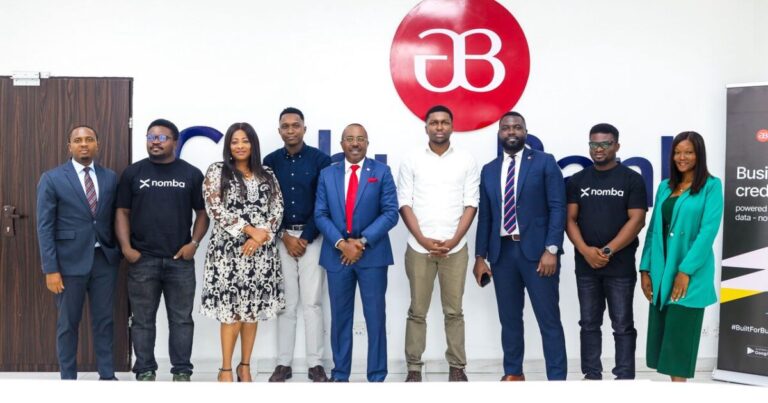

Obafemi Banigbe, Chief Executive Officer, revealed that a competitor deliberately prolonged negotiations for shared services, leading to financial losses for the company and hoping for its failure.
Banigbe said this at the Inspiring Woman Africa Series 14 held in Lagos on Thursday under the theme ‘Leadership Redefined: Charting New Paths to Excellence’.
The PUNCH reported that Nigerian telecoms operator 9mobile rebranded to T2 as part of a strategic push to revive its market position, following the 2023 acquisition of 9mobile by Lighthouse Telecoms, led by businessman and investor Thomas Etuh.
Speaking during a panel session titled Visionary Leadership in Transformative Times, Banigbe said, “One of our competitors wanted us to die. How else do you want to explain it? They were stringing us along for months, and we were bleeding money every month.
“For us, it’s making sure that we can modernise the infrastructure to deliver services on a cost-effective basis… Therefore, to everyone who is wondering, yes, we are back in the market. Now, we are able to leverage all the competitive infrastructure to deliver services. Today, everywhere you have MTN, we exist in the market mostly because we have leveraged infrastructure.”
Throwing more light on the shared infrastructure deal with MTN, Banigbe said, “It took us six months to negotiate that deal, and then after six months together, we reached an agreement. So, one year of trying to revive the business in Nigeria,” adding that the process demanded resilience and relationship-building across the industry.
Banigbe noted that collaboration remained essential despite harsh competitive pressures, emphasising, “You must be willing to leverage your relationships with your peers. Nobody is an island. They say that a tree does not make a forest.” It was within that context, he said, that T2 experienced direct attempts to undermine its progress. “One of our competitors wanted us to fail,” he repeated, describing the resistance the company encountered while attempting to rebuild.
Banigbe told the audience that the company had inherited severe structural and financial strain. Highlighting the burden of unsustainable fixed costs, he stated, “When you are running a business, your fixed cost is eight times your revenue, which means that you are potentially in debt.” He explained that the organisation had no option but to confront its challenges head-on and implement a structured recovery plan built around four phases.
Speaking on the complexity of implementing that plan, Banigbe said it felt like a Formula 1 race, like “changing the engine and the tyre when the vehicle is in motion.” He said the company had to invest carefully while recognising the realities of the current economic climate, especially the pressure of dollar-denominated costs. “In the digital world, it’s not about owning infrastructure. It’s about accessing the infrastructure,” he said, stressing the need for collaborations and shared platforms to survive.
“We decided to break our recovery process into four phases. One is the standardisation of the project. The second phase is modernisation. The third phase is transformation. And then the fourth phase is growth. Now, it’s like when you are driving, and you are participating in a Formula 1 race, and you have to change the engine and the tyre and the vehicle when the vehicle is in motion. So, that’s exactly what we are attempting to do. So, standardising means that we need to ensure that we have a business model that is still ongoing. We have to deal with the issue of cost. I mean, when you are running a business, your fixed cost is eight times your revenue. So, effectively, it means that you are potentially in debt.
“So, what we had to do was to say, ‘How do you address your fixed costs? I want to give you an idea of taking a fixed cost model from a fixed cost model to a very new cost model. And what we had to do was that we had to start to leverage the product-based infrastructure. So, standardisation is more like keeping the business stable, restoring our community to the market. So, we had to deal with some of those issues of the debt that we were having. Modernisation was a key thing. So, we are investing now in trying to modernise the infrastructure. It is expensive to run a telecom business in Nigeria. A lot of our costs are in dollars. It’s simply because a lot of our costs were in dollars, whereas our revenues are in naira, and those revenues have not increased because the tariffs have not been increased. The tariffs were increased this year,” he said.
The Inspiring Woman Africa Series 14 convened leaders and professionals from multiple sectors. The keynote address was delivered by the former president of Ethiopia, Sahle-Work Zewde. IWA is organised by award-winning journalist Kemi Ajumobi.