
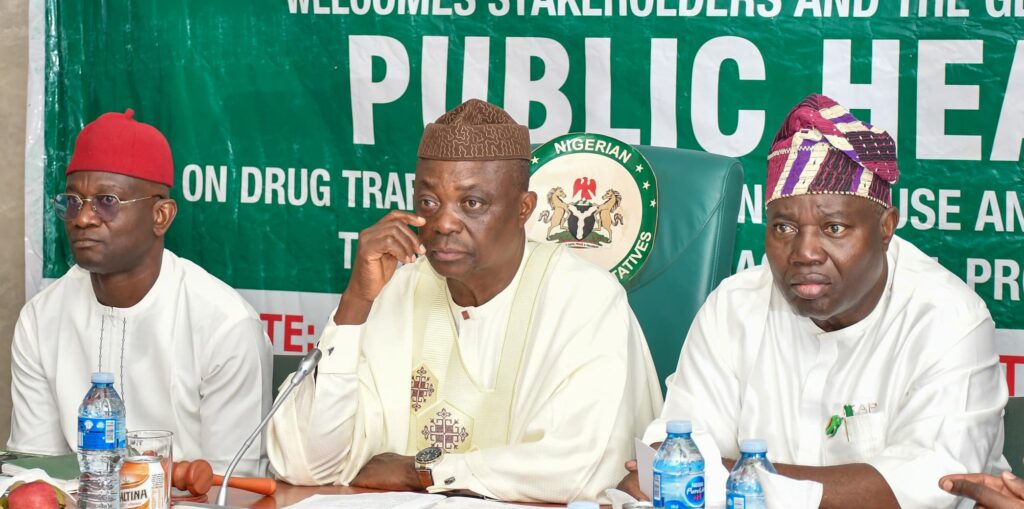
The House of Representatives on Tuesday sounded the alarm over the escalating drug abuse in Nigeria, warning that the trend threatens the very soul of the nation.
Chairman of the House Ad hoc Committee on Drugs, Trafficking, Alcohol and Tobacco Abuse, Oluwatimehin Adelegbe, made the remarks at the commencement of an investigation into the rising incidence of drug abuse across the country.
He described the situation as a national emergency, citing the convergence of substance abuse, illicit drug trafficking, unregulated pharmaceutical distribution, predatory alcohol marketing, and aggressive tobacco promotion.
“This crisis is stealing the health of our youth, weakening our labour force, destabilising communities, and undermining our collective future,” Adelegbe said.
He further noted that cannabis is smoked openly on the streets, methamphetamine use is spreading alarmingly, and Codeine-based cough syrups are being sold as freely as soft drinks. Tramadol 200mg, hazardous alcoholic mixtures, and other substandard products are also reportedly harming young Nigerians in motor parks, campuses, and marketplaces.
The United Nations Office on Drugs and Crime (UNODC), in its presentation to the committee, raised concerns over the scale of drug use in Nigeria, describing it as far above the global average.
Referencing findings from the 2018 Nigeria Drug Use Survey conducted with the National Bureau of Statistics and the European Union, the agency noted that 14.4 per cent of Nigerians aged 15 to 64 use drugs. Cannabis remains the most commonly used substance, with an estimated 10.6 million users, followed by around seven million users of pharmaceutical opioids, including Tramadol and Codeine-based cough syrups.
The survey also indicated that nearly three million Nigerians suffer from drug use disorders requiring counselling or medical treatment.
UNODC highlighted a disproportionate impact on women and girls, pointing out that while one in four drug users is female, only one in 20 women receive treatment, suggesting that stigma and access barriers limit care for female users.
The agency warned that drug abuse could potentially affect more than 20 million Nigerians, posing a serious threat to public health and security.
The National Drug Law Enforcement Agency (NDLEA), in a memorandum to the committee, reaffirmed its commitment to safeguarding Nigeria from the dangers of illicit drugs.
The agency pledged to provide technical support to strengthen the National Drug Control Master Plan (NDCMP) and called for enhanced legislation, regulation, treatment systems, and operational resources to better combat drug trafficking and protect public health.
Adelegbe urged that urgent national action be taken to address the crisis, emphasizing that the future of millions of Nigerians depends on decisive intervention.