
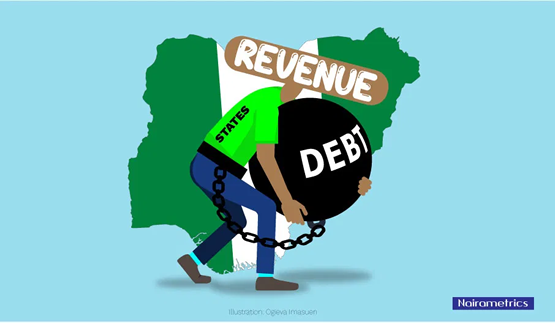
Fresh borrowing approvals by the Federal Government have heightened concerns over the sustainability of Nigeria’s rising debt profile, with the country’s total public debt projected to approach ₦184 trillion within the next fiscal cycle amid mounting debt-service obligations and weak revenue growth.
The concern follows Senate’s approval of a fresh $21.5 billion external borrowing plan for 2025–2026 and a proposed $2 billion domestic foreign currency bond programme, further expanding a debt stock that stood at ₦159.27 trillion at the end of 2025, according to figures from the Debt Management Office (DMO).
Within less than three years, the current administration has added roughly ₦72 trillion to Nigeria’s debt burden through Eurobonds, multilateral loans, treasury bills, domestic bonds and securitised Ways and Means advances.
Although the government insists the borrowings were necessary to stabilise the economy, finance infrastructure and cushion the effects of reforms, economists are increasingly worried about debt sustainability, rising debt-service obligations, weak revenue generation and the longterm fiscal outlook.
Chief Executive Officer of the Centre for the Promotion of Private Enterprise (CPPE), Muda Yusuf, said Nigeria’s major fiscal vulnerability lies in its debt service-to-revenue ratio rather than debt-to-GDP ratio.
“Nigeria’s debt-to-GDP ratio may still look manageable on paper but debt-service-to-revenue ratio is the real concern,” Yusuf said. “When a very large percentage of government revenue goes into debt servicing, the government loses fiscal flexibility.”
Available fiscal data show Nigeria spent about ₦7.8 trillion servicing debt in 2023, while debt servicing reportedly rose to about ₦13.12 trillion in 2024.
Development finance expert, Dr Paul Ajala, warned that Nigeria’s debt challenge is becoming increasingly structural. “What makes Nigeria’s situation troubling is not just the size of the debt but the weakness of public revenue,” Ajala stated.
“A country can sustain high debt if it has strong productive capacity and strong revenue mobilisation. But where revenues remain weak and debt servicing keeps rising, borrowing can quickly become a fiscal trap.”
Development economist, Dr Ayo Teriba, however, argued that borrowing itself is not necessarily harmful if funds are channelled into productive sectors. “Debt becomes dangerous when borrowed funds are consumed rather than invested in productive sectors,” Teriba explained.
“If loans are used for infrastructure, industrialization, energy expansion, logistics and export growth, the economy can generate future income to repay itself.”
Public finance analyst, Kalu Aja, described the situation as a “reforminduced debt cycle,” noting that the government removed fuel subsidy to save funds but later borrowed heavily to cushion the hardship caused by the reforms.
Chief Executive Officer of Financial Derivatives Company, Bismarck Rewane, said poor communication and limited visible outcomes have deepened public skepticism.
“People want to see roads, stable electricity, efficient hospitals, rail lines, industrial parks and jobs. Those are visible indicators of debt utilisation,” Rewane said.
Economists also warned that continued Naira depreciation could worsen Nigeria’s external debt burden by increasing repayment costs in local currency terms, further tightening pressure on already strained public finances.








