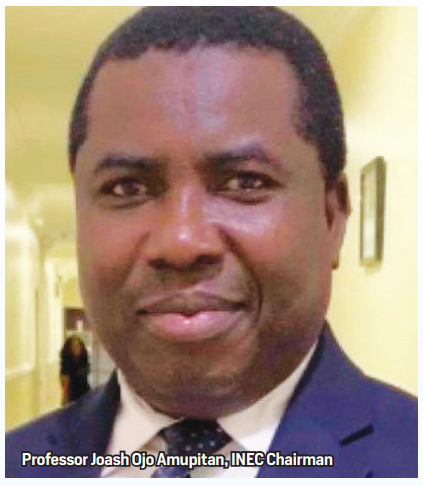

PHILIP NYAM reports on the recent training session for National Assembly Press Corps on strengthening reporting for reserved seats for women organized by a civil society group, TSO Foundation and the National Secretariat for the Reserved Seats for Women Bill Campaign Coalition in conjunction with the House of Representatives Committee on Media and Public Affairs
I t is no longer news that women are abysmally represented in both chambers of the National Assembly and the 36 state Houses of Assembly. Although the percentage participation of women in governance has improved over the years, there has been a sharp decline in the number of women elected into the legislature both at the state and national levels.
In the last constitutional amendment, the bills seeking for the accommodation of more women in the legislatures could not see the light of day. But in the ongoing constitution review process, the advocacy for the bill to pass has gained momentum with the sponsors, civil society organisations, women and gender-related societies leading the campaign.
It was therefore part of the advocacy that the House of Representatives, the TSO Foundation and the National Secretariat for the Reserved Seats for Women Bill Campaign decided to put together a training session for the National Assembly Press Corps to strengthen report on the Reserved Seats for Women Bill.
Titled “An act to alter the constitution of the Federal Republic of Nigeria 1999 to provide for Seat Reservation for Women in the National Assembly and State Houses of Assembly and for related matters,” the bill is sponsored by the Deputy Speaker, House of Representatives, Benjamin Kalu. The co-sponsors include Hons Tolani Shagaya, Kafilat Ogbara, Joshua Gana, Chinwe Nnabuife, Khadija Bukar Ibrahim, Jafaru Gambo Leko and M.D. Hassan. The rest are Hons. Blessing Onuh, Kama Nkemkanma, Amobi Ogah, Jonathan Gaza Gbefwi and Francis Waive.
The bill proposes the creation of one seat for each state of the federation and the Federal Capital territory (FCT) in the Senate (37 additional seats); one seat for each state of the federation and the FCT in the House of Representatives (37 additional seats); three seat (one per senatorial zone) for each state House of Assembly (108 additional seats). If the bill is passed and signed into law, the National Assembly will have 543 members made up of 397 in the House and 146 in the Senate.
The host
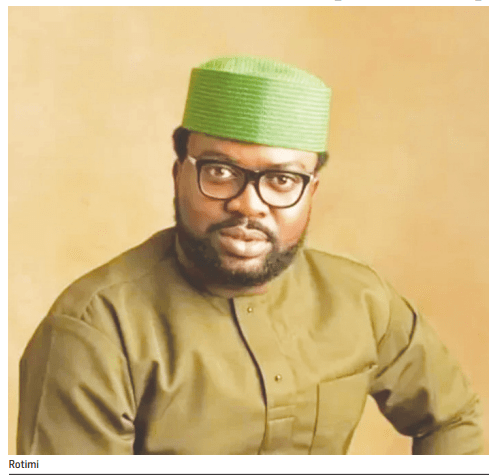
In his welcome remarks, Hon. Akin Rotimi, who is a co-sponsor of the bill, said the time has come for the inequality suffered by women to be corrected. He emphasised that the media is a major stakeholder in legislative advocacy, stressing that whatever happens in the parliament, if the media does not disseminate information, it will remain within the confines of the legislature.
He explained that the decision to collaborate with the TOS Foundation to organize the training for the National Assembly press corps was to ensure that journalists covering the parliament were better equipped to effectively communicate the intendment of the Reserved Seats Bill.
The convener
In her welcome address, the Chief Executive of TOS Foundation and Convener, Reserved Seats for Women Bill Campaign Coalition, Chief Osasu Igbinedion Ogwuche said the issue of reserved seats is not about women but about Nigeria.
She said it is not right for Nigeria, being the giant of Africa, to lag behind in women representation in the parliament when smaller nations are doing better. “We can’t call ourselves the giant of Africa and be performing so poorly when it comes to women in government. I was speaking with the speaker of the South Sudan House of Representatives the other day.
This is a country that was torn into pieces by war. And you have women leading where it matters. These women rebuilt their countries”. She lamented that it is wrong for women to make up about 49 per cent of the population and constitute 47 per cent of registered voters, yet, hold less than five per cent of elective positions.
She appealed to the media to escalate the advocacy adding that the TSO Foundation is conscious of the media role in influencing policy formulation and public opinion and that informed the decision to sponsor the training. Chief Ogwuche added that as the National Assembly votes on the constitution amendment report on December 16, the lawmakers should place Nigeria on the world map by giving women their due recognition by endorsing the Reserved Seats Bill.
Presentations
In a presentation titled “Understanding the Reserved Seats Bill for Women”, Special Adviser (Legislative) to the Deputy Speaker, Dr. Chidozie Aja, said it is important to note that even if additional 74 seats are granted in the Senate and House of Representatives, bringing the total number of seats to 543, it means that Nigeria will only secure 13.6 per cent women representation in the National Assembly.
He said: “In the House of Representatives today, only 17 of 360 seats are occupied by women and in the Senate, just three of 109 seats. This places Nigeria among the lowest globally in terms of female legislative representation (4.7 per cent, ranking 184th globally), behind countries with smaller economies, fewer resources, and younger democracies.
He explained that the Reserved Seats for Women Bill is not another attempt at tokenism but “it is a structural correction and a democratic innovation designed to level the playing field.” He stressed that the reserved seats “will not replace existing seats but will expand representation to create room for women at the table of decision-making.
It is important, also to note that political parties will field only female candidates for these seats. It is meant to last for 4 election cycle of 16 years in all. It is a temporary special measure (TSM). “The bill seeks to alter sections 48, 49, 71, 77, 91 and 117 of the Constitution of the Federal Republic of Nigeria, 1999; and more recently recommended alteration of section 42.”
Media framing
In her paper titled “Media framing and narrative building,” Dr. Adaora SidneyJack of African Independent Television said some headlines are being circumvented to relegate women to the background. She advised the media to eschew stereotypes often bandied about women and balance up their reports advising that it should be based on facts, research unbiased and unemotional. She also noted that the bill is not sensational. “This is a policy document and policy is about humanity.
And as our job as media people, that’s how we need to do that narrative.” Sidney-Jack submitted that the conversation on reserved seats for women has reawakened a national debate on representation, equity, and the role of the media in shaping public imagination around women in politics. As Nigeria moves closer to legislative reform that could fundamentally shift gender balance in governance, the responsibility placed on journalists, political editors, and media gatekeepers becomes even more critical.
According to her, reporting on politics is never neutral. Every headline, every interview angle, every frame, and every omission contributes to constructing a narrative about who deserves power, who is capable of leadership, and who the public should trust. “When women are entering political spaces historically dominated by men, the media becomes a decisive actor—not merely informing society, but influencing perception, legitimacy, and acceptance of women’s political participation.
“Narratives do not just describe reality,they create meaning around it. In many countries that adopted reserved seats, from Rwanda to Senegal to Tanzania, the quality of media narratives was instrumental in shifting societal norms and increasing acceptance of women leaders. “In Nigeria, reserved seats will demand that journalists rise above the traditional stereotypes that cast women as “tokens,” “beneficiaries,” or “substitutes,” and instead build narratives rooted in competence, contribution, and public interest,” she said.
She further noted that effective narrative construction should highlight women’s political experiences and policy achievements, not personal lives, contextualise reserved seats as corrective justice, not charity, normalise women’s leadership by using routine coverage, not exceptional or scandal-driven frames.
She also cautioned against gender bias in reporting, adding that gender bias in media often manifests subtly such as describing women leaders by marital status, age, or appearance, expecting them to explain their competence, treating their candidacy as unusual or surprising and using patronising languages such as female aspirant, iron lady and soft-spoken.
“Reserved seats represent a historic turning point for Nigeria. But legislative reform alone will not shift culture. The media’s role—through balanced narratives, gender-sensitive storytelling, and ethical reporting—will determine whether reserved seats become merely symbolic or truly transformative, she said. Speaking on “Data-driven reporting on gender and politics,” Barr. Andikan Mark gave a breakdown of countries in Africa that have ceded reserved seats for females in their Parliament’s. She lamented that Nigeria ranks among the lowest globally for women’s political representation. Women make up nearly half of the population, yet hold less than per cent of seats in the 10th National Assembly.
According to her, only 54 women serve across 990 seats in State Houses of Assembly with 15 states having no female legislators. While there are 4 female senators and 17 House of Representatives female members. She said Rwanda has a historic instance of a majority-female parliament, with over 60 per cent of seats occupied by women in the Chamber of the Deputies and 50 per cent in the Senate.
Mark disclosed that the remarkable statistic was largely aided by constitutions amendment in which a mandatory minimum of 30 per cent is set as a quota in all decision-making bodies, as stipulated in Article 80(3) of the Constitution of Rwanda (2003 revised 2015), which requires that at least 30 per cent of elected and appointed senators must be women. “Additionally, among other inclusive actions, 24 out of 80 seats in the lower house are reserved for women under Article 76(3 of the Constitution of Rwanda,” she added.
On Tanzania, she said having been one of the countries, which first pioneered efforts to reserve seats for women and other marginalised groups along with Uganda whose own inclusion came in 1989, Tanzania has had provisions for this since 1985. “The country maintains a reserved seats quota system where 30 per cent of parliamentary seats are reserved for women – around 113 of 393 seats – as provided under the Constitution of Tanzania and the Political Parties Act,” she said.