

The House of Representatives Ad-hoc Committee on Drugs and Illicit Trafficking on Tuesday sought a stronger collaboration with the Nigeria Customs Service (NCS) as part of efforts to curb the rising menace of illicit drugs and prohibited pharmaceuticals in the country.
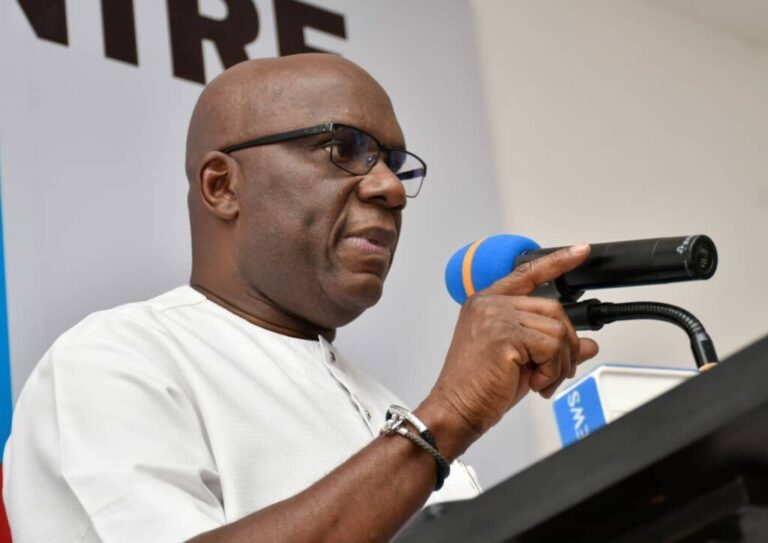
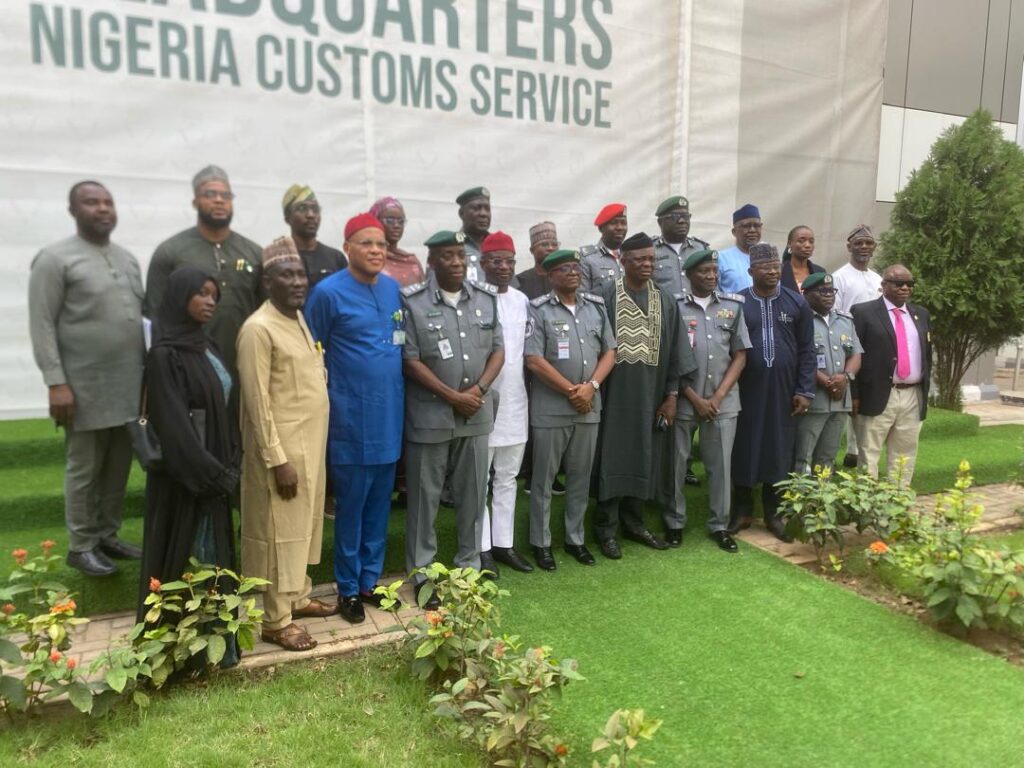
The committee, led by its Chairman, Hon. Timehin Adelegbe, alongside members, paid a courtesy visit to the NCS headquarters in Abuja, stressing that the fight against drug trafficking requires coordinated legislative reforms and improved inter-agency cooperation.
Adelegbe clarified that the visit was not investigative but aimed at fostering a partnership with the Nigeria Customs Service in addressing the menace of drugs.
“We are not here for investigation; we are here on a courtesy call to collaborate and move ahead together,” he said.
He noted that the committee had earlier conducted a public hearing attended by over 300 organisations, including NGOs and institutions, reflecting growing public concern over the widespread impact of illicit drugs.
“The menace affects everyone. If it doesn’t affect you directly, it affects your family. It is a national crisis that demands collective action,” he said.
The lawmaker commended Customs for its seizures but stressed that more needed to be done in harmonising operations with agencies such as the National Drug Law Enforcement Agency (NDLEA) and the National Agency for Food and Drug Administration and Control (NAFDAC).
He said the committee would review existing laws governing tobacco products, illicit cigarettes, bonded warehouses and border control operations, noting that emerging products such as vape devices were not contemplated under the current Tobacco Act.
“We must examine whether the laws are adequate. Are bonded warehouses complying with regulations? Do we have sufficient personnel at our borders? These are areas we must holistically address,” Adelegbe said.
He also disclosed plans for nationwide advocacy campaigns in Lagos, Port Harcourt and Abuja, as well as across all states, to raise awareness about the dangers of drug abuse.
Hon. Adelegbe emphasised the need for the Nigerian Customs Service to collaborate with the committee in carrying out the planned advocacy to ensure its success.
Responding, the Deputy Comptroller-General of Customs in charge of Enforcement, Investigation and Inspection, DCG Timi Bomodi, who received the committee on behalf of the Customs Comptroller-General, CG Bashir Adewale Adeniyi, reaffirmed the Service’s commitment to combating illicit trade.
Bomodi revealed that in the past year alone, Customs intercepted over 230 forty-foot containers of illegally imported pharmaceuticals, many of which exceeded approved limits set by NAFDAC and were concealed as other goods.
“It is only left to the imagination what damage over 200 containers of such substances would have caused if allowed into society,” he said.
He also cited major cocaine seizures, including 22 parcels intercepted at Seme Command and handed over to NDLEA, as well as over 1,000 kilogrammes of cocaine seized at Lagos ports, some concealed in ship hulls.
According to him, the Nigeria Customs has intensified intelligence-driven enforcement across land borders, airports and seaports, noting a clear link between illicit drugs and criminal activity.
“The activities of the Service have created a significant dent in criminal networks. As criminals evolve, we also evolve in our enforcement strategies,” he said.
Bomodi disclosed that the Service was deploying advanced scanners, establishing a special unit for drug detection and implementing specialised training for officers.
“In terms of volume, it’s really large. I don’t have the figure, but it is really huge. Again, to buttress the point that the Nigerian Customs Service is alive to its responsibilities, as a matter of fact, when you think of our activities in relation to enforcement, you see that across all our border posts, the ports, airports, and seaports, we are making serious interventions, especially in this particular area.
“We are mindful of the fact that the impact of this trade would have not only on citizens in general, but on our youth population, who are mainly prone to the use of some of these substances. And we know what it can do to that population. That is why we don’t compromise in any way whatsoever, and we try to check the influx of these things, try to look at criminal networks and see how they operate”, he said.
He added that Customs has also introduced mandatory drug testing for its personnel as part of its zero-tolerance policy for drugs.
He further confirmed that Customs has signed Memoranda of Understanding with both the NDLEA and NAFDAC to strengthen inter-agency collaboration on drug control and pharmaceutical imports.
“The goals of this committee are the goals of the Nigeria Customs Service. We are willing to partner fully and provide any assistance required,” he assured.