
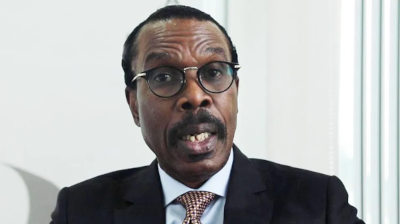
The Managing Director of Financial Derivatives Company, Mr Bismarck Rewane, has stated that reforms in Nigeria’s power sector are essential and cannot be ignored if the country is to achieve meaningful growth, describing the industry’s crisis as an economic threat.
Delivering a keynote address at the recent 2026 Economic Summit organised by the Redeemed Christian Church of God, Christ the Lord Parish, Lekki, Lagos, themed “Positioned for Advantage in a Shifting Economy,” Rewane noted that Nigeria’s economic aspirations would remain mere “pipe dreams and wishful thinking” without decisive improvements in electricity supply and distribution.
He said, “The point is that economic productivity in Nigeria must increase; it will be driven by power, agriculture, and manufacturing, and most importantly, fintech and telecommunications.’’
Rewane reiterated that power sector reforms are critical, explaining that electricity supply directly affects business productivity, particularly for small and medium-scale enterprises.
He observed that many SMEs are currently forced to rely on diesel and petrol at high costs due to the ongoing Middle East crisis, which has persisted for about four weeks.
He added that these businesses are unable to immediately transfer rising costs to consumers, who are already grappling with stagnant wages. Artisans engaged in activities such as milling and vulcanising are also struggling under the burden of an inadequate power supply.
From this perspective, he described power as a key driver of national development and progress. Providing further insight, Rewane said, “From 1999 to today, Nigeria has committed nothing less than $30bn to power, $16bn of it during the period of former President Olusegun Obasanjo.”
Despite this level of investment, he pointed out that Nigeria generated about 5,000 megawatts in 1999, but is currently struggling to maintain a supply of 4,000 megawatts. He urged the government to urgently implement planned reforms and overhaul the sector.
Panellists at the hybrid event, Nike James, Sola Adesakin, Chidi Okpaluba, and the moderator, Uwa Osa-Oboh, also offered practical recommendations on how Nigeria can better position itself in a changing economic environment. They emphasised the importance of investing in agriculture, manufacturing, fintech, human capital, and infrastructure to unlock growth opportunities for citizens.
From an SME perspective, Dr Chidi Okpaluba said, “We need an identity shift. He said, unfortunately, the world does not treat you as you want to be treated. The world does not give you what you want, but the world gives you what you are, so we need an identity shift.”
Speaking on personal finance and wealth creation, Mrs Sola Adesakin encouraged participants at the summit to explore opportunities in the Nigerian stock market, noting its recent growth. She said, ‘’Shares are going up.” She also stressed that value and promotion will accrue to those who consistently deliver value.
From a taxation standpoint, Nike James provided insights into the new tax regime, explaining its implications and practical applications.
She stated that the tax burden has shifted from low-income earners to high-income earners, offering an analysis of how the policy affects employees, the self-employed, and small businesses. Her presentation highlighted key requirements for tax compliance, available exemptions, and applicable deductions.
James also urged citizens to maintain proper financial records of their income and filings. She concluded by advising that “It is our moral duty and obligation as Christians to do what is right and keep proper records, in case there is a future need to clarify our returns or income.”
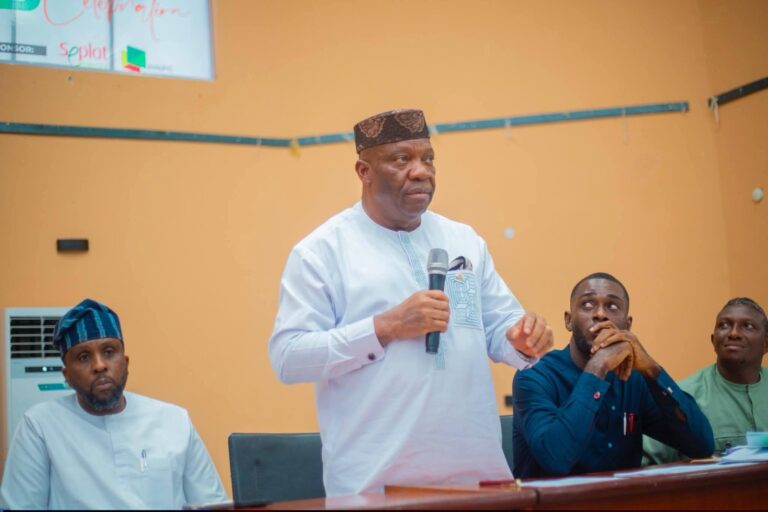
The Convener of the Summit, Pastor Tunde Netufo, expressed satisfaction with the turnout and explained the purpose of the annual event. He said it serves as a cornerstone of the Parish’s Christian Social Responsibility efforts, inspired by the RCCG General Overseer, Pastor E.A. Adeboye.
According to Pastor Netufo, “the annual event aims to give back to society, stimulate economic growth, eradicate poverty and foster a just, egalitarian community where everyone, regardless of age, gender, social or religious status, can access a quality life.”
He noted that the theme, “Positioned for Advantage in a Shifting Economy,” is particularly relevant given current economic uncertainties. “None of us can, with certainty, beat our chests and tell ourselves about the direction our economy is headed,” he said, referencing the fast-changing situation in the Middle East.
He added that the effects are already being felt through rising crude oil prices and higher local fuel costs. “There is much more which I am sure you would like to know to position yourself for positive advancement lest you become a victim of the economic headwind,” he said, urging participants to adopt strategic approaches in navigating the challenges.
Netufo emphasised that the government alone cannot solve present-day societal challenges, highlighting the church’s role in community development. “It’s our own little way of impacting our community,” he said, stressing the importance of empowerment rather than temporary relief.
Drawing a distinction between short-term aid and sustainable impact, he explained, “When you give a man food, you have only solved his problem, albeit momentarily. However, when you put him through the process of making food, you will succeed in making him his own man.”
He added that this approach enables individuals to empower others within their communities, thereby deepening economic activity and growth at the grassroots level.
The annual Economic Summit attracted a large audience both physically and online, providing an engaging platform for insightful discussions and interactive question-and-answer sessions throughout the event.