
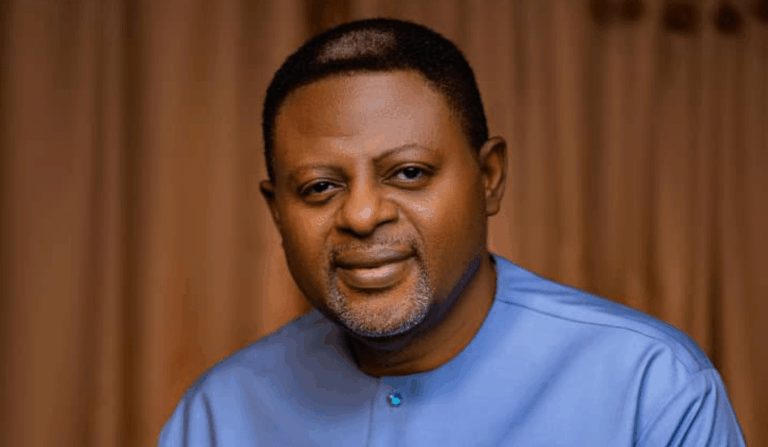
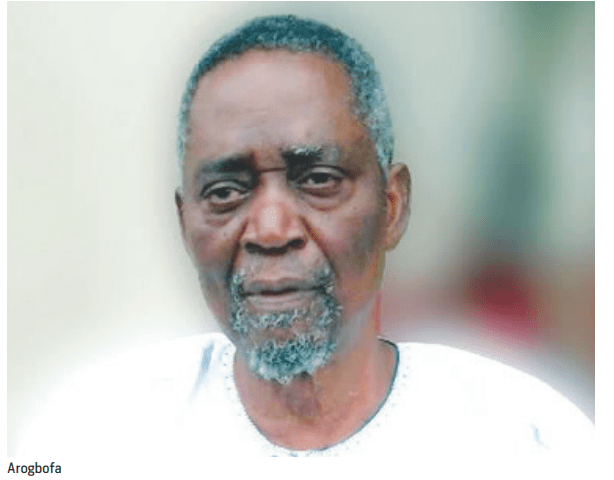
Highly respected octogenarian leader of Afenifere, Bashorun Sehinde Arogbofa, rarely grants interviews. But in this exclusive encounter with BABATOPE OKEOWO, he reminisces on Nigeria’s nationhood journey, the state of the country and the current level of underdevelopment
Do you share the view that the amalgamation of 1914 is the genesis of Nigeria’s problem?
The way we came together through the protectorate, being pronounced, saying that we are together without considering cultural backgrounds, different attitudes towards life, different stages of development without the people being involved in the coming together, it is just a pronouncement.
Such have put Nigeria into a very big problem. So, the process of coming together in the true sense of it, of working together in the true sense of it, and of moving forward, these processes have been very, very difficult. And that is why we have seen Nigeria taking some steps forward and some backwards in most of all the things we have been doing. Invariably, because of this, there has always been a deficit in our development.
For example, when we take three strides forward, and we take two backwards, that again hasn’t been the best. And that is what has been mainly responsible, because we are different peoples and because we are different peoples, if we were to be brought together, we should have been allowed to have a kind of an amalgam, where each people, or a group of people who can understand themselves, can grow at their own pace, so that the larger central will be like a kind of clearing house, not a house that forces things down on the others. This hasn’t happened in Nigeria and that is the problem. Whether we like it or not, the undertone is there. And that is why we talk of rotation.
Are you saying that the rotation presidency is now good for our polity?
If things have been properly blended, the issue of the Yoruba man who is President being pronounced, the Fulani man being pronounced, and the Igbo man being pronounced, will not have arisen. If we look at the USA, leaders emerge irrespective of what part of the country they come from because of the kind of federal system they adopted. The Americans see themselves mainly as having one faith, one destiny.
We tend to follow that in this country, but because we didn’t start well, it has been difficult. And so, when a government goes, that is why another government which doesn’t have the same philosophy with the government that goes has probably been finding it difficult to implement the national policies established by the previous, by the outgoing government.
The other one will start again. I really don’t know whether we are blending the type of oneness we expect. I really don’t know whether that is happening. You see, Obasanjo, when he was President, had a country of six geo-political zones. He tried that at the federal level, where the Federal Character Commission really played a leading role. He tried it, and I think it was successful.
But some of us warned him that the issue of the Federal Character Commission might not last as he expected. What Nigeria really needed was a true federal system, whereby those zones would be fairly independent, and the federal would be like a clearing house, like a primus inter pares. It would be first among equals. So, I’m not sure we are there yet.
With your position, is it safe to conclude that amalgamation has brought us woes instead of blessings?
The answer to this is neither yes nor no. In certain areas, the amalgamation has brought us a lot of respect. Take, for example, our size, what you call our unity in diversity. Outside Nigeria, they look at us as giants because of this amalgamation.
Yes, even within us, except for the poverty level, it is trying to make us understand one another better, trying to destroy this idea of you are a Yoruba man, you are an Igbo man, you are a Hausa man. One government even tried to do something like that, to erase it. In our curriculum, they are trying to say that apart from your own native tongue, you should be able to acquire another major Nigerian language in order to give you a feeling of Nigerianess.
But all these things, as they work, our politics destroy them. Our politicians destroy them. That is our problem, because our politicians, most of them don’t think like the Americans would do of their country being first. That patriotism is not there. Selflessness, there’s nothing wrong in thinking of yourself first, in other words, loving your people because if you don’t love yourself, you can’t love others.
But you are not to love yourself at the disadvantage of others. You must think of other people. Whether we like it or not, in Nigeria, the thing is still your community first, before you look at your own state, before you look at the entire nation. But a situation, where Nigeria first, your state second, yourself third, is not working in Nigeria because of the way we started. If we had started very well, like in America, this would have been possible. So, we are still battling with this, it is a serious challenge.
Do you think the administration of President Bola Tinubu is driving towards true federalism with its policies?
I am not really very sure that President Bola Tinubu promised true federalism, even though that was his own philosophy. But I think he is trying to solve this problem through another method. That is a kind of regional system he has set up, where, for example, we have South-West Development Commission, we have for South-South, North-West, North-East, and so on and so forth, a kind of regional system whereby the states there can assist one another, can transfer assistance to one another.
That is quite different from Afenifere’s view of every state being on its own, being able to manage its own affairs, whatever it has in minerals, being able to handle it and just paying a percentage to the center.
His own way of solving it is a little bit different. But if he can make a success of the one, he is doing fine. We may be driving towards a certain goal. But again, there will still be a difference in the two approaches. This regional system he has introduced, while it will bring greater inclusivity for people in the country, at the center, the lacuna is still there. Because the true federal system we are talking about is that the center should not be too strong. It should not be too strong.
The problem is that I don’t know how this can be done because what we have preferred is equality of states with the center just being ceremonial. You will recollect when we had Governor-General, Prime Minister; the Governor-General was expected to be the ceremonial head. What all will actually expect the center to be like the ceremonial head, with more powers in the state, not the power to stifle the states. The states must be allowed to breathe.
They must be allowed to think. They must be allowed to use their initiative. Of course, we may argue that now the states are having plenty of money unlike in the past. But this money they are having, the money coming from the states no doubt, but if the states are being allowed, or the states are allowed to have more power, to use their initiative in whatever they have, it will be a better thing. There will be a kind of good competition. Take for example in Ondo State, we are talking of bitumen, Kano State, textile expertise and others like that. If every state does things well, and is able to fend for its people it would be better.
But, not now where in most of these states, at the end of the month, you see them in the rat race to go to Abuja to collect money. But if they are able to think deeply, develop their resources, it will make them more independent, and it will make them more resourceful. They will be able to know where the shoe pinches in their states. But now, they will just give them the money but most of them don’t think seriously about it. If you look at some states, the roads are not there.
Education is in shambles. Hospitals are like dispensaries, and many things like that. But if the chief executives of the states are allowed to be accountable, to develop their own resources, and not depend on something from the center, within them, they will know better where the shoe pinches and I don’t know when next we are going to have this. Because, you see, when every governor gets there, it depends more on the expiration of his term. Let me be there for four years, or eight years, and that’s that. But the mind of laying the kind of foundation for others to build upon is not there.
Do you share the view that our leaders need reorientation in this regard?
I have always said something about moral rearmament, which is close to what you are saying. It needs a kind of moral revolution. I’m not talking about physical revolution, for everybody to think. But can we think now? Can we think in Nigeria? Take for example, I will start with politics. Can most of our politicians think about the future? If we think deeply about the future where we have a kind of common pool, where there will be inclusiveness, where everybody will have a fair share out of it.
What I’m driving at is this: our politicians, especially those in the various legislative houses, most of them will never think of anything that will go against their interests, however patriotic it may be, their interests are first. How they live, how their children will live, how the entire country will rotate around them and that is not the best. That has been the problem. We don’t have patriotic politicians. They are not patriotic. If it is a patriotic situation, and today we say, okay, this is the type of thing we want, let’s do it. If they allow it to be done, then we are having patriotic people.
But they may not like it, because it has affected their main source of livelihood, which they won’t like. Any plan in this country, however good it may be, if the politicians don’t look at it from a patriotic angle, if they look at it from the angle whereby, they alone will benefit, success is very difficult. We don’t have such a number of patriotic politicians in this country.
Look at most of our graduates, apart from the fact that there’s unfortunate joblessness in the land, for them, immediately they leave school, they go into politics, and they start hustling here and there. How can such a hustler think of something patriotic? He has to think of how to live and the next day he has to be on the fast lane and fast lane is not the best for our country. The people are always on the fast lane—to gain everything, to become wealthy, to earn this, to earn that.
We learned that some notable elders in the North are divided over the issue of marginalization of their zone, what is your view about this development?
That the Northerners are allegedly being shortchanged, Nigeria should be grateful to God and should also appreciate Tinubu for his courage. Those of us who are not in government but who read between the lines knew then that the country was going towards hitting the rocks, but for the emergence of someone like him. I’m talking economically. If he was not a bold leader, somebody who on the first day took the bull by the horn, Nigeria would have gone into combustion. So let’s appreciate him for that.
Yes, the other plans to mellow things and so on might not have reached maturity, but surely, we will get there. I’m not saying he’s a perfect person. Nobody is perfect. And these issues that people are being shortchanged, who is shortchanging who? The data are there. Not too long ago, in the northern forum, all the ministers from the North gave Tinubu a clean bill.
They said he had been fair to them. But you know human beings, when some people want offices and they don’t get them, the next thing is to complain. Some of them should even learn from us in the South-West. This is a serious point. We fought for the emergence of Tinubu fearfully. We risked our lives. But we are more concerned about the future of this country. We believed that Tinubu would be able to do it.
That was why we fought for him and he’s doing his best. We have to be realistic. A lot is wrong with this country. Some people are saying that it is a continuation of one party, that is not the issue. There was a personality that was there. Look at the issue of security, for example. For eight good years, the former Head of State was looking the other way while marauders and terrorists were destroying the country, driving away farmers, killing them, and so on. We may not be able to say that Tinubu has resolved everything, but all those problems created over a long time cannot be overcome overnight.
He’s making serious efforts. The soldiers are doing their best, although we still expect more to happen. Look at what is happening in Kwara, it’s terrible. People are being chased out of their homes. The beginning was when those who were alleged to have been brought in through one government for political and electoral purposes refused to go back. They formed a terrible group in the country and attracted other terrible people from outside the country.
What of the Arewa’s visit to Afenifere leaders?
It is a welcome development. Some efforts might have been made in the past, but this one, to me, is a welcome development because I can see a change in philosophy and in action, if sincerity is there. I am in a way close to the northerners. I have made very good friends over there.
If the Arewa Think Tank, is taking this initiative, to me, it is good. Arewa really means “North,” but now they are coming out to meet other people. That is beautiful. In the past, when we talk about the present, we can’t forget the past. If you remember what efforts Chief Awolowo made, you will be tempted to think that some good things are going to happen if that sort of sincerity exists.
We don’t know what next move the Ohanaeze is going to make in any case. But for the Arewa Think Tank meeting Afenifere, I don’t know whether that step has ever been made. I’m not sure it has.
The background to each of these sociocultural organizations is different. But trying to break the barriers now is good. Don’t forget that when we talk of Afenifere, it was first political, but later on especially with the problems that Baba Adesanya had and when Baba Fasonranti took over, the decision was taken to make it socio-political, so that more people could come in to assist.
Even then, when it was founded, you could scarcely distinguish the Action Group from Afenifere. They shared the same philosophy and that philosophy was more universal: free education, free breath, and so on. It could be said to be federal in nature. We, as human beings generally, benefit from all these things.
You commended Tinubu for the economic reforms he is now embarking on. But people are complaining bitterly across the country, as a result of the hardship this has brought. What should be done to ameliorate the suffering?
If you are referring to the oil subsidy removal that was already in place before he came in, and his predecessors were cowardly not to make the decision. So, I commend him for making the pronouncement when he came in. I’m not feeling comfortable with what is happening, but I thank God for life, and I know what it means when we have people who are hungry.
But again, some sacrifices are necessary if the future will be bright; let’s commend Tinubu for taking the step. If we Nigerians also cooperate, if, for example, I’m not lazy, you are not lazy, and we all work hard, things can get better. Good things can be achieved again.
Look, my brother, early in the morning, if you come here and it’s not raining, you’ll see young men and women on the hill shouting and clapping from morning till evening when they should be working. When they go back, they’ll still want to eat; some of them will resort to stealing. That is not the way.
We must respond. And, of course, Tinubu has to bring in more palliatives, not just about sharing money, but those who promote empowerment through small businesses and empowerment. He is doing it already. If we have more of this and we stay positive, things will be better.
We can’t overcome this suffering overnight but can’t you see it? We are complaining, yes, but things are still improving. Let’s remember one government back in those days, they said the problem they had was how to spend money.
We had a lot of money, but didn’t know how to spend it wisely. That government didn’t make us be on our own and use our senses and so we all relaxed and squandered the money. Now it is a different situation, we have to work harder. I’m not saying all is well; even some people in government are not doing the right thing.
Their lifestyle doesn’t reflect the suffering of the people. Some don’t give the right reflection of what Tinubu is doing. Yes, I praise his boldness. He took the bull by the horn. The deficits we have in development can’t be reversed within a day or two. There had been a deficit in security, feeding, development, and many other things.
What is your advice to President Tinubu because people are complaining too much?
My advice to him is that he must continue to be focused. He must strive harder to make life better for the common man. The dividends of this hardship we are facing may not be immediate because it seems to be building up for tomorrow, but that tomorrow, people must get to it.
If people are not sustained to that tomorrow, the effort will be in vain. He should remain focused and appreciate that people are not happy because they are hungry. He is not the cause of banditry, or those chasing people away from the farms. Although people could say that one of his promises is to provide security, the deficit had been there.









