
…with INEC, Judiciary, Legislature under President’s control
…says 2025 witnessed shrinking of political space, rise in insecurity, increased poverty
…insists Tinubu can’t win in a just, credible poll
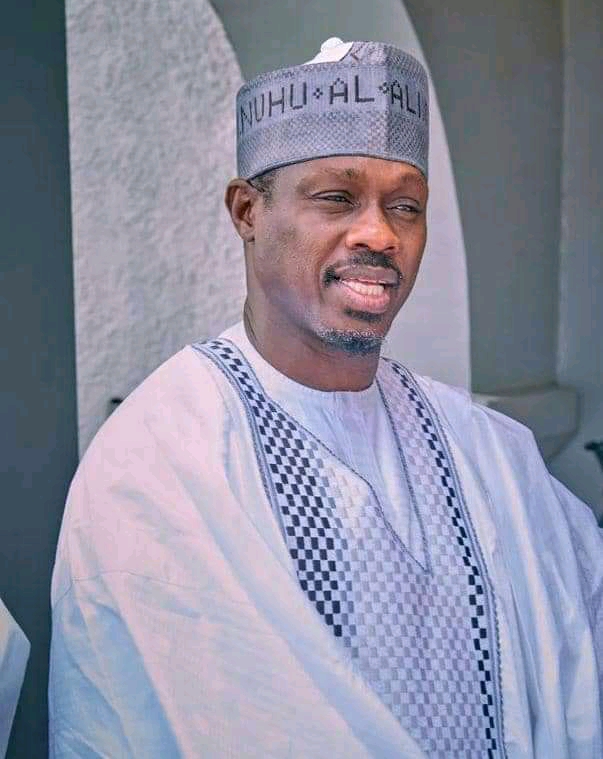
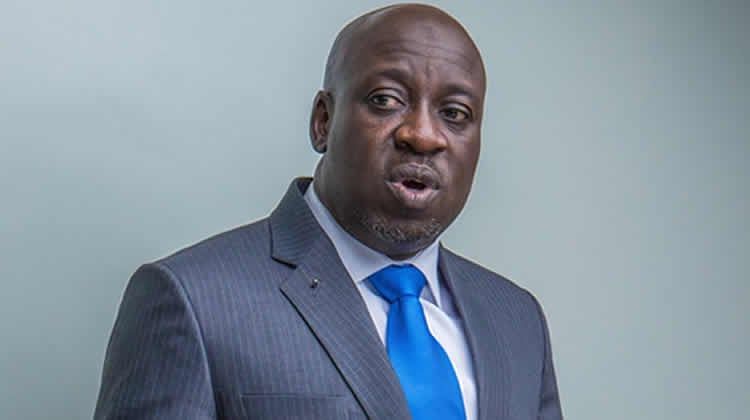
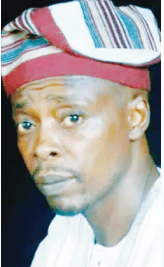
Prince Justice Faloye is the National Publicity Secretary of the Pan-Yoruba SocioPolitical Organisation, Afenifere. He is also an author who has published many books apart from engaging in civil advocacy. He is also an activist, who serves as President of ASHE Foundation, a think-tank set up by the Ooni of Ife in conjunction with other Southern and Middle-Belt monarchs. In this interview with OLAOLU OLADIPO, he appraised the President Bola Ahmed Tinubu-led government as well as the build up to the 2027 poll. Excerpts:
What would be Afenifere’s assessment of the country with regards to the outgoing year?
Nothing has changed in the country under the ruling APC government. As a country, we have not moved forward progressively, rather things seem to be going down.
The arrest of our political and economic development has continued since we gave the 2025 midterm report. We are regressing, economically and politically.
Economically, poverty has increased with most Nigerians unable to live decently because they are now worse off. Politically the democratic space continues to shrink thanks to the efforts of the Bola Tinubu government to foist a one-party on the country, something past leaders of the country never dared to undertake.
We are no longer safe as a people considering the fact that the spate of insecurity continues to spread. Unfortunately for us, our insecurity has continued to spread to an unimaginable level and has now attracted international condemnation.
Due to devaluation and removal of production subsidies, our GDP has fallen to about $180 billion from the $360 billion left behind by the imme- diate past regime of late President Muhammadu Buhari. Unfortunately, these are self-induced problems caused by a wrong ideology and governance style.
Would you say the country has moved forward significantly going into 2026?
Contrary to propaganda being spread by officials of state suggesting that the economy has improved, but on December 16, 2025, we heard our Minister of Finance tell members of the House of Representatives that there was a huge shortfall between projected 2025 revenue of about N40 trillion and the N10 trillion realised.
This is despite the claims by officials in the Presidency sometime in Au- gust that the 2025 projected revenue had been met. If you ask me, this points to the lack of integrity and credibility of national indices coming from official circles. They (officials of state) have continued to reel out conflicting claims on several issues such as unemployment rates to inflation and revenue.
Since the same budgetary process and personnel that produced a budget variance of 70 per cent was used for 2026 budget read by the president recently, then the budget is not really worth the paper it was written on by the President. It is more or less a request for more public debt. The 2026 budget which they tagged, Hope Budget might as well be a pipe dream in the end.
Politically, in 2025 we witnessed a steady move towards consolidation of power at the centre and the loss of faith in our different arms of government by ordinary Nigerians.
The judiciary and legislative arms of government stand on the mandate of the president and have refused to be independent to serve as the necessary checks on the executive arm of government. The two arms have become appendages of the executive arm instead of protecting the people’s rights.
It is this consolidation of power at the centre that results in the opposition politicians defecting, believing that they cannot get a fair and just election process under the current regime which is working towards foisting a one party state.
So what exactly are we expecting in the 2027 election? Most important, the failure to restructure and de-centralise the police infrastructure to create state police has fuelled the increase in insecurity and its spread.
The people’s hands are tied behind their backs while terrorists and criminals wield absolute power with the government which is in possession of all instruments of coercion standing aloof. On the whole, there is no way we can confidently go into 2026 with these stated problems.
It is looking that peaceful and just change can’t be obtained through our political system, with INEC, Judiciary and legislature under President Tinubu’s overbearing control.
President Bola Ahmed Tinubu is a Yoruba son; in your considered opinion, how well do you think he has advanced the interest of the Yoruba speaking people of the country?
With regards to Yoruba benefiting from President Tinubu regime since it came into power in 2023, he has never identified with any ethnic or national agenda apart from his personal political empire building.
Is giving less than 10,000 out of 50 million Yorubas jobs progress? Afenifere doesn’t believe in prebendalism, a system whereby the elites of an ethnicity share economic and political benefits among themselves, while the masses suffer. Our motto is abundance for all, which is definitely not the case as we speak under the current regime.
We believe in free education for all, he has brought student loans that covers about one sixth of the student population that need it. Parcel out government land to friends and family, while 30 million Nigerians across the country are homeless.
Whether we are Yoruba, Igbo or Hausa does not matter any more, what matters as we speak is the fact that collectively, we are all buying the same goods with a devalued currency, we all feel the effects of bloated inefficient governance. The issue at stake is not about giving jobs for the boys, cronies and others. Politically, we Yoruba traditionally govern ourselves from our monar- chical system favouring polycentric representative governance, not over centralisation and absolute power in faraway capitals.
Afenifere pushed for restructuring by inspiring the 2014 Sovereign Conference. Even though we initially pushed for regionalism since we occupy one region, but in consultation with other regions, especially the Middle-belt and South South with hundreds of minorities, we all agreed to devolution of powers to states as federating units.
President Tinubu has not done any of this but engaging in the disabling of the federation by making local governments autonomous, thereby breaking state power, to control the local governments with federal might.
The continued over centralisation of the police and other CONFAB resolutions of devolution are affecting Yorubas in Kogi and Kwara that are defenceless against genocidal ethnic cleansing.
How would you appraise his (President Tinubu’s) leadership style?
There has been no change in President Tinubu’s leadership style since 1999 when he came to power as the governor of Lagos State.
He is still the same person who likes to hoard power to pursue his personal agenda. Everything revolves round him and this is a development that stops meritocracy and breeds inefficien- cy in governance and its structure.
How can you not have ambassadors for two years and hope to relate with efficient diplomacy from Aso Rock. 2026 will show how he deals with the USA, France and other foreign nations, but his choice of ambassadors is a concern for us in Afenifere.
The question that we keep asking ourselves is whether he will strike deals just to keep power or to uplift and empower the masses and enhance their welfare and wellbeing.
Afenifere has had to criticise his style before, do you think things have changed in regards to what you noticed in the past?
President Tinubu still believes in absolute power and acts like he is above the law in his approach to state issues. His disregard for the rule of law is being highlighted with the forged Tax Reform Act, which his media aides have refused to address since the news broke on the floor of the House of Representatives.
We all watched a courageous member of the House on television telling us that the executive arm of government had Gazetted what they wanted, regardless of what the NASS, the voice of the people, passed to them for assent.
This constitutional breach is actually an impeachable offence in whatever way you choose to look at it but unfortunately, a legislature that stands on the mandate of the President will probably forgive the legislative robbery and the President and other officials of the executive arm of government will continue to have their way.
Do you think he (President Tinubu) has done well to secure a second term of office?
I doubt he can win a just and credible election in the country considering the situation of things. Already, they have destabilised most of the opposition parties, so the election is practically won or lost.
At least that’s what they believe, that the 2027 election is in their pockets, as boasted by the Vice President recently, but political history teaches us what happens when people realise that peaceful change is not possible in a political system.
To compound the masses frustration is when the corrupt ruling class has resolved to tax the already suffering and hapless masses into deprivation.
The 2025 Tax Reform Act might be equated to the Poll Tax under UK Prime Minister Margaret Thatcher, who globally propagated the very neoliberal economic principles currently being used to pauperise Nigerians by the Tinubu administration.
The issues in 2026 will be continued insecurity due to lack of proper restructuring, economic downturn due to neoliberal economic policies being pushed by the government, over-taxation of the traumatised people of the country and a contract for cronies political economy, and electoral manipulation which is gradually manifesting on daily basis before our very eyes without any form of check by institutions that should act but which have since been pocketed by the executive arm of government.