
- Echoes of North, South dichotomy as parties seek
- Echoes Of North, South Dichotomy As Parties Seek
- Winning Formulas Ahead Presidential Election


FELIX NWANERI writes on the zoning of presidential tickets by the leading political parties, which has rekindled Nigeria’s geopolitical politics ahead of the 2027 general election
There is no doubt that arguments for and against rotation of the presidency between the North and South have always dominated build-ups to previous general elections since 1999, when Nigeria returned to civil rule.
This, perhaps, explains why ethnic affiliations and religious leaning rather than capacity have been the unofficial criteria for selecting candidates for presidential elections by the various political parties. Although not constitutional, the idea behind the zoning principle or rotational presidency is that in a multi-plural, diverse country like Nigeria, with over 300 ethnic nationalities, it is important that every group is given a sense of belonging in order to promote national unity and to prevent domination.
However, like in the past, zoning has become one of the most contentious issues in Nigeria at the moment, and the politics around it, is heating up the polity ahead of the 2027 presidential election, with implications for the stability of the country. The tension that is brewing is over the ethnic card being played by some members of the political class and the possibility of 2027 presidential election putting a wedge between the country’s geopolitical divide – North and South – is not in doubt.
The present democratic dispensation (Fourth Republic) is 27 years and would be 28 by 2027, when the next general election would hold, but so far, the North has occupied the presidency for 11 years – Muhammadu Buhari (eight years, 2015-2023) and Umaru Yar’Adua (three years, 2007-2010).
The South, on its part, has been in power for 16 years through Olusegun Obasanjo (eight years, 1999-2007), Goodluck Jonathan (five years, 2010-2015) and the incumbent, Bola Tinubu (three years). However, the region would have spent 17 years by the time Tinubu serves out his first term in 2027. Though the South presently has a five-year advantage over the North, which would be six years by 2027, most Nigerians believe that power should remain in the South given that the North enjoyed eight straight years presidency under Buhari.
According to these southern political leaders, sustenance of rotational presidency at this point in history is in the best interest of the country as Nigeria’s unity is presently under threat. Some northern political leaders, on their part, are clamouring for power to return to their region in 2027, so that they can be at par with the South. The argument for and against zoning, notwithstanding, many are of the view that because the power shift arrangement principle has helped to ensure a sense of balance and inclusion, it would be counter-productive for any political party that jettisons.
This assumption apparently explains why the leading parties have zoned their respective tickets for the forthcoming 2027 presidential election to the South. They are the ruling All Progressives Congress (APC), Peoples Democratic Party (PDP) and Labour Party (LP). For the African Democratic Congress (ADC), a coalition of key opposition leaders, there is also pressure on its leadership to also zone its presidential ticket in line with the rotational presidency arrangement.
Tinubu already candidate of APC
Whereas the leadership of the APC said at a time that it will give members of the party the opportunity to express themselves at the presidential primary, it was clear that the principle of right of first refusal has already decided contest for the ticket in favour of President Tinubu given the torrent of endorsements his second term bid has so far received from the various organs, caucuses and stakeholders of the party.
What will play out is a convention that will formally ratify Tinubu as the candidate of his party as many believe that it would amount to a wild goose chase for any member of the APC to square against him in a primary election even as the President has already kick-started his re-election campaign.
Endorsement of the President dates back to April 2024, when the President of the Senate, Godswill Akpabio, led members of the National Assembly to pay the President Sallah homage at his residence in Lagos during the Eid el Kabir celebration. Setting the tone for an early push for Tinubu’s re-election then, Akpabio declared: “As you coast home to victory for a second term, may all the governors seated here also coast home to a second term victory in their states.”
At the gathering were 27 governors from across party divides, former governors and the leadership of the Senate and House of Representatives. Other speakers at the event showered praises on the President. They include Vice President Kashim Shettima and Kwara State governor, AbdulRahman AbdulRazaq, who is the chairman of the Nigeria Governors’ Forum (NGF). A subsequent declaration by the then National Chairman of the APC, Abdullahi Ganduje, that there will be no vacancy in Aso Rock, further gave credence to the belief that the President’s re-election bid had been launched.
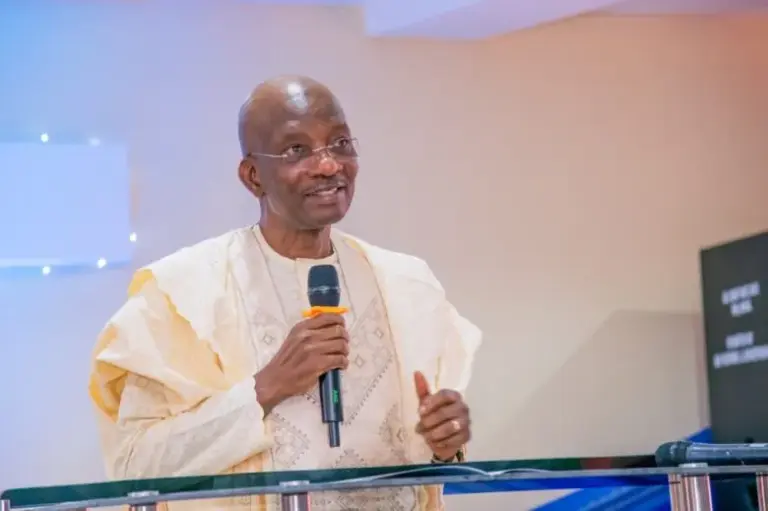
The Secretary to the Government of the Federation (SGF), George Akume, who spoke in like manner, particularly advised politicians of Northern extraction to wait till 2031 for another presidential bid. Although he acknowledged that individuals have the right to aspire for positions, he predicated his stand on the power shift arrangement between the North and South. However, endorsement of the President’s second term bid got to a height, when governors of the APC extraction under the aegis of Progressive Governors Forum (PGF), declared him as the sole candidate of the ruling party for the 2027 presidential election.
Hope Uzodimma, governor of Imo State and chairman of the forum, who announced the decision at the APC national summit at an APC summit in May last year, said the governors were united in their support for Tinubu’s re-election bid. Members of the National Assembly elected on the platform of the APC, who also announced endorsement of the President as the party’s sole candidate for the 2027 presidential election at the summit, said their position was based on his political sagacity, According to Akpabio, who moved the motion in that regard, and which was seconded by the Speaker, House of Representatives, Tajudeen Abbas, Tinubu has been able to set Nigeria on the path of growth. Similarly, the zonal caucuses of the ruling party have endorsed the President for a second term.
However, in what appears a departure from the norm, some members of the opposition political parties have equally joined the fray by endorsing the President for a second term even when their respective parties are strategisiing on how to wrest power from the ruling APC. Notable among them are Governor Charles Soludo of Anambra State and the Minister of the Federal Capital Territory, Nyesom Wike.
Soludo, a second term governor on the platform of the All Progressives Grand Alliance (APGA), has repeatedly said that his party will work with APC as both share a common belief in progressivism. Similarly, Wike, who leads a faction of the PDP, insists that he will work for Tinubu in the 2027 election. Besides endorsements, some APC youth groups have gone ahead to raise funds ranging from N100 million to N200 million and donated same to the national leadership of the party for the purchase of the nomination form the President Tinubu.
PDP seeks to reinvent self with zoning
The PDP, which usually experience internal strife over battle for its ticket for the presidency, each election year, has equally zoned its 2027 presidential ticket to the South. This decision, a departure from the 2023 experience, when the ticket was thrown open, was arrived at the 102nd National Executive Committee (NEC) meeting of the party.
While the argument of most members of the party is that it would be morally wrong for another northerner to emerge as PDP presidential candidate in 2027 after former Vice President Atiku Abubakar flew the party’s flag in the 2019 and 2023 elections, there is no doubt that the party opted for zoning to avoid discontent as witnessed in three previous elections. Many still believe that internal wrangling over zoning cost the PDP the 2015 and 2019 presidential elections. It is also incontestable that the party had what could be described as its worst battle over zoning during the build-up to the 2023 elections.
This explained why the May 28, 2022, presidential primary election of the party was characterised by high level politicking that pitted the aspirants against each other. The contest was however won by Atiku, who polled 371 votes to defeat his major challenger and the then governor of Rivers State, Wike, who garnered 237 votes. Though most of the aspirants pledged to rally behind Atiku and work for the success of the party at the presidential election, there was no doubt that the PDP further suffered polarization thereafter.
We have zoned the position to Southern Nigeria. So, if any northerner comes now to contest, we certainly will not accept that
Matters got to a height over Atiku’s choice of then governor of Delta State, Ifeanyi Okowa, as running mate. Many had thought that Wike’s performance at the presidential primary would earn him the party’s vicepresidential ticket but that was not to be.
It was reported that 14 members of the 17-man panel set-up by the party to advise its leadership and Atiku on the choice of vice-presidential candidate recommended Wike but Atiku in his wisdom, opted for Okowa, an action that infuriated members of Wike’s camp. The aftermath was that five of the party’s governors known as G5 – Wike, Okezie Ikpeazu (Abia), Ifeanyi Ugwuanyi (Enugu), Seyi Makinde (Oyo) and Samuel Ortom (Benue) – withdrew support for Atiku.
The consequence of their action was that the party went into the 2023 elections a divided house, and there is no disputing the fact that this contributed to PDP’s loss in the presidential poll. The pre-election crisis continued to fester and got to a level that many started wondering whether PDP will not go into extinction before the next elections.
However, what seemed a glimmer of hope for the main opposition party emerged, when some of its founding fathers called for adoption of a strategy that will produce a presidential candidate from the southern part of the country in 2027. Erstwhile National Secretary of the party, Prof. Jerry Gana, who championed the move, noted that such will not only ensure victory for the party at the polls, but will promote justice, fairness and equity.
“From our renewed foundation, we should conduct a fair process to produce our candidate for the 2027 presidential election. We should present to Nigerians not just a candidate, but a visionary leader – a tested and trusted patriot, a proven solution-provider, with a huge capacity and character to rescue Nigeria,” he said.
A former Deputy National of the PDP, Chief Olabode George, who backed the zoning arrangement, said the decision will strengthen unity, noting that members who left the PDP are beginning to return because fairness and equity had been upheld. “It’s refreshing to see us come together as one indivisible party,” he said. Although the call by the PDP founding fathers that the party’s 2027 presidential ticket be zone to the South was initially termed advisory, there are members of the party who believe that PDP’s fortune in the forthcoming presidential election will not be determined by regional calculations or ethnic alliances.
A former Deputy National Publicity Secretary of the party, Dr. Gbenga Hashim, who has repeatedly expressed the belief that PDP is poised for national comeback despite divisions and defections, warned that zoning of the presidential ticket, not only threatens party unity, but Nigeria’s wider political balance. The businessman, who has already declared interest in the party’s 2027 presidential ticket, described the move as a big error and unprecedented in the PDP’s history.
He argued that while the party has always debated internally and allowed caucuses to influence delegates, it had never barred aspirants from any region of the country. His words: “The PDP has never zone presidency before. In 1999, General Olusegun Obasanjo contested against Alhaji Abubakar Rimi from Northern Nigeria and some other aspirants like Dr. Alex Ekwueme. In 2003, Obasanjo as a sitting president in the villa had to contest again with Chief Barnabas Gemade from Benue State and Alhaji Rimi from Kano. The party never shut the door against any zone.
“There would always be agitation that the candidate should come from one section of the country or the other but the caucus leaders will use their control over the delegates to influence their preference. The party has never done what was done by the National Executive Committee (NEC) and I say it’s really unprecedented.” He also warned that the zoning decision could face a legal challenge as it may conflict with Nigeria’s constitution, saying:
“The constitution does not allow you to discriminate against party members in an elective contest because of where they come from. Even if I am not running, any member of the PDP can go to court to say he was excluded, and the court could nullify the party’s candidate.” Although he acknowledging that the decision was reached democratically through the NEC, he insisted that it remained a mistake that could and should be corrected. “NEC is composed of elected members, but human beings can make errors.
This is one of those times. The party can still revisit it,” he said. He also dismissed arguments that zoning of the ticket is a way of correcting mistakes made in the 2023 election, when a group of governors known as the G5 rebelled against the PDP candidate, insisting that the PDP had always maintained a tradition of inclusivity, even during moments of fierce internal contestation.
“You cannot start the history of our politics from the G5. Even in 2003, there were rumours that Vice President Atiku might run against Obasanjo, and governors supported him across zones. But the contest remained open. That was the PDP way,” he said. On what zoning of the presidential ticket portends for the PDP ahead of 2027, Hashim said the party has not played into the hands of the ruling APC but strengthened President Tinubu’s prospects for re-election. He added that the party has indirectly asked it members from the North to look elsewhere.
“This decision is effectively a default campaign for the return of President Tinubu. Those pushing zoning are the same people who, in 2023, claimed to be PDP members but worked for Tinubu. By excluding the North, the PDP will not have a viable candidate in 2027. “Look at all of them; the same people saying ‘we are in PDP but we are committed to the President’s re-election.’
So, it’s a default campaign for the PDP not to have a viable candidate because those who are saying it must be automatically zoned to the South are also championing President Tinubu’s re-election.” No doubt, the fears raised by Hashim are not ones to be taken for granted, but it is left to be seen how the PDP will ensure that it presidential candidate emerges from the South given as many believe that it is likely to end up without candidates for the 2027 elections given the leadership crisis that has factionalised the party.
LP shuts the door against
North Also joining the zoning fray, the Labour Party said that it will not accept any presidential candidate from the northern part of the country, insisting that the position has been zoned to the South. The Interim National Chairman of the party, Nenadi Usman, who disclosed this, while addressing journalists after a recent meeting between the Independent National Electoral Commission (INEC) and leaders of the political parties, however said LP will not go begging anyone to run on its platform.
“It’s never done. It’s left for future aspirants who want to use the Labour Party to come. But we have one certain decision that we have taken, and that is to say that we will certainly not field any aspirant from northern Nigeria. “We have zoned the position to Southern Nigeria. So, if any northerner comes now to contest, we certainly will not accept that. But as for who, I can’t tell you now, because then it wouldn’t be democratic anymore. We’re supposed to have and practice internal democracy.
“So, in view of the internal democracy we intend to practice and uphold, we will not be able to disclose that now. When the aspirants come, whoever the people like and vote for, that person will be the winner of the primaries.” Recall that Peter Obi, the presidential candidate of the party in the 2023 elections has since left the party for the ADC, and it stands, it is not yet clear who will fly party’s flag in the coming presidential election.
ADC leaves option open
For the ADC that has main opposition leaders, zoning of the presidential ticket is not on the cards and the reasons may not be farfetched. Adoption of a platform by leaders of the coalition was after several back-and-forth movements, including moves that initially linked them with the Social Democratic Party (SDP) and application for registration of a new political party – All Democratic Alliance (ADA).
However, following adoption of the ADC by the opposition leaders, the Raph Nwosu-led National Working Committee (NWC) voluntarily resigned to make way for the emergence of David Mark (a former Senate president) and Rauf Aregbesola (a former governor of Oyo State) as interim national chairman and interim national secretary, respectively.
Opposition leaders in the coalition include 2023 presidential candidates, Atiku and Obi; a former Minister of Transportation, Rotimi Amaechi, exKaduna State governor, Nasir El-Rufai; a former Speaker of the House of Representatives and immediate past governor of Sokoto State, Aminu Tambuwal and a former Secretary to the Government of the Federation (SGF), Babachir Lawal.
While it was euphoria in the opposition’s camp at the time these opposition leaders and others resolved to close ranks and work together, the hurdle posed by the power sharing arrangement between the North and South is one challenge they must scale in their bid to defeat the APC in the presidential election.
To some analysts, the alliance is likely to hit the rocks if its arrowheads are merely looking for a platform to actualise their individual political ambitions. This assumption is predicated on the belief that Atiku, Obi and Amaechi, among others, are bent on contesting the 2027 presidential election, and that none of them is likely to step down for each other. It is against this backdrop that many are waiting to see how leaders of the coalition will resolve the zoning issue as regards where their presidential candidate will come from.
Obi and Amaechi are from the South, which the odds favour to retain the presidency in 2027, but Atiku, who is from the North, has publicly declared that he will contest the forthcoming presidential election and his camp is confident that he will pick the coalition’s ticket. They are of the view that it is only an Atiku ticket can unseat Tinubu. A former presidential candidate and Atiku’s loyalist, Dele Momodu, who holds this belief, said: “For anybody to face a Tinubu, that person has to come from the opposite direction. Which means it must be someone who can get the North to coalesce behind him.”
We should present to Nigerians not just a candidate, but a visionary leader – a tested and trusted patriot, a proven solution provider, with a huge capacity and character to rescue Nigeria
“The candidate must also be someone who has a substantial network in the South. There is no other person I can see who has that kind of network behind him. So, that’s why everybody is talking about Atiku,” Momodu added.
Kenneth Okonkwo, the 2023 campaign spokesperson for Peter Obi Presidential Campaign Organistaion, who also believes that ADC must present a northern candidate if it intends to defeat Tinubu, has repeatedly declared that any attempt to field a southern candidate will guarantee the President’s reelection.
Okonkwo warned that the political arithmetic of 2027 favours the incumbent unless the opposition adopts a pragmatic and strategic approach, saying: “My strategy this time around is that I am going to support a northerner in 2027. The person must be qualified, and if he has experience in the presidency, it is an added advantage. So, when he pairs with someone from the South, it will push him through.”
However, Obi’s insistence on contesting the 2027 presidential election is viewed as a threat to Atiku’s ambition and there is no doubt that his success or otherwise at the ADC’s presidential primary would be one of the major factors to determine how far the coalition will go in the main election. An indication to this assumption is the insistence by Obi’s camp that it is either the presidential ticket or no deal.
The belief among members of the Obidident Movement, Obi’s main supporters, is that some people within the coalition are only out to ride on the former Anambra governor’s back to power like many did in the 2023 elections even when they do not share in his vision of “a New Nigeria.”
However, there are some members of the ADC, who Obi to pair with Atiku as running mate. According to them, such arrangement is likely to be supported by most voters in the North, who wants power to return to their region. But, countering such arrangement, Obi has declared that will serve a single four-year term if elected. He also reaffirmed his commitment to the zoning arrangement that rotates power between the North and South.
“If you take the arrangement which is, understandably, what you can call an unwritten agreement that power would go South and North, and if that arrangement is to be followed strictly, you would see that anybody, not just me, who happens to come from the South as president in 2027, must be ready to leave on May 28 not 29, 2031,” he said. While some northern political leaders are yet buy Obi’s promise of one term, founder and pioneer National Chairman of All Progressives Grand Alliance (APGA), Chief Chekwas Okorie, told New Telegraph a southern candidate is the best bet for the opposition coalition.
He said: “The coalition looks like a very portent one that may turn out to be a very formidable challenge to President Tinubu come 2027 beyond the way those around him are reacting to it because I know that those behind the coalition are plotting to divide Southern Nigeria by bringing a candidate, who will do just four years in order to allow the region to complete its eight years in line with the rotation agreement, so that power can go back to the North in 2031.
“The trump card in this calculation is Obi and the belief of the arrowheads of the plot is that he unlike President Goodluck Jonathan, Obi will not renege on any agreement he is likely to enter with the North given his antecedent.” Amaechi, who has also declared for the ADC ticket, has equally promised to serve only one term if elected in adherence to the power rotation agreement between the North and South. “For now, the way Nigeria is, you must stick to that unwritten agreement that says eight years for the South and eight years for the North,” he said.
As it stands, it is unclear how ADC will wade through the zoning conundrum, but the party’s spokesperson, Bolaji Abdullahi, who allayed fears over the issue, said APC and PDP’s early zoning of their respective tickets shows they don’t care about solving societal problems. Abdullahi said the ADC has several qualified persons who have shown interest in running for president on its platform.
He said: “When people say that the coalition was put together for a particular candidate running elections, Alhaji Atiku Abubakar came out to say he is going to run for president. If this whole thing was put together for him, why would he need to come out to say he is running for president?” “Don’t forget we still have the likes of Peter Obi, Rotimi Amaechi and others who are interested in running, and we have reiterated that they have an equal chance,” he said, adding that ADC is not bothered by the decision of the PDP and the APC but focused on consolidating its newly formed union.”