


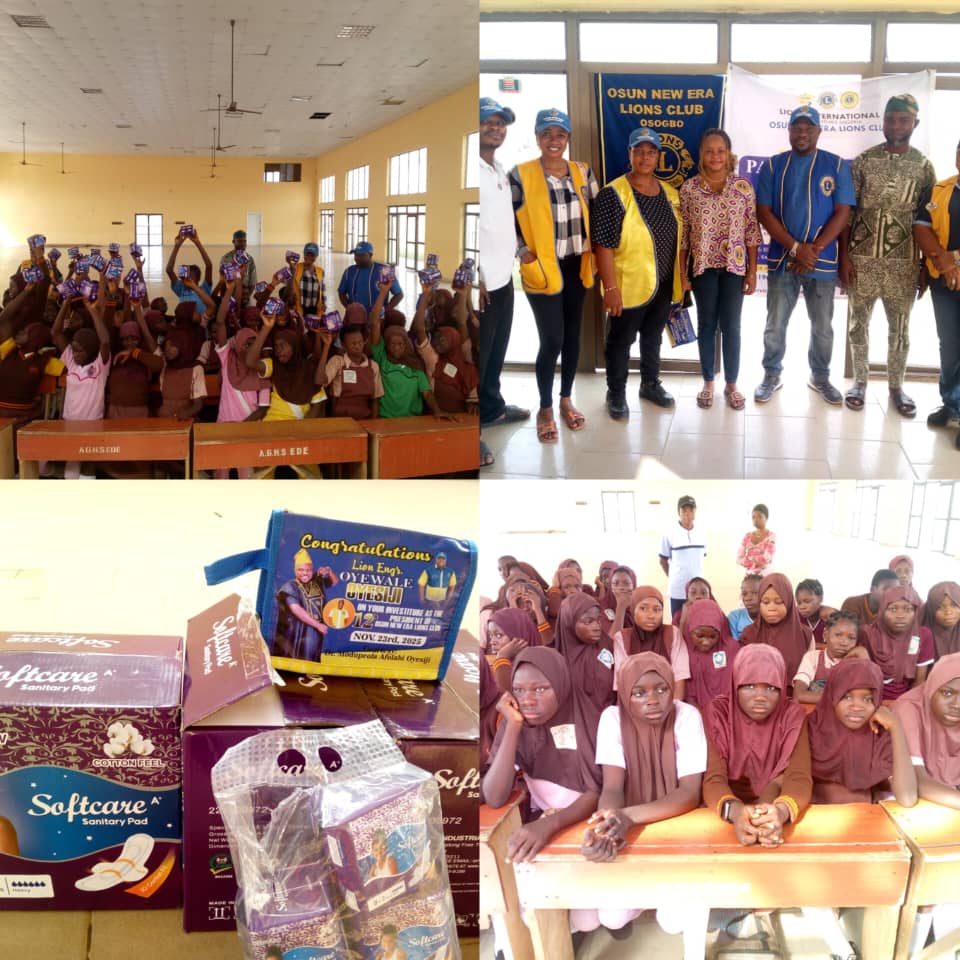
The President of the Osun New Era Lions Club, Lion Engineer Wale Oyesiji, has called on parents, schools, and governments at all levels to prioritise investment in the girl child, particularly through menstrual hygiene education and improved access to sanitary pads.
Oyesiji made the call on Thursday during a menstrual hygiene sensitisation programme organised by the club at Ede High School, Ede, Osun State, where 72 schoolgirls received free sanitary pads and were educated on personal hygiene and menstrual health.
He said inadequate knowledge of menstrual hygiene continues to expose many young girls across the country to health risks, emotional distress, and low self-esteem, with long-term implications for their education and future.
“Some girls do not even know how to approach their parents for sanitary pads. That confidence must be built from the home. When the foundation is right, the child will relate better in society,” Oyesiji said.
He explained that the initiative was designed to educate girls on the proper management of menstruation, discourage the use of unsafe alternatives such as rags, and guide them away from behaviours that could compromise their health and future.
“Proper hygiene helps them stay clean, prevents infection, and prepares them for the responsibilities ahead as ladies and women,” he added.
Oyesiji also urged government authorities to mainstream menstrual health support into public policy, stressing the need for subsidised and free sanitary pads, especially for families who cannot afford them.
According to him, access to menstrual hygiene products should be treated as a public health and education issue, rather than a private burden borne by families alone.
Speaking at the event, the First Vice President of the club, Lion Ikeoluwa Aina, said early education on menstrual hygiene remains one of the most effective ways to protect the health, dignity, and academic progress of the girl child.
“Infections arising from poor menstrual hygiene can be very dangerous and may affect reproductive health in the future. Educating the girl child early is a major step toward preventing such risks,” Aina said.
She noted that lack of access to sanitary pads often leads to absenteeism among schoolgirls.
“A girl without pads may miss up to one week of school every month. Providing sanitary pads helps girls stay in class, build confidence, and participate fully in their education,” she added.
Also speaking, a member of the club, Lion Fumilayo Akinnusi, said the sensitisation programme also targeted girls who are yet to begin menstruation, helping them understand what to expect and preparing them mentally for the experience.
“Menstruation should not be a source of shame. With proper hygiene and awareness, girls can manage it confidently and safely,” Akinnusi said.