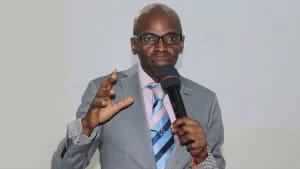



The Director-General of the Oyo State Agribusiness Development Agency, Debo Akande, has urged Nigerian youths to prioritise building practical skills and integrity over relying solely on academic qualifications if they hope to lead effectively in the future.
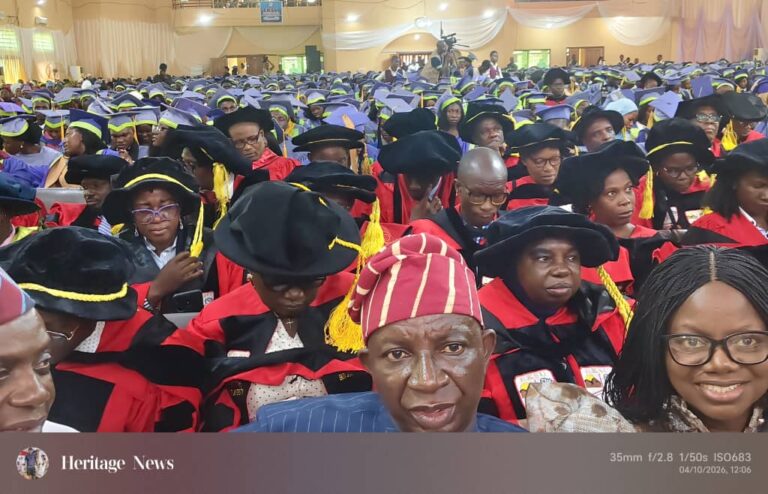
Akande, who is also Executive Adviser to Governor Seyi Makinde on Agribusiness and International Development, gave this advice while speaking at the Leadership Redefined Conference, organised by the Leadership Role Models Association, held at the International Conference Centre, University of Ibadan, on Monday.
He said, “The biggest limitation facing young Nigerians is not a lack of intelligence but a lack of essential soft skills needed to thrive in modern leadership environments. Many young people are brilliant, but brilliance without a skill set is not enough.
“Leadership today requires time management, teamwork, flexibility, customer service, and the discipline to deliver results. These skills will shape your future far more than your degrees.”
He warned youths against defining themselves solely by their university experiences or dwelling in cycles of criticism without taking responsibility. “Criticism is not leadership. Young people must move beyond pointing fingers to providing solutions. You cannot leave school and still hold on to who you used to be. Every young person must see themselves as a leader.”
Akande stressed that leadership began with personal integrity, insisting that one’s behaviour and values speak louder than certificates.
“People are watching you. Leadership is not a title; it is influence. Your integrity will speak for you long before your resume is read. Dress the way you want to be addressed. Leadership doesn’t demand being expensive, but being responsible. Knowledge, curiosity, and innovative thinking matter more than the number of certificates you carry,” he stated.
The agribusiness expert cautioned young people to avoid being deceived by divisive issues of religion and ethnicity, urging them instead to use their “domain of influence” responsibly.
He stressed that innovation, not technology alone, will redefine Nigeria’s development future. “We cannot solve our problems with the same thinking that created them. Curiosity is the catalyst of progress.”
Earlier, convener of the conference, Wole Oladokun, said the goal of LRC 1.0 was to raise ethically grounded African professionals and bridge leadership deficiencies across sectors.
He described leadership as a responsibility, not an entitlement, saying Nigeria’s development requires leaders who are competent, visionary, and institution-focused. “We have seen elders fail and young people excel. What we need are leaders who carry the right content and character.”
Former Deputy Speaker of the Ogun State House of Assembly, Remmy Hazzan, who spoke on Transformative Governance, lamented the decay in Nigeria’s institutional systems.
“Ethical leadership is the moral backbone of effective governance, but it is lacking in our system. Integrity, which should form the bedrock of leadership, is missing. Our institutions are weak because the people who come into them are pulled from weak value systems.”
He warned that the political ecosystem remains challenging for young people who wish to lead but have not built the necessary capacity. “Having a university degree is not enough. You must understand the political space and its realities,” he added.
Another speaker, Hannah Oyebanjo, speaking on Youth and Women in Leadership, urged them to take advantage of demographic opportunities.
“For Nigeria to change, young people must realise that background does not determine the future. Character is the pivot of growth. If you know nothing, you will offer nothing. Competence and the right mindset are critical.”