
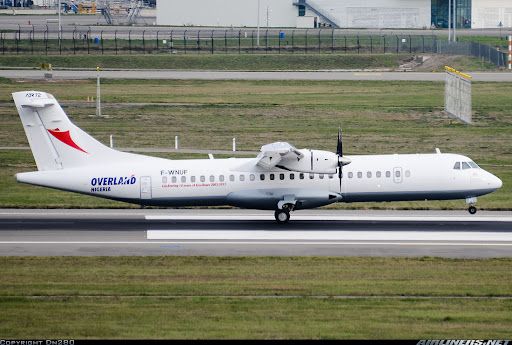
For years, the sleek, modern jets that crisscrossed the nation’s major cities were often just fleeting shadows, wearing the livery of a local carrier but flown, maintained, and insured by a foreign lessor. This expensive arrangement, known as a wet lease (Aircraft, Crew, Maintenance, and Insurance – ACMI), became the default, not by choice, but by necessity.
More than 70 per cent of all aircraft operating in the country are under wetlease arrangements, a costly mode of aircraft financing that has seriously affected the sustainability of the airline business, despite the domestication of the Cape Town Convention (CTC) that the Nigerian government signed last year.
The CTC means a country officially adopts its rules into its national laws, making international aviation finance easier by creating uniform, enforceable rights over high-value aircraft, engines, and helicopters, thereby reducing risk for lenders, lowering borrowing costs, and streamlining asset recovery, as seen in Nigeria’s recent court practice directions.
It’s about transforming the treaty’s principles into local legal force. A dry-lease, on the other hand, is an aircraft leasing agreement where the lessor provides only the aircraft, and the lessee is responsible for all other aspects, including crew, maintenance, and insurance.
This contrasts with a wet lease, which includes crew and other support services. Dry leases are typically longerterm, placing the operational control and all costs on the lessee. The mandatory reliance on wet-lease arrangements for Nigerian airline operators, driven by historical non-compliance issues that led to a global dry-lease blacklist, has significant and largely negative implications for their financial viability, operational independence, and long-term sector growth.
All payments for wet leases are denominated in US Dollars. Since the Nigerian Naira has undergone significant devaluation, airlines are exposed to substantial financial risk. They earn revenue in Naira but pay operational costs in US dollars, leading to a constant drain on the nation’s foreign exchange reserves and making long-term financial planning nearly impossible.
The exceptionally high operating costs severely restrict profit margins. To cover expenses, Nigerian airlines are forced to charge higher airfares,which limits the growth of the domestic air travel market and makes them uncompetitive with foreign carriers.
The use of the lessor’s foreign crew and maintenance staff hamper the development of local capacity. Nigerian airlines cannot build up a sufficient pool of their own experienced pilots, engineers, and maintenance technicians, forcing a perpetual reliance on foreign expertise.
Stakeholders have heaped praise on the Minister of Aviation and Aerospace Development, Festus Keyamo, for the doggedness with which he ensured that the country was removed from the Black List of lessors, with legal backing that prevents lessors from retrieving their aeroplanes in the event of default by Nigerian operators.
By his actions, Nigeria softened the hearts of the lessors, who are now open to wet-leased agreements with the country’s airline operator, a far cheaper option than acquiring aircraft. Before now, this fear was based on reality. Several instances of Nigerian airlines reneging on dry-lease terms, running to local courts for injunctions, and frustrating the legitimate repossession efforts of international lessors had left a massive negative imprint.
The legal and regulatory environment was not seen as reliable for asset recovery. Nigeria was categorised as a high-risk jurisdiction. The Managing Director of Aero Contractors, Capt Ado Sanusi, who spoke to Sunday Telegraph, lamented that the majority of leases in Nigeria are now wet leased, maintaining that the aircraft flying in the country are mostly wet leased.
He stated that the celebration of the Cape Town Convention does not mean a flip of a switch that will bring the aircraft into Nigeria, stressing that it requires lessors to build confidence with operators, which will probably take 3 to 5 years or even longer.
His words: “This Cape Town Convention, as you know, came a long time during the former DirectorGeneral of Nigeria Civil Aviation Authority (NCAA), Dr. Harold Demuren’s time and over a period of time, because of the lack of domestication of the convention actually made Nigeria to be subtly blacklisted as a lot of companies could not access dry-lease aircraft.”
“The coming of the current minister, the Aviation Working Group, Boeing and all other stakeholders, with the leadership of the minister, met on the Cape Town Convention domestication in Nigeria, which was a success, and we were scored highly.
That does not translate into bringing aircraft and giving it to the operators. No. That means that one door has been opened for the lessors and the airlines to come together to build trust and for the lessors to start giving their aircraft to the Nigerian airlines on dry-lease.”
“As we speak, the majority of the aeroplanes flying in the country are wet leased. I might even argue that there are more wet-leased aeroplanes flying than there are dry-leased aircraft, or even all the aircraft in Nigeria. So, if you take 100 per cent of all aircraft flying in Nigeria, probably 60-70 per cent of them are wet-leased.
That is bad because that means 60- 79 per cent are foreign crew; they are not Nigerians. That is capital flight, including engineering; everything is leaving the country. It is not good for the economy”, he added.
The Managing Director of Belujane Konsult and a former General Manager, Public Affairs of defunct Nigeria Airways, Mr Chris Azu Aligbe, said the recently signed Irrevocable De-Registration and Export Request Authorisation (IDERA) in October 2024, through Keyamo and the Director-General of NCAA, Capt Chris Najomo, to align with the Cape Town Convention, enabling airlines easier access to dry lease aircraft, boosting industry confidence, reducing lessor risks, and improving global aviation standing for easier aircraft acquisition and operations, cannot be retroactive.
He said: “The agreement has been reached before the IDERA. This is the second time IDERA has been signed. It was signed under Demuren but because of violations, this agreement was signed. It is not retroactive. It is the new one that should come under that.”