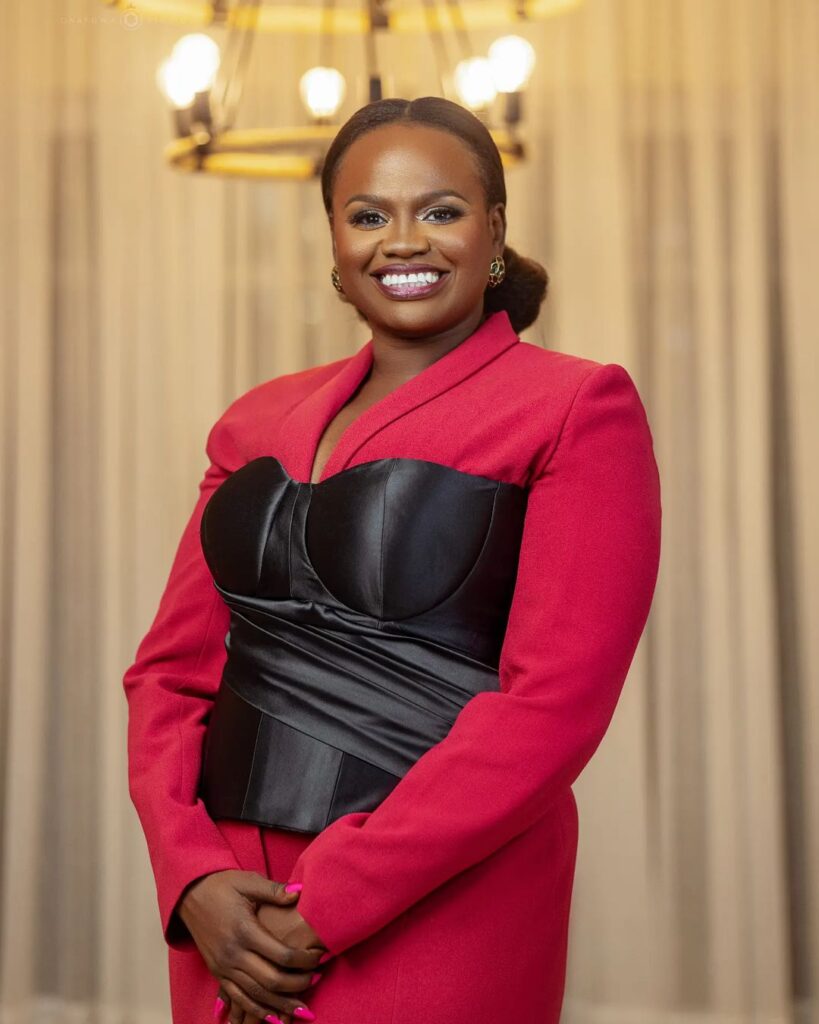
In response to the mounting calls for lifetime royalties for actresses, Jade Osiberu has cynically stated that she supports the idea while promoting a common financial plan for the entire profession.
According to Osiberu, actors and crew members ought to share some of the financial risks involved in making a movie, especially if there are losses.
She emphasized the capital-intensive nature of filmmaking and urged stakeholders to take the whole value chain into account while advocating for improvements in a statement shared on X.
READ ALSO:
According to her, the industry’s viability depends on a balanced strategy that takes into consideration both prospective losses and earnings.
She wrote on X, “I agree, Jare. I think the association should also implement a law that when a producer makes a loss on a project, all the actors and crew come together to contribute to cover the losses incurred.
Maybe for actors, you can contribute by how many scenes you featured in, so the leads pay the most, and then day players and extras pay the least. For the crew, it can be by seniority. By the way, I’ve put it here sarcastically cos I thought we were all joking.
“The conversation has some nuance. I was one of the first producers to offer actors in my films backend deals and even ask them to invest so we can build together. I think these conversations should consider all stakeholders’ POVs and industry realities.
“I get that everyone wants to look out for themselves, but filmmaking is one of the most capital-intensive art forms. In an industry like ours that is still figuring out and building infrastructure, it carries its own risk.
Any single player just looking to earn without thinking about the whole value chain and ecosystem needs to settle down and really learn about their industry.”
She cited examples of successful business models, including YouTube’s performance-based payment and Netflix’s upfront fees, highlighting the importance of shared risk and reward.
Osiberu added, “YouTube already has a model where it pays creators by performance. So if your film does well, you get paid more. If it doesn’t do well, you get paid less or nothing at all. YouTube carries no risk.
“Netflix, on the other hand, pays upfront fees and takes on a 100% of the risk of it doing well or not with their subscribers. If you want to have a performance-based conversation with any business, you have to also have some skin in the game”.
Osiberu urged industry players to prioritise mutual understanding and transparency, encouraging actors and producers to grasp the industry’s unit economics.
“Everyone needs to understand the other person’s role in the ecosystem and the co-dependencies. By the way, producers are also guilty, as we accuse and attack exhibitors, meanwhile, those ones are carrying overheads that don’t change if one person comes to see your film or the entire room is sold out.
All of us need to know a lot more about the unit economics of this industry and how that impacts our individual role & income prospects”, she added.
She noted that many actors have become producers themselves and understand the business, but emphasised that shared risk is essential for fair compensation.
“I’ve worked with actors who have, and the industry is changing. Many actors have themselves become producers and, as such, have a better understanding of the business. If they see opportunities for mutual value and there’s trust and transparency, many are open actually”, she wrote.
Osiberu added that music and film streaming operate differently, revealing that music platforms pay based on performance, whereas film streaming services usually involve upfront licensing payments.
“Music streaming and Film streaming are not the same. Music distribution platforms don’t pay upfront fees; they pay as per performance. Film streaming companies often pay/commit to upfront licensing costs”, she concluded.