
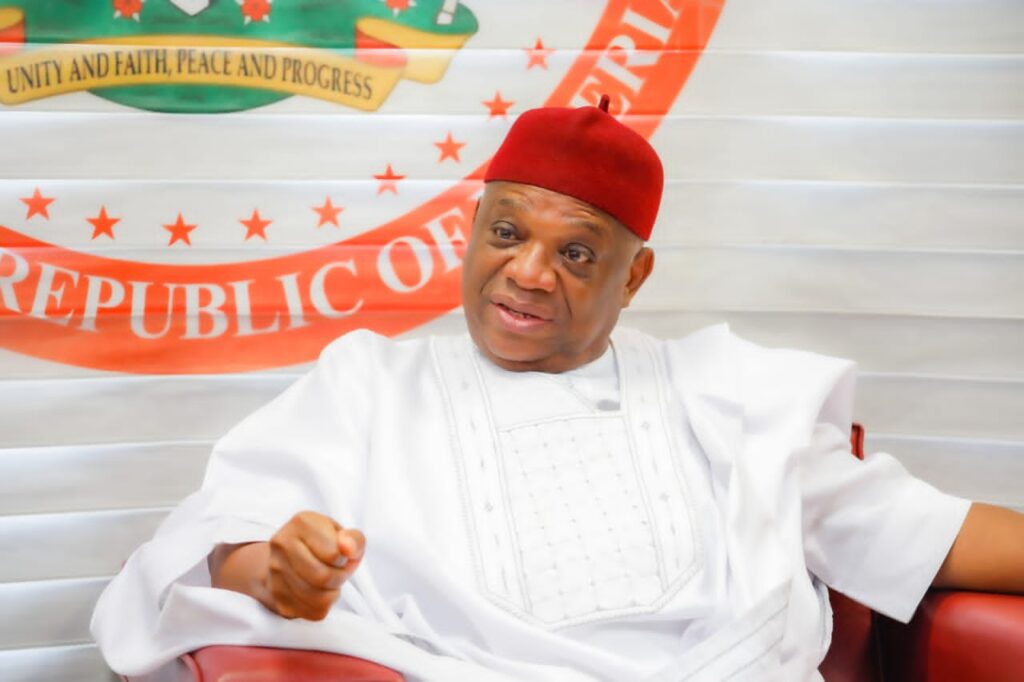
In a landmark moment during an emergency plenary session, Senator Orji Uzor Kalu stood resolute, advocating for a transformative shift in Nigeria’s electoral process.
The atmosphere in the Senate chamber was charged with anticipation as he passionately articulated his support for the electronic transmission of election results, a measure many believed was long overdue.
“For too long, our electoral process has been marred by allegations of fraud, manipulation, and lack of transparency,” Kalu proclaimed, his voice echoing through the hallowed halls of power.
“Today, we have the opportunity to usher in a new era for our democracy, one that empowers the people and restores their faith in the electoral system.”
The Senator‘s endorsement came with the recent adoption of the amended Clause 60(3) of the Electoral Act, a significant milestone that allows presiding officers to transmit results electronically from polling units across Nigeria.
“This is not just a technical upgrade; it is a deep commitment to ensuring that every vote counts, that every Nigerian’s voice is heard, and that our elections reflect the true will of the people,” he continued.
As he explained, the new clause stipulates that electronic transmission would serve as the primary method of results transmission where technology is available and functional.
However, he was quick to add a crucial caveat: in instances where electronic systems fail or are deemed impossible to use, the traditional method of using the duly signed Form EC8A would still remain valid.
This dual approach reflects a nuanced understanding of Nigeria’s diverse landscape, where some regions struggle with inadequate telecommunications infrastructure.
Kalu’s stance was not merely a political manoeuvre; it resonated with the sentiments of many Nigerians, particularly those in rural areas, who have often felt marginalised in the electoral process.
“We must ensure that voters in network-challenged communities are not disenfranchised,” he stated. “Our democracy must work for every Nigerian, everywhere.”
The Senator’s remarks were met with a mixture of applause and skepticism from his colleagues. While many supported the move towards greater transparency, others raised concerns about the potential for technological failures and the implications for electoral integrity. Yet, Kalu remained undeterred, emphasising that the adoption of technology was an essential step in modernising Nigeria’s electoral framework.
“This balanced approach strengthens transparency, fairness, and credibility in our electoral process,” he argued.
“We cannot allow fear of technology to impede progress. Instead, we must invest in robust systems and training for our electoral officials to ensure a seamless implementation.”
As the session drew to a close, Kalu’s impassioned speech left an indelible mark on the proceedings. For many, it was a reminder that change is possible, even in the face of longstanding challenges.
The Senator’s advocacy for electronic transmission of results signalled a turning point in Nigeria’s electoral history—a commitment to a more inclusive, transparent, and accountable democracy.
In the days that followed, discussions around the amendment will continue to flourish across Nigeria, from bustling urban centres to remote villages. Citizens will begin to envision a future where their votes could be counted swiftly and accurately, a future where their voices could echo loudly through the halls of power.
Rubby Obinna
Feb. 10, 2026.