


- Or Shortcut For Ex-Combatants To Evade Justice –Ali
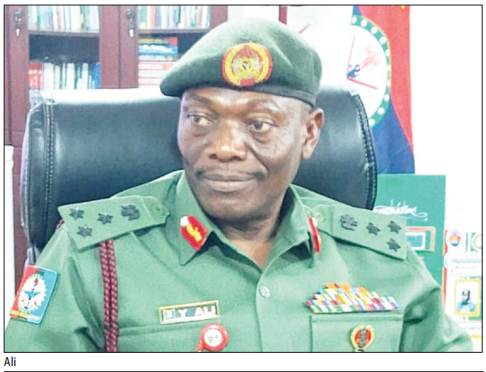
Brig. General Yusuf Ali is the National Coordinator of Operation Safe Corridor. In this interview, he speaks on the sensitivity of reintegrating excombatants into the society, Federal Government’s increased investments in community sensitization and efforts to make the deradicalisation programme more victimsensitive. EMMANUEL ONANI reports
What would be your assessment of Operation Safe Corridor in terms of countering violent extremism through non kinetic means, compared with other countries facing similar challenges?
I think the best way to assess the success of Operation Safe Corridor is to look beyond just the number of individuals that have passed through the programme and ask a more strategic question: Has this initiative helped to reduce violence, encourage disengagement, and weaken terrorist and bandit groups from within?
On that basis, I would say the programme has made significant progress. Globally, there is now a clear under- standing that military force alone cannot defeat violent extremism. Countries that have made meaningful gains combine kinetic operations with structured non kinetic approaches such as rehabilitation, reintegration and community stabilisation.
Operation Safe Corridor represents Nigeria’s contribution to that global ap- proach, and it serves as the operational arm of the non-kinetic component of our counterterrorism strategy. One of the key successes of the programme is that it has created a credible pathway for surrender and disengagement. Because that pathway exists and is trusted, we have seen increasing num- bers of individuals choosing to surren- der rather than continue fighting. So far, over 10,000 individuals have surrendered to Nigerian troops over time.
That is a major strategic gain because every sur- render reduces the manpower available to these groups and weakens their operational capability. In comparative terms, if you look at countries like Somalia, they have also implemented disengagement programmes for groups like Al Shabaab, focusing on low risk defectors. The lesson from those experiences is that where screening is weak, programmes can face setbacks.
In our case, we have strengthened a multiagency screening and legal process to ensure that only eligible individuals are admitted, which reinforces the credibil- ity of the programme. If you look at a different context like Colombia, particularly, after the Revolutionary Armed Forces of Colombia (FARC) peace process, their reintegration model placed strong emphasis on community based reintegration and long term livelihood support.
That is an area we are also strengthening, especially under the leadership of the Chief of Defence Staff, by expanding the economic livelihood component to ensure reintegrated clients are productive and do not relapse. Another important indicator of success is institutional recognition and replication. Operation Safe Corridor has attracted international attention, with several countries and organisations visiting Nigeria to study the model.
It has also influenced state level initiatives such as the Borno Model, which shows that the concept is adaptable and scalable within our national context. At the same time, we are not saying the programme is perfect. Like similar initiatives globally, especially in active conflict environments, there are challenges, particularly around community acceptance and balancing victim support with reintegration. That is why we are evolving the programme to include stronger community engagement and victim centred interventions.
So, in summary, compared to other countries, Operation Safe Corridor stands as a structured, institutionalised, and strategically relevant non kinetic tool. It is helping to reduce the cycle of violence by encourag- ing surrender, supporting disen- gagement, and complementing military operations. Going forward, our focus is to deepen its impact through stronger livelihoods support, enhanced community ownership, and sustained monitoring to ensure long term stability.
Against the backdrop of evolving security threats occasioned by terrorism, kidnapping and other acts of violent extremism, what measures are being initiated to strengthen the integrity of the programme?
Let me start by saying that Operation Safe Corridor is not static; it is continuously evolving in response to the changing security environment and the realities we are seeing across different theatres of operation in Nigeria.
What we are doing now is strengthening the programme along several critical lines. First is our screening and classification process. We are deepening interagency collaboration to ensure that only properly assessed, low risk individuals are admitted into the programme. This involves close coordination with security agencies, intelligence services, and the Ministry of Justice to ensure that due process is followed and that individuals who should face prosecution are clearly separated from those eligible for rehabilitation.
We are also working with partners like the International Committee of the Red Cross to strengthen humanitarian standards, documentation processes, and compliance with international best practices in handling individuals associated with armed groups. Second is transparency and strategic communication. We recognise that a lot of misconceptions exist around Operation Safe Corridor, and those misconceptions can undermine public trust.
Military force alone cannot defeat violent extremism. Countries that have made meaningful gains combine kinetic operations with structured non kinetic approaches
So, we are making deliberate efforts to clearly communicate what the programme is and what it is not. It is not amnesty, it is not a shortcut to evade justice, and it is certainly not a recruitment pathway into the Armed Forces. Through strengthened engagement with stakeholders, media platforms, and partners such as the Office of the Special Presidential Envoy on Reconstruction and Rehabilitation, we are ensuring that the public better understands the safeguards, structure, and objectives of the programme.
Third is the expansion and decentralisation of our Deradicalisation, Re- habilitation and Reintegration (DRR) infrastructure. We have moved beyond a single theatre approach. The establishment of the DRR camp in Tsafe Zamfara State is specifically designed to address the peculiar security dynamics of the North-West, while the planned facility in Benue is intended to cater to the North Central zone. Other zones are also in the pipeline as part of a broader national framework.
This expansion is informed by research conducted by our partners, which shows that over 60 per cent of foot soldiers within terrorist and bandit groups are not ideologically driven actors, but individuals who were coerced, abducted, or caught in the dynamics of conflict. That insight is critical because it means that a one size fits all approach is no longer sufficient and interventions must be tailored to regional realities. Closely linked to this is the strengthening of post reintegration monitoring and community engagement.
Reintegration is not a one off event; it is a process. We are working closely with state governments, community leaders, and local structures to ensure continuous follow up, support systems, and accountability mechanisms for those who have passed through the programme. Finally, and very important, the programme itself is evolving to become more victim sensitive.
We recognise that sustainable peace cannot be achieved if victims of conflict feel neglected. That is why we are now advancing the establishment of Victims Rehabilitation and Reintegration Camps, particularly in the North Central and North-West, where communities have experienced significant trauma, displacement, and loss. Many victims are living with deep psychological scars, and addressing that trauma is just as im- portant as rehabilitating ex-combatants.
So, in summary, the evolution of Operation Safe Corridor is moving in three key directions: Stronger screening and accountability, expanded and region spe- cific infrastructure, and a more balanced approach that addresses both disengagement from violence and healing for af- fected communities.
What is your response to views in some quarters that Operation Safe Corridor is a soft landing platform for surrendered terrorists?
I understand those concerns, especially from communities that have suffered deeply, and those concerns are valid and must be acknowledged with empathy and responsibility. But let me be very clear; Operation Safe Corridor is not about leniency, it is about national security strategy, and more importantly, it is part of a broader structured response to counterterrorism in Nigeria. Operation Safe Corridor serves as the operational arm of Nigeria’s non kinetic counterterrorism strategy.
While the military continues to apply necessary kinetic pressure on terrorist and bandit groups, this programme provides a controlled and structured pathway to disengage individuals from violence, reduce the fighting force of these groups, and ultimately weaken their operational capacity from within. In every conflict, there are different categories of individuals. Not everyone you find within these groups is a hardened or ideologically committed combatant.
A significant number, based on research and field experience, were coerced, abducted, manipulated, or forced into participation. Some were children at the time of recruitment; others were caught in between conflict dynamics with very limited choices. For such individuals, deradicalisation, rehabilitation and reintegration is not just a security measure, it is also a form of restorative justice.
For many of them, the programme represents an opportunity to transition from a cycle of violence into lawful existence, while still going through a structured process that includes screening, accountability, behavioural assessment, and rehabilita- tion. It is important to emphasise that this is not a blanket approach.
Those who are assessed as high risk or who have committed prosecutable offences are not simply reintegrated. There is a clear distinction between those who must face the justice system and those who qualify for rehabilitation based on established criteria. Now, if you remove this pathway en- tirely, what happens is that you trap a large number of individuals within vio- lent systems with no incentive to surren- der. That prolongs the conflict, sustains recruitment pipelines, and increases the burden on kinetic operations.
By providing a controlled exit, you are effectively reducing the manpower available to these groups and encouraging further defections. So, this programme is not about rewarding wrongdoing. It is about reduc- ing violence, disrupting recruitment, encouraging surrender, and supporting long term stability. It is also about recognising that in modern counterinsurgency and counterterrorism, you cannot rely on force alone. You must combine security operations with rehabilitation, reintegration, and community based recovery.
At the same time, we are conscious of the need to maintain public trust. That is why we continue to strengthen our screening processes, improve transparency, and expand our engagement with communities and victims because ultimately, the success of Operation Safe Corridor is not just measured by how many people pass through the programme, but by how much safer our communities become and how effectively we break the cycle of violence.
What are considerations in determining repentant fighters, who are qualified for the DRR programme?
Let me first clarify this very important point because there is often a misunderstanding around it. Only individuals who voluntarily surrender are considered within the framework that may lead to the deradicalisation, rehabilitation and reintegration process.
Those who are captured do not automatically go through this pathway. Surrender is a critical starting point because it reflects a willingness to disengage from violence. It is also important to situate this within the framework of International Humanitarian Law (IHL). Under IHL, once an individual expresses an intention to surrender or is no longer taking part in hostilities, they are entitled to humane treatment and protection.
Nigeria, as a signatory to key international humanitarian instruments such as the Geneva Conventions, has an obligation to uphold these standards. So, recognising and properly processing surrendering individuals is not just a policy choice, it is also a legal and moral obligation within the conduct of armed conflict. Once individuals surrender, they undergo a comprehensive profiling process conducted by intelligence agencies, both military and civilian.
This stage is thorough and structured, and it is designed to establish who the individuals are, their level of involvement, their background, and any potential security concerns. Following that, the process moves into what we can describe as a transitional and criminal justice phase, and this is where the Federal Ministry of Justice plays a central role. It is im- portant to state clearly that Operation Safe Corridor does not select or admit participants into the programme. Eli- gibility is strictly determined by the Federal Ministry of Justice after due legal and administrative review.
All individuals who eventually pass through Operation Safe Corri- dor are those who have been recommended by the Ministry of Justice as eligible for the Deradicalisation, Rehabilitation and Reintegration programme under existing legal frameworks. So, admission is not arbitrary, and it is not discretionary. The process itself is built on a rigorous multi agency system involving over 17 Ministries, Departments and Agencies (MDAs), ensuring that decisions are not taken in isolation.
Specifically, what are the key factors considered in determining eligibility?
First is the level of involvement, which helps to distinguish between core fighters, support elements and individuals who may have been associ- ated under duress or coercion. Second is the risk profile, where individuals are carefully categorised into low, me- dium, and high risk based on intelli- gence assessments and behavioural indicators.
Third is the legal status. The Ministry of Justice deter- mines whether an individual has prosecutable offences or should be processed through the rehabilitation pathway. Only those assessed as low risk and eligible under the law are admitted into Operation Safe Corridor. High risk individuals are not reintegrated through this process and are handled through appropriate legal and security channels.
So, what this shows clearly is that Operation Safe Corridor operates within a structured legal, security and institutional framework, and every individual who goes through the programme has passed through multiple layers of scrutiny, in line not only with national processes but also with Nigeria’s international obligations.
What are the safeguards emplaced in order to forestall possible relapse?
This is a very important question, and let me say upfront that no system anywhere in the world can guarantee zero risk. However, what we have done in Operation Safe Corridor is to build a multi layered safeguard system that significantly reduces the likelihood of relapse and strengthens long term stability. First, within the camp environment, participants undergo a structured and comprehensive rehabilitation process.
This includes religious reorientation to correct extremist narratives, psychosocial support to address trauma and behavioural conditioning, vocational and skills training to prepare them for economic independence, and continuous behavioural assessment to evaluate readiness for reintegration.
This phase is not rushed; it is deliberate and designed to ensure that individuals are not just processed, but truly disengaged from violent ideologies. Second, once they exit the camp, the process does not end there. Reintegration is carefully managed in collaboration with state governments, community leaders, traditional institutions and security structures.
Their biometric data is captured, and there are community based monitoring and support mechanisms in place. This ensures visibility, accountability, and early detection of any signs of disengagement failure. But beyond monitoring, which is important, the most critical factor is what we call sustainable reintegration. Experience has shown that relapse is rarely just a security issue; it is often driven by economic vulnerability, social rejection or unresolved trauma.
So, if a reintegrated client returns to a community where there is no acceptance, no livelihood, and no support system, the risk naturally increases. That is why we are now placing stronger emphasis on the economic livelihood component of the programme. Under the leadership of the Chief of Defence Staff, there is a deliberate effort to evolve and expand this aspect so that reintegrated clients are not left idle or economically stranded. The goal is to ensure that each individual leaves the programme with practical skills, livelihood opportunities, and in some cases starter support that enables them to become productive members of society.
When a person is economically empowered, socially accepted, and psychologically stable, the incentive to return to violence is greatly reduced. In simple terms, we are not just taking people out of conflict, we are giving them a viable alternative to conflict. So, going forward, the focus is on strengthening that full cycle, from rehabilitation, to structured reintegration, to sustained livelihood support and community acceptance. That is what ultimately ensures that those who pass through Operation Safe Corridor remain reintegrated and do not relaps.
How would you react to the argument that Operation Safe Corridor prioritises rehabilitation of ex-combatants’ over the welfare of victims of terrorist attacks?
This concern is valid, and we do not dismiss it. In fact, it is something we take very seriously and are actively addressing as part of the evolution of Operation Safe Corridor.
Let me be very clear, Operation Safe Corridor is not designed to prioritise ex fighters over victims. The ultimate objective is peace, stability, and healing for affected communities as a whole, both victims and returnees. You cannot build sustainable peace by focusing on one group while neglecting the other.
We recognise that many victims of conflict, particularly in the North-East, North-West and North Central, are living with deep trauma, displacement, loss of livelihoods, and in some cases long term psychological scars. If these realities are not addressed, it creates a sense of imbalance and can undermine trust in the entire process. That is why we are deliberately expanding our approach to include structured victim support systems.
Operation Safe Corridor is not about leniency, it is about national security strategy, and more importantly, it is part of a broader structured response to counterterrorism in Nigeria
This includes strengthening psychosocial care, improving access to livelihood opportunities, and supporting community based recovery programmes that benefit both victims and host communities. In addition, there are ongoing efforts to establish Victims Rehabilitation and Reintegration Camps, particularly in the North Central and North-West zones, to provide a more focused and institutional response to the needs of victims.
These centres are designed to address trauma, support recovery, and help victims rebuild their lives in a dignified and sustainable way. We are also working closely with partners, government institutions, and community structures to ensure that victim support is not treated as an afterthought, but as a core component of the broader peace-building framework.
If victims feel neglected, it creates resent- ment, weakens community acceptance of reintegrated individuals, and can potentially fuel new cycles of conflict. So, the approach going forward is very clear, reintegration of ex combatants and support for victims must go hand in hand, reinforcing each other as part of a balanced and sustainable pathway to peace.
In specific terms, what roles do communities play in the reintegration process, and how are their concerns and security fears being addressed?
Communities are absolutely central to this process. Reintegration does not happen in the camp, it happens in the community. It is important to clarify that Operation Safe Corridor does not directly carry out reintegration. What we do is create a controlled and enabling environment for deradicalisation, rehabilitation, and preparation for reintegration.
After this process, clients are formally handed over to state governments, who have the constitutional responsibility to receive, manage, and support their reintegration into society. However, the process does not end with that handover. There is a coordinated framework involving relevant MDAs and partners who continue to monitor, support and provide periodic feedback.
This includes agencies such as the Department of State Services (DSS), the Nigeria Police Force, Nigeria Security and Civil Defence Corps (NSCDC) and partners like the International Organisation for Migra- tion, all working within their respective mandates to ensure that reintegration is properly managed and that early warning signs, if any, are addressed. That is why, even before reintegration takes place, we invest heavily in community sensitisation and engagement.
We conduct town hall meetings and consultations with traditional rulers, religious lead- ers, and community stakeholders to prepare the ground. This helps communities understand who is returning, the processes they have gone through, and the safeguards that are in place. We also recognise that communi- ties have legitimate concerns and fears, especially in areas that have experienced significant trauma.
So, we do not dismiss those concerns. Instead, we address them directly by ensuring transparency around screening, ex- plaining the monitoring structures, and working with community leadership to build confidence. Going forward, we are deepening this approach by ensuring that communities are not just passive recipients of reintegration decisions, but active partners in the process because ultimately, successful reintegration depends on acceptance, support and shared responsibility at the community level.
What, in your estimation, are the indicators that point to the effectiveness of Operation Safe Corridor since its inception in 2016?
There are several ways to measure our progress, and it is important to look at this from both quantitative and strategic perspectives. First is the number of individuals, who have been successfully processed, rehabilitated, and reintegrated over the years, which runs into thousands. That reflects not just capacity, but consistency and operational sustainability over time.
It shows that the programme is not theoretical, it is delivering real outcomes. Second is institutional strengthening. Over the years, we have significantly improved our screening processes, refined our rehabilitation modules, and enhanced coordination across more than 17 MDAs. We have also aligned our processes with in- ternational best practices, which has earned us recognition from global partners.
For instance, the International Committee of the Red Cross has issued a letter acknowledging Operation Safe Corridor’s compliance with humanitarian standards, which speaks to the integrity of the process.
Beyond that, Operation Safe Corridor has attracted international attention and recognition. We have received delegations from other countries and international organisations who come to study the model, understand how it works, and explore how similar approaches can be adapted in their own contexts. This positions Nigeria not just as a participant in global counterterrorism efforts, but as a contributor of practical solutions.
Third, and very importantly, is strategic impact. One of the clearest indicators of success is the increasing number of surrenders. The existence and credibility of the DRR programme has created a pathway for disengagement, and as a result, over 10,000 indi- viduals have surrendered to Nigerian troops over time.
That is a major shift, because it directly reduces the fighting strength of these groups and weakens their operational capacity. We have also seen replication of the model at sub national levels, such as the Borno State led reintegration approach com- monly referred to as the Borno Model. The emergence of these state driven initiatives is largely influenced by the success and lessons of Operation Safe Corridor, showing that the concept is scalable and adaptable.
But beyond all these, the most important measure remains the long term effect. So for us, success is not just about numbers. It is about reducing recruitment into violent groups, encouraging disengagement, strengthening community stability, and contributing to sustainable peace across affected regions.








