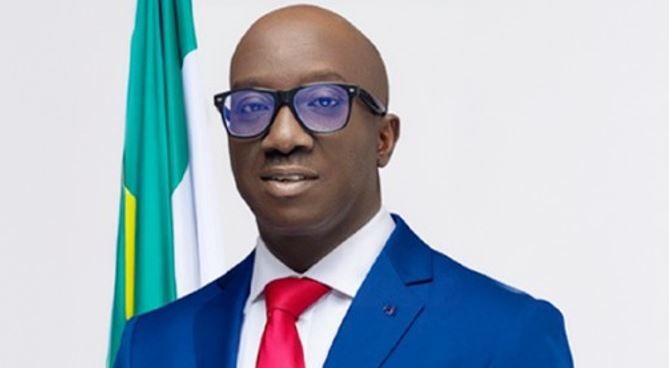

The Executive Secretary of the Nigerian Content Development and Monitoring Board, Engineer Felix Ogbe, has announced that the board has expanded its intervention fund for women in the oil and gas sector to deepen inclusion and bridge the gender financing gap in the industry.
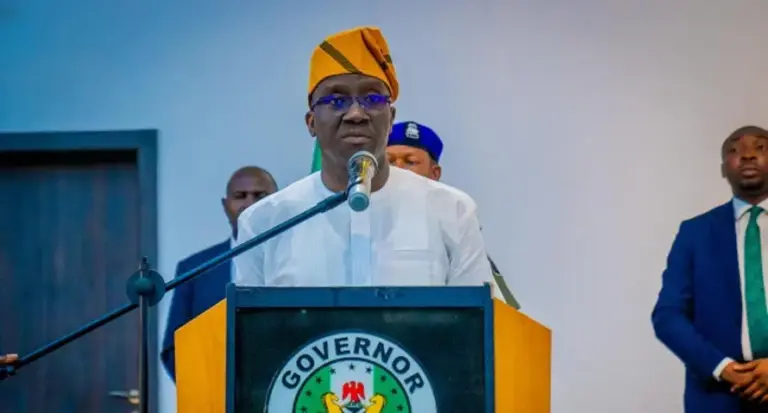
Engineer Ogbe made this disclosure on Tuesday in his goodwill address at the third edition of the Diversity Sectorial Working Group Annual Women in Oil and Gas Conference, where he reiterated that women’s empowerment remains central to the board’s capacity development mandate.
According to him, having recognised that skills alone are insufficient without access to capital, the NCDMB established the Women in Oil and Gas Intervention Fund in partnership with the Bank of Industry.
Describing the initiative as a landmark intervention, Mr Ogbe explained that it was designed specifically to support female entrepreneurs operating within the oil and gas value chain.
“Recognising that skills alone are not enough without access to capital, NCDMB established the Women in Oil and Gas Intervention Fund, in partnership with the Bank of Industry.
This landmark initiative was designed specifically to support female entrepreneurs in the oil and gas sector by providing access to affordable financing and business expansion support,” he stated.
According to him, through this intervention, women-owned businesses have been able to procure equipment, expand their operations, and participate more actively in the oil and gas value chain. He noted that beneficiaries include women operating in logistics and marine services, safety equipment supply, and environmental management services.
“This fund is helping to close the gender financing gap and enabling women to transition from participants to owners and leaders within the industry,” Mr Ogbe remarked.
The NCDMB chief stressed that women’s empowerment is a core pillar of the board’s capacity development strategy under the Nigerian Oil and Gas Industry Content Development Act. He added that beyond financing, the board has implemented targeted programmes to support women entrepreneurs through vendor development and business capacity strengthening.
“Through our collaboration with the Nigerian Content Intervention Fund and financial institutions, women-owned companies have received business training and access to financing,” he said.
Mr Ogbe stated that the board had also prioritised technical capacity building for women through partnerships with training institutions such as the Petroleum Training Institute and other accredited centres. He cited the training of women in welding and fabrication under NCDMB-sponsored programmes, in partnership with industrial training centres in Rivers and Bayelsa states, as a notable example.
“One inspiring example is the training of women in welding and fabrication under NCDMB-sponsored programmes in partnership with industrial training centres in Rivers and Bayelsa states. Several female graduates of these programmes are today employed in fabrication yards, contributing directly to major oil and gas projects within Nigeria.
“These women are not only earning dignified livelihoods but are also breaking stereotypes and inspiring a new generation,” he added.
Mr Ogbe maintained that empowering women was not merely a moral obligation but an economic imperative for the sustainability of the energy sector.
At the conference, themed “Building Bridges, Empowering Women for a Sustainable Energy Future”, the Chairman of the Planning Committee, Michele Branco-Aiyegbusi, stated that the 2026 event was not only a gathering of professionals but also a deliberate statement that inclusion in the oil and gas sector must move from aspiration to action.
Ms Branco-Aiyegbusi stressed that the theme spoke to urgency and responsibility, asserting that the industry must address the structural and cultural gaps that shape who participates and who leads.
Speaking at the event, the Chairman of the NCCF Diversity Sectoral Working Group, Alero Onosode, testified to the significant rise of women into visible and influential leadership roles.
“Across Nigeria’s oil and gas landscape, we see renewed activity, reform, and growth. And alongside this momentum, we see something equally significant: the rise of women into visible, influential leadership roles.
“We celebrate the regulators, CEOs, directors, engineers, and policymakers who are shaping strategy and transforming rooms that were once dominated by a single voice. The landscape is changing, and that change has been driven by intentional effort,” Ms Onosode stated.
According to her, building bridges means bridging sectors, generations, and perspectives. It also means women and men working together, turning diversity into strength and collaboration into results.
During different panel sessions, stakeholders advocated for greater representation of women in the oil and gas sector. Significantly, the Director of the NNPC Academy, Mrs Folashade Adekeye, disclosed that the Nigerian National Petroleum Company Limited is scheduled to launch its women’s group on Monday.