




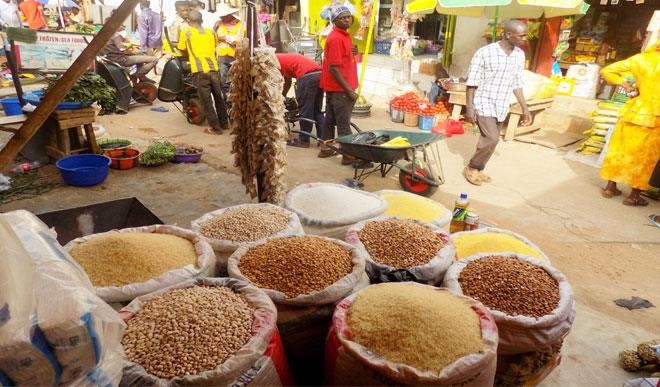
In Ekiti State the fasting period witnessed no significant change in the cost of food and transportation. A recent market survey revealed that a bag of foreign rice still remains N64,000, while local rice costs N62,000.
A measure of beans, which sold for N2,800 during Christmas period remains the same, while a measure of ‘garri,’ which sold for N350 still remains, and a bottle of palm oil still sells for N1500.
Transportation from Ado-Ekiti to Lagos is N10,200, while a trip to Ibadan costs N6,000 just like it was during Christmas period.
Also, a trip from Ado-Ekiti to Ekiti State University, EKSU still remains N500, while a trip to Ikere Ekiti is still N600, and Ado-Ekiti to Iyin Ekiti is N500 On the significance of the coincident of Ramadan and lent, some clerics, who spoke during interviews, described this as a divine symbol of spirituality in connecting with the Almighty God.
They also termed it as sanctity of religion and belief. An imam in Okeyinmi mosque, Ado-Ekiti, Alhaji Abdul Rahman Bello described it as an uncommon and special moment for interfaith spiritual reflection and unity.
“The coincidence is an indication that prayers, fasting and charity are crucial for human spiritual growth. It also showed that fasting is a moment of spiritual connection of human beings to the one and only creator,” he said.
In his response, Pastor James Akinlola of Christ Apostolic Church, Afao road, Ado-Ekiti described this as a divine and sacred sign.
“It’s a testament to the significance of shared and common love and a message to everyone on peaceful coexistence and mutual love for a global peace,” he said.








