




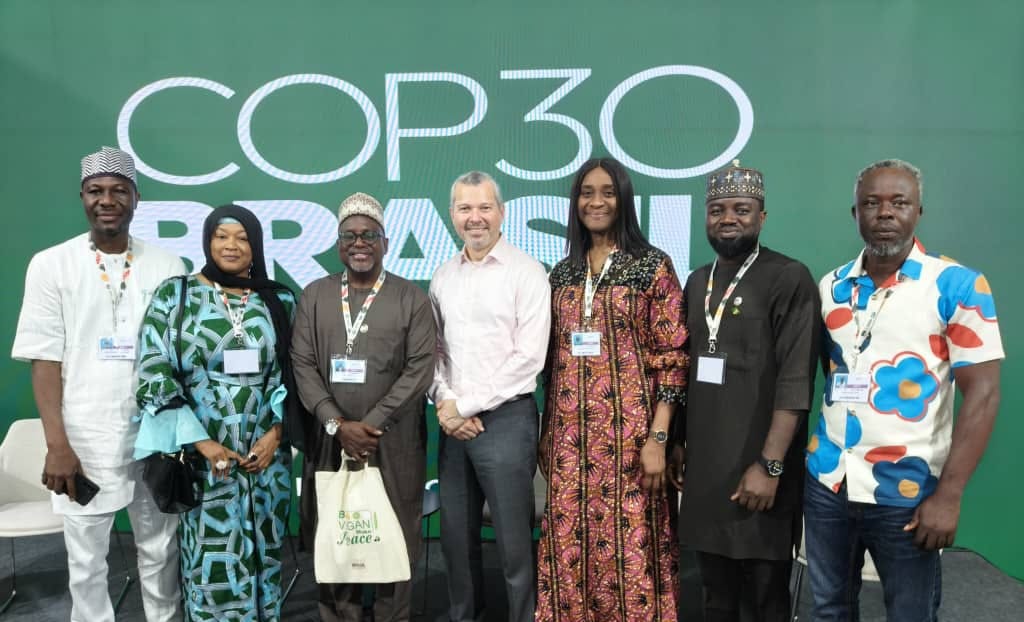
The Nigerian Maritime Administration and Safety Agency (NIMASA) has unveiled a pioneering Public-Private Partnership (PPP) model for African maritime decarbonisation with the launch of the Nigerian Maritime Continuous Emissions Monitoring System (NMCEMS) at the 2025 UN Framework Convention on Climate Change (UNFCCC COP 30) in Balem, Brazil.
The agency presented the initiative at a side event during the conference, highlighting Nigeria’s commitment to advancing the International Maritime Organization (IMO) energy transition strategies through digital innovation.
According to Osagie Edward, NIMASA’s Deputy Director of Public Relations, the presentation was made by Dr. Oma Ofodile, Director of the Environment Management Department, representing Director General Dr. Dayo Mobereola.
Mobereola emphasized that NIMASA has consistently led efforts to drive energy transition in Nigeria’s maritime sector, culminating in this groundbreaking initiative.
He explained that the agency’s digital innovations aim to translate ambition into measurable progress in line with IMO strategies.
“At COP 28, NIMASA launched the African Coalition for IMO GHG emissions reduction strategies. At COP 29, we convened expert panels and presented our work on a verifiable Nigerian maritime emissions inventory, developed in collaboration with University College London (UCL). This initiative demonstrates Nigeria’s readiness for a low-carbon shipping and maritime sector. At COP 30, we formally presented the Nigerian Maritime Continuous Emissions Monitoring System, developed with UCL researchers, and discussed tangible steps to advance IMO energy transition strategies,” Mobereola said.
Speaking at the event, Mr. Roel Hoeders, representative of the IMO Secretary-General, commended NIMASA for organizing the session, noting its role in deepening discussions and offering strategic insights into how Africa can tackle the challenges of shipping energy transition.









