
…says redeploying police for frontline security duties will have limited impact
…says growing awareness of negative impact, crucial for curbing insecurity in the North
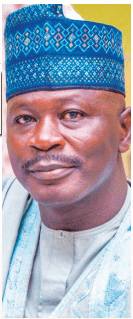
Colonel Ahmed Usman (rtd) is the Special Adviser to Sokoto State Governor on Security. In this interview with UMAR DANLADI ADO, he appraises the state of affairs with regards to worsening insecurity in the country just as he also appraises the efforts of the state government in securing lives and property of residents. Excerpts:
Do you believe the withdrawal of police aides from VIPs will have a meaningful impact on addressing insecurity across the country?
The directive may be well-intentioned, but its overall impact on national insecurity remains limited. While withdrawing police aides from VIPs could marginally increase the number of officers available for conventional policing, it does not automatically translate into improved security outcomes.
Nigeria’s security challenges are largely driven by insurgency, banditry and terrorism threats that are inherently combat-oriented. By constitutional design and professional training, the Nigeria Police Force is not structured as a combat force.
Under Section 214 of the 1999 Consti- tution and the Police Act, the police are primarily responsible for crime prevention through routine patrols, community policing, intelligence gathering, investigation and prosecution, and the maintenance of law and order. Without adequate equipment, modern technology and specialised training, redeploying police personnel from VIP protection to frontline security duties will have limited impact.
What Nigeria requires is a holistic security architecture anchored on intelligence-driven operations, strong inter-agency collaboration and a clear delinea- tion of roles. Counter-insurgency operations should be led by the Armed Forces, while the police focus on internal security, community engagement and crime prevention.
While the policy may promote equity and curb excessive VIP protection, it must be complemented by sustained recruitment, improved welfare, modern weaponry and technology-driven policing to meaningfully address insecurity nationwide.
Does the appointment of the immediate past Chief of Defence Staff, Gen Christopher Musa, as Minister of Defence give Nigerians confidence of better performance in the security sector?
Yes, without any doubt. The appointment of General Christopher Musa is a well-deserved national recognition of his distinguished service and unwavering commitment to Nigeria’s unity and stability.
It comes at a critical time when the nation requires tested, strategic and disciplined leadership to reposition the defence sector. Beyond his résumé, I speak from personal experience.
I worked closely with General Musa in Maiduguri during my active service and know him to be calm under pressure, decisive, professional and deeply mission-focused. He understands both the operational realities on the ground and the strategic demands of high-level leadership.
As a former Chief of Defence Staff, he understands the system thoroughly and knows where reforms are urgently required.
I expect tangible improve- ments in intelligence coordination, troop morale, operational efficiency and the accelerated adoption of modern defence technologies. Nigerians have high expectations, and based on his track record, I am confident he will deliver.
The Northern governors recently resolved that each state should contribute N1 billion as a regional security fund to tackle insecurity. As a Special Adviser on Security, how do you assess this decision?
The decision by the Northern Governors to establish a ₦1 billion per state regional security fund is both timely and commendable. It reflects a growing understanding that insecurity in the North is interconnected and requires collective responsibility rather than isolated state responses. From a strategic standpoint, the initiative has strong potential, but funding alone will not resolve insecurity.
The effectiveness of this intervention will depend on transparent management, strategic deployment and strong coordination. Priority must be given to intelligence gathering, surveillance technology, logistics, mobility, rapid response capabilities and operational support for security agencies. Equally important is regional coordination.
A shared security challenge requires shared intelligence, harmonised operations and collaboration with federal security agencies to avoid duplication and ensure efficiency.
Establishing a regional coordination and oversight mechanism will be crucial. Transparency and accountability are non-negotiable.
Clear utilisation guidelines, regular audits and measurable performance indicators will help build public trust. When combined with long-term efforts to address poverty, youth unemployment and social exclusion, this fund can become a powerful tool for restoring peace and stability across the North.
In view of the expanding security challenges in parts of Sokoto State, what concrete steps is the state government taking to ensure lasting peace?
The protection of lives and property remains the highest priority of His Excellency, Governor Ahmed Aliyu. While the security challenges—particularly banditry—are part of a broader North-West problem, the Sokoto State Government has adopted a proactive, coordinated and intelligence-driven response.
The government is working closely with federal security agencies, including the Nigerian Army, Police, Air Force, Civil Defence and intelligence services.
Joint operations have been intensified in vulnerable areas such as Isa, Sabon Birni, Tangaza, Gudu, Silame and parts of the western zone, including Yabo, Shagari, Kebbe, Dange Shuni and Tureta. A recent operation in Sabon Birni Local Government Area highlights the effectiveness of this collaboration.
Acting on timely intelligence, security forces successfully repelled an attempted attack on traders travelling to a weekly market, neutralising several attackers and preventing loss of innocent lives.
The government has also strengthened community-based intelligence through sustained engagement with traditional rulers, community leaders and vigilante groups.
In addition, it continues to provide logistics, mobility, communication equipment and welfare support to security personnel.
Beyond enforcement, the administration is addressing the root causes of insecurity through youth engagement, social interventions and economic empowerment, particularly in rural communities. Anyone found aiding or financing criminal networks will face the full weight of the law.
As the New Year approaches, what assurances can residents expect regarding security in 2026?
While no responsible government can claim insecurity will disappear overnight, residents of Sokoto State can expect measurable improvements in 2026.
Collaboration with federal agencies, traditional institutions and community leaders has been strengthened to enhance intelligence gathering and rapid response.
The governor has consistently prioritised logistics, welfare and operational support for security personnel, recognising that a motivated force is critical to effective security delivery.
The administration is also tackling the socio-economic drivers of insecurity through youth empowerment, job creation and social intervention programmes.
At the same time, coordination among vigilante groups, community guards and formal security agencies is being strengthened within the framework of the law.
With sustained citizen cooperation and unwavering government commitment, 2026 will be a year of improved security, stability and renewed confidence across Sokoto State.
Having served under General Musa during your time in the military, what strategic counsel would you offer him as he assumes office as Nigeria’s Minister of Defence?
General Musa brings to this office an exceptional depth of operational and strategic experience, having served with distinction as Chief of Defence Staff. My counsel, therefore, is not from a position of instruction but from shared service and a common commitment to Nigeria’s security.
At this stage, the priority should be strengthening collaboration across the entire security spectrum federal, state and community levels. Modern security threats are complex and asymmetric, and addressing them requires seamless coordination among the Armed Forces, intelligence agencies, the police and sub-national governments.
I would also emphasise the continued shift toward intelligence-led operations. Investment in modern surveillance systems, data fusion, cyber capabilities and real-time intelligence sharing will significantly enhance operational effectiveness and reduce reaction time.
Equally critical is the welfare, training and motivation of military personnel. A well-trained, well-equipped and properly motivated force remains the backbone of any successful defence strategy.
Professionalism, accountability and strict adherence to rules of engagement and human rights standards are essential to sustaining public trust and citizen cooperation. With his experience, discipline and calm leadership style, I am confident that General Musa will consolidate ongoing reforms, strengthen Nigeria’s defence architecture and provide the strategic direction required to achieve lasting peace and stability