



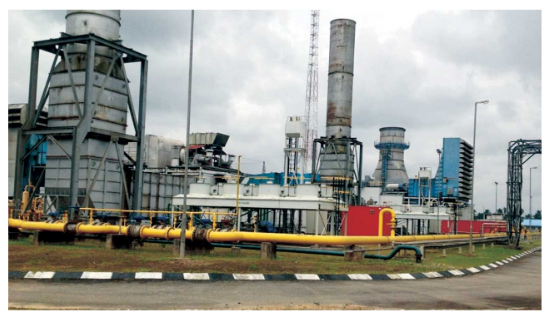
Nigeria’s power grid slipped further in November as new data from the Nigerian Electricity Regulatory Commission revealed a fresh decline in available generation capacity despite improved output from leading hydro and gas plants.
The November 2025 Operational Performance Factsheet, released on Thursday, showed that plant availability dropped to 41 per cent, down from 42 per cent recorded in October, leaving the country with 5,544 megawatts available for dispatch out of a total 13,625MW installed across 28 grid-connected plants.
Although availability weakened, generation strengthened. NERC reported a 10 per cent rise in average hourly generation, from 4,271MWh/h in October to 4,701MWh/h in November, following stronger performance by major hydro stations.
The factsheet also showed that the load factor rose to 85 per cent in November, seven percentage points higher than the 78 per cent recorded in October. This means the grid utilised more of the capacity made available by generation companies compared to the preceding month.
The contrasting trends, lower availability but higher utilisation, reflect the continued pressure on the grid, as operators are forced to stretch limited generation assets to maintain supply.
The report read, “The November 2025 Operational Performance Factsheet breaks down how Nigeria’s grid-connected power plants performed this month. Plant Availability Factor: 41 per cent, showing that an average of 5,544 MW was available for dispatch out of 13,625 MW installed capacity. Average Load Factor: 85 per cent, showing that 4,701 MWh/h of available capacity was utilised.”
Hydropower plants dominated the leaderboard of top contributors in November.
Zungeru operated at 100 per cent availability, generating 412MWh/h. Kainji posted 77 per cent availability and produced 565MWh/h, with a high 97 per cent utilisation.
Jebba maintained 93 per cent availability, generating 444MWh/h. The Ihovbor gas plant also featured prominently, achieving 99 per cent availability and generating 419MWh/h, a performance that improved on its October output.
“Top Energy Producers: Ihovbor, Kainji, Zungeru, and Jebba stood out with strong availability and high utilisation levels,” It added.
Meanwhile, Egbin, the country’s largest thermal plant, operated at 50 per cent availability, down from an estimated 53 per cent in October, but delivered higher output due to a stronger 94 per cent load factor.
Some plants continued to underperform, contributing to the drop in national availability. Olorunsogo II operated at 8 per cent availability, Afam II at 27 per cent, Sapele Steam I at 3 per cent, and Alaoji I recorded zero availability, the same pattern observed in October.
Although these assets maintained relatively high load factors, their low availability continues to depress the grid’s operational capacity. NERC flagged deteriorating grid stability, with voltage and frequency levels falling outside operational limits.
The monthly average lower voltage fell to 296.50kV, significantly below the approved lower limit of 313.50kV and weaker than the average 302kV recorded in October. The upper voltage stayed within approved boundaries at 345.67kV, marginally better than October.
Grid frequency also slipped further outside the permitted band of 49.75Hz – 50.25Hz, ranging between 49.53Hz and 50.62Hz in November, compared to 49.60Hz – 50.55Hz in October.
According to NERC, such deviations heighten the risk of grid disturbances, equipment trips, and partial collapses.
The report comes at a time when the Federal Government is pushing aggressive reforms to stabilise Nigeria’s electricity market under the amended Electricity Act, including decentralised state-led power markets and new liquidity measures for the national grid.
Despite these efforts, November’s fact sheet underscores Nigeria’s long-running dilemma that stronger generation from a handful of plants cannot compensate for deep structural inefficiencies, ageing assets, gas supply bottlenecks and inadequate transmission capacity.