
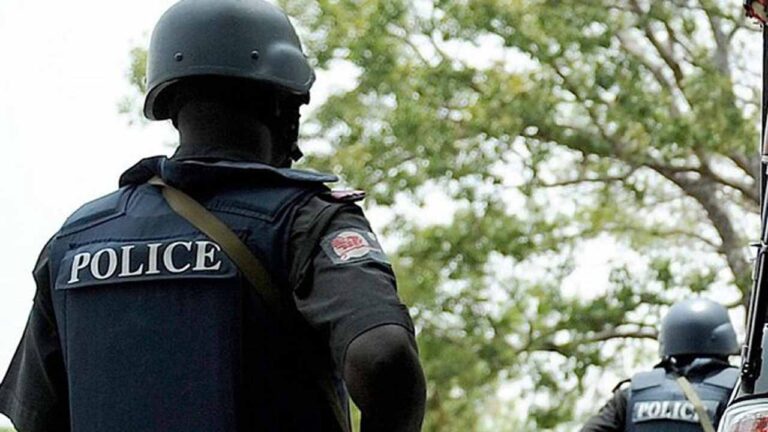
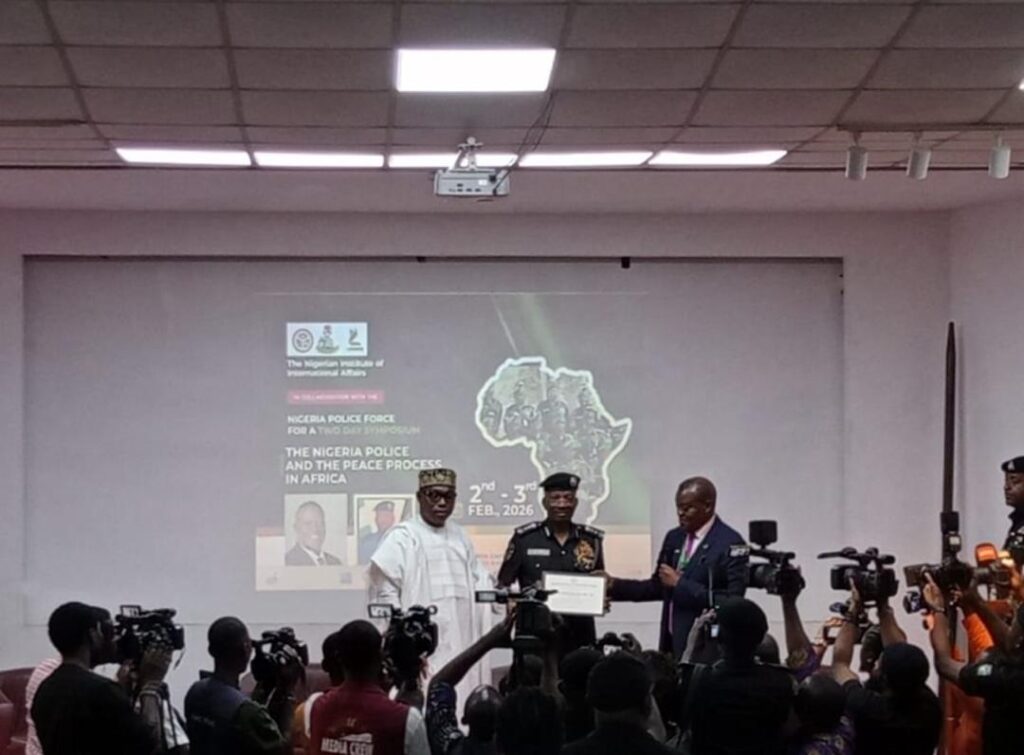
Prince Adewole Adebayo has declared that the Nigerian Police Force is a direct reflection of Nigeria’s development, history and future, urging the nation to invest boldly in policing if it truly desires peace at home and credibility abroad.
Adebayo made this remark in Lagos at a two-day symposium on “The Nigeria Police Force and the Peace Process in Africa,” organised in collaboration with the Nigerian Institute of International Affairs (NIIA).
The event brought together key security and policy leaders, including the Inspector General of Police, Kayode Egbetokun, and the Director-General of the NIIA, Professor Eghosa Emmanuel Osaghae.
“Nigerian police are like a shadow following Nigeria. If there is any aspect of policing you are not satisfied with, it is simply a reflection of our life at a particular time.
“To have a better police, we must have a better society, because the police is a reflection of what the society is.”
Tracing the roots of the force to Lagos in 1861, Adebayo, who was the former presidential candidate of the Social Democratic Party (SDP), noted that the Nigerian Police was international in outlook from inception, having been created to secure trade routes and protect global commercial interests along the coast.
According to him, decades of military rule and poor democratic prioritisation weakened investment in policing, even though the police remained the “guardian of democracy.”
He stressed that effective policing is impossible without peace, good laws, strong community relations and serious capacity building.
“Good policing costs money. You cannot praise the police in speeches and budget poorly for them. Forensics, helicopters, investigations — these things cost billions.
“If you want the police of your dreams, send your best and most courageous children to the force.”
Earlier, NIIA Director-General Professor Osagie delivered a sweeping historical account of Nigeria’s global peacekeeping footprint, describing the Nigerian Police Force as one of the most experienced peacekeeping institutions in the world.
From Congo in 1960 to Kosovo, East Timor, Somalia, Sudan, Haiti and beyond, Osagie said Nigerian police officers have played extraordinary roles in restoring peace, often rising to command positions within the United Nations, African Union and ECOWAS missions.
“The only police force that comes close to Nigeria in peacekeeping operations is India. It is not only when we sleep well in Nigeria that we remember the police, but when Liberia, Senegal or Kosovo sleep well too.”
Osagie praised Inspector General Egbetokun for expanding Nigeria’s international policing presence and announced plans for an International Centre for Peacekeeping in partnership with the Police Force.
He acknowledged existing domestic challenges but insisted that the police have undergone a remarkable transformation over the past two decades in skills, training and professionalism.
In his keynote address, IGP Kayode Egbetokun highlighted Nigeria’s enduring commitment to multilateral peacekeeping, noting that over 12,000 Nigerian police officers have served across multiple continents under the UN, AU and regional missions.
“The true impact of peacekeeping is not always captured in reports. It is seen when schools reopen, markets return, and public trust is restored.”
He outlined the evolving challenges facing modern peace operations, including terrorism, transnational crime, cyber threats and resource constraints, but described them as “imperatives for reform, innovation and partnership.”
According to the police chief, Nigeria’s future peacekeeping strategy will focus on specialised capabilities, institutional modernisation, regional integration, research collaboration with institutions like the NIIA, and sustained police reform at home.
“International credibility is inseparable from domestic professionalism, accountability and respect for human rights. Nigeria will not retreat from responsibility. We will stand, credibly and consistently, on the side of peace.”
The symposium ended with a call for deeper collaboration between policymakers, security agencies and civil society, as speakers agreed that Nigeria’s role in global peacekeeping remains both a national pride and a solemn obligation to future generations.








