


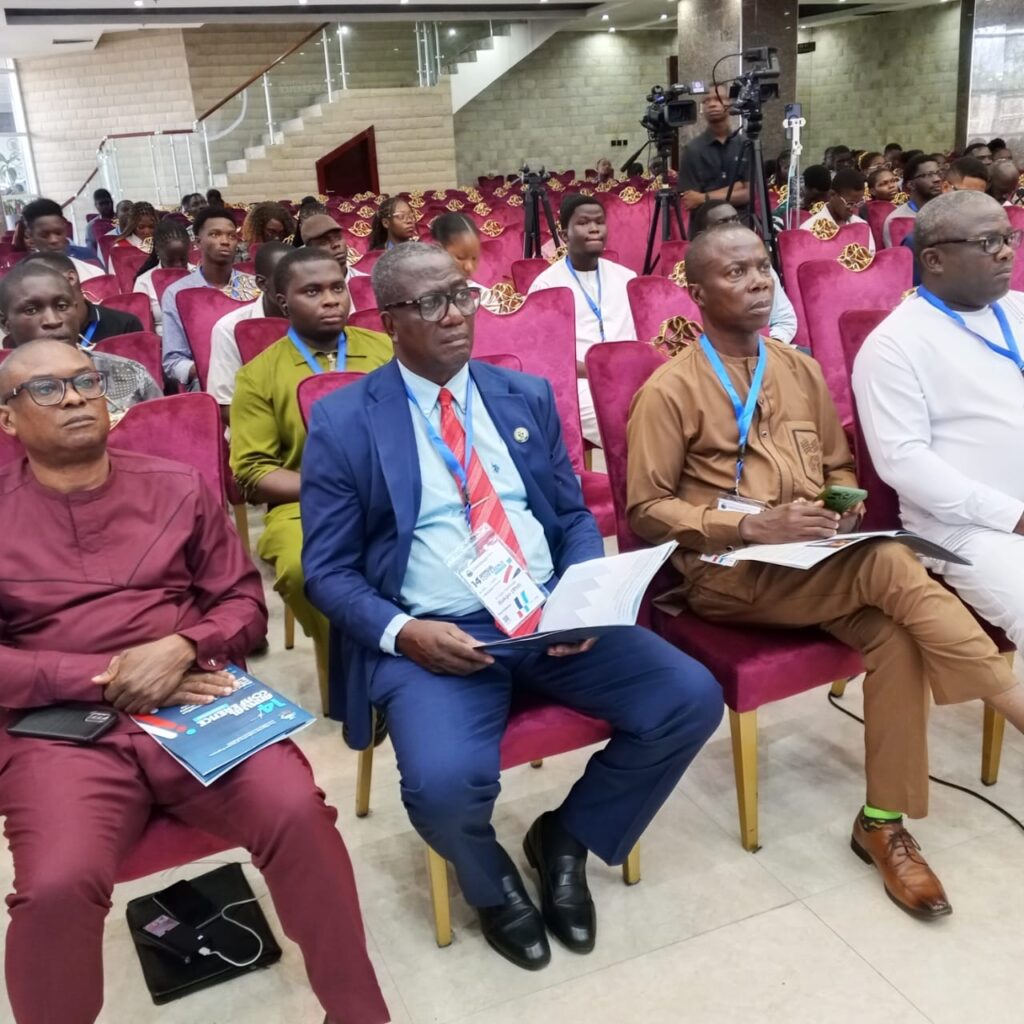
Nigeria’s blue economy has the potential to generate over N1 trillion annually for the national coffers if properly harnessed. Engr. Dr. Eferebo I. Sylvanus FNSE, National Chairman of the Nigeria Institution of Maritime Engineers and Naval Architects (NIMENA), stated this while speaking at the 14th Annual Conference of the institution in Port Harcourt, themed “Digital Maritime Transformation and Smart Solutions: A Pathway to the Advancement of Nigeria’s Blue Economy.”
He explained that a lack of clear national policy, poor standardization, and limited technical sovereignty threaten the full potential of the sector. According to Sylvanus, Nigeria has one of the most active maritime sectors due to its oil and gas industry and long stretches of coastline and inland waterways.
He emphasized that the sector could create millions of jobs for the young population while generating enormous wealth for the country.
However, Sylvanus noted that Nigeria is missing out on opportunities because it relies on foreign certification and standards for maritime operations.
“If we want to solve unemployment issues in this country and create enormous wealth, we must harness our maritime sector. Nigeria has one of the most active maritime sectors in oil and gas, a long coastline, inland waterways spanning 10,000 kilometres, and a wealth of young talent. The problem is not a shortage of talent but the lack of a structured pathway. This conference provides an avenue to unlock these potentials,” he said.
He further stated, “Nigeria is losing out in various sectors. To unlock the potential, we must achieve technical sovereignty. We are a sovereign nation, yet we depend on foreign expertise. We cannot standardize or certify our tools locally. Our engineers or cadets must obtain foreign certification to operate.”
Sylvanus called for a national vision on maritime development, stressing the importance of a structured pathway to fully harness Nigeria’s human capital. “We need a national vision for our maritime sector. A roundtable discussion could help shape policies that will drive growth and development,” he added.
In his address, the President of the Council for the Registration of Engineers in Nigeria (COREN), Engr. Prof. Saddiq Abubakar FNSE, highlighted the maritime domain’s significance in trade, logistics, energy exports, naval defense, and blue economy development.
He noted that despite its strategic importance, Nigeria’s maritime capacity is constrained by substandard marine engines and equipment, poor maintenance culture, high machinery failure rates, inadequate shipyard capabilities, limited local content, weak conformity assessment for imported equipment, fragmented enforcement of standards, and insufficient technical regulations for naval machinery.
The keynote speaker, Dr. Aladenusi Olugbemiro, emphasized that digital transformation is essential for Nigeria to build a competitive and globally attractive maritime industry.
He commended NIMENA for its leadership in driving the national conversation on maritime development.