

The Nigerian government’s spending rose in nominal terms in 2024. Still, it delivered far less value in real terms, as inflationary pressures continued to weigh on public finances, renewing calls for policy action to boost growth while enforcing fiscal discipline.
Data from the Central Bank of Nigeria’s 2024 Statistical Bulletin showed that total government expenditure increased by N7.06tn in nominal terms, rising from N10.02tn in 2023 to N17.08tn in 2024.
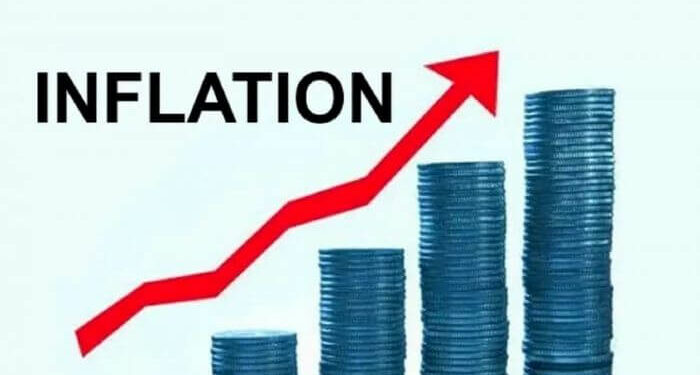
When adjusted for inflation, the increase was far more modest. In real terms, government spending rose by N1.26tn, from N4.44tn in 2023 to N5.69tn in 2024, signalling that higher spending translated into weaker purchasing power.
Economists explained to The PUNCH that the divergence between nominal and real spending reflected the impact of persistent inflation and exchange rate depreciation, which continue to erode the value of government revenues and expenditures.
The Chief Executive Officer of Economic Associates, Dr Ayo Teriba, said the figures suggested that the data largely captured government consumption rather than capital spending.
“The government expenditure data must have captured only consumption. It doesn’t include capital spending. So N17tn in 2024 makes sense in that regard,” Teriba said.
He explained that capital expenditure was recorded under gross capital formation, which covered both public and private sector investments.
“A capital budget will be captured as part of gross capital formation. Part of the total government budget goes on capital formation, and part goes on consumption. So, if they say consumption was N17tn, so be it,” he added.
Teriba argued that rising government consumption did not automatically translate into inflationary pressure, especially in an economy operating far below its productive capacity.
“Rising consumption does not necessarily mean it will be inflationary. Rising consumption should stimulate rising output,” he said.
Teriba argued that spending only becomes inflationary when consumption grows faster than output in an economy that is already close to full capacity.
“Nigeria is very far from our output frontier. If either the government or private sector spends more heavily, it can only lead to growth in output. It should not lead to inflation,” Teriba stated.
Similarly, the Director of the Centre for Promotion of Private Enterprise, Dr Muda Yusuf, stated that the sharp rise in nominal spending masked the weak real impact of government expenditure.
“When we look at the nominal terms, government spending has been increasing. But in real terms, it has not been increasing that much,” Yusuf said.
He added that inflation had significantly eroded the value of public spending.
“What N100m could do three or four years ago, you now need close to N500m to do today,” he said.
Yusuf noted that although nominal government revenues had risen due to fuel subsidy removal and exchange rate depreciation, inflation had wiped out much of the gains.
“In nominal terms, yes, revenues have increased. But inflation has eroded a significant portion of the nominal income. That is why nominal numbers tend to exaggerate the increase,” he explained.
He warned against what he described as “money illusion”, where rising figures give a false sense of progress despite declining real value.
“You have so much money, but the value of the money has been significantly degraded by inflation,” Yusuf said.
He pointed to the exchange rate as another factor weakening the real impact of spending.
“Three or four years ago, the exchange rate was around N500 or N700 to the dollar. Today it is about N1,450. So even with high nominal naira figures, the amount of foreign exchange you can get is not that much,” he added.
Yusuf suggested that the solution lay in reducing inflation and boosting revenues so that spending could have a stronger real impact.
“The government must bring down inflation so that the value of government revenue in real terms can improve. Secondly, it must boost revenue itself,” he advised.
The spending data comes as President Bola Tinubu presented the 2026 budget, titled ‘Budget of Consolidation, Renewed Resilience and Shared Prosperity’, to the National Assembly.
President Tinubu presented the projected total expenditure for 2026 at N58.18tn, including N15.52tn for debt servicing. He added that recurrent non-debt expenditure would be N15.25tn, while capital expenditure would amount to N26.08tn. The budget deficit is projected at N23.85tn, representing 4.28 per cent of Gross Domestic Product.
Key sectoral allocations include N5.41tn for defence and security, N3.56tn for infrastructure, N3.52tn for education and N2.48tn for health.
Tinubu said the budget assumptions were based on a crude oil benchmark of $64.85 per barrel, oil production of 1.84 million barrels per day and an exchange rate of N1,400 to the dollar.
Meanwhile, the PUNCH Editorial Board has criticised the 2026 budget for structural and policy weaknesses, citing deep revenue challenges.
“The Minister of Finance and Coordinating Minister of the Economy, Wale Edun, admitted that the Federal Government recorded a N30tn revenue shortfall in 2025, making just N10.7tn compared with the projected N40.8tn,” the board said.
An economics professor at the Olabisi Onabanjo University, Sheriffdeen Tella, also questioned the credibility of the projections.
“There is no basis for any budget because what they had, they have not implemented,” Tella said.
The President of the Nigerian Economic Society, Prof. Adeola Adenikinju, said delays in the budget process undermined fiscal predictability.
“The 2026 budget should have been in the National Assembly for consultation so that we can keep to this January 1st thing. That makes our fiscal system predictable,” Adenikinju said.
The economists concluded that as government spending rises in nominal terms but weakens in real value, Nigeria must balance the drive to boost growth through effective spending while taming inflation and restoring fiscal credibility.