




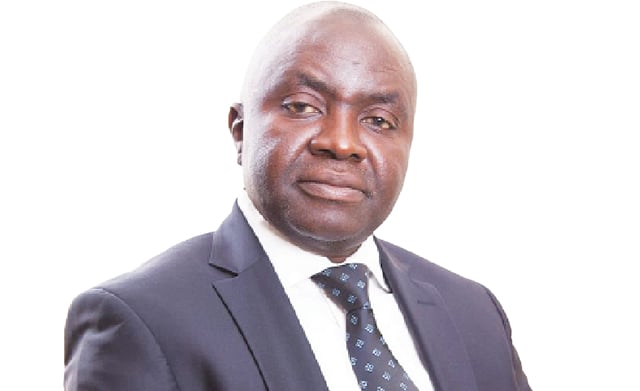
The Centre for the Promotion of Private Enterprise has warned that Nigeria’s $6.01bn capital importation rebound in the third quarter of 2025, though impressive, remains largely short-term and vulnerable, urging the Federal Government to drive investment into the real economy.
Nigeria’s capital importation in the third quarter of 2025 recorded total inflows that rose to $6.01bn, representing a remarkable 380 per cent year-on-year increase and a 17 per cent quarter-on-quarter growth.”
In a statement, Chief Executive Officer of CPPE, Dr Muda Yusuf, warned that while total capital inflows rose to $6.01bn in Q3 2025, the structure of the inflows exposes the economy to significant risks.
Yusuf noted that the rebound reflected renewed investor confidence following foreign exchange market liberalisation, tighter monetary policy, and improved liquidity conditions.
“This development reflects a gradual restoration of investor confidence following recent macroeconomic reforms, particularly foreign-exchange market liberalisation, tighter monetary policy, and improved liquidity conditions in the domestic financial system,” he said.
But he cautioned that the rebound is largely portfolio-driven and does not signal structural transformation. CPPE’s chief noted that more than 80 per cent of total inflows in Q3 2025 were portfolio investments, while foreign direct investment accounted for less than five per cent.
Yusuf said, “The resurgence in capital importation is overwhelmingly portfolio-led. More than 80 per cent of total inflows in Q3 2025 were portfolio investments, while foreign direct investment accounted for less than five per cent.”
He warned that portfolio flows are volatile and prone to sudden reversals, stating, “Portfolio flows, by nature, are highly sensitive to global interest-rate movements, risk sentiment, and policy credibility. They provide liquidity support and can help stabilise financial markets in the short term, but they are volatile and prone to sudden reversals.”
He stressed that sustainable growth depends on long-term investments in production, infrastructure, and technology transfer.
CPPE’s chief noted, “Sustainable economic growth, job creation, and export expansion depend not on short-term capital but on stable, long-horizon FDI tied to production, infrastructure, manufacturing, and technology transfer.”
Further, the CPPE noted that most inflows went to the banking and financial sectors, with minimal allocation to manufacturing and infrastructure. Yusuf said, “Sectoral analysis shows that the bulk of inflows went into the banking and financial sectors, with only marginal allocation to manufacturing, infrastructure, and other productive activities.”
He warned that financial deepening without real-sector expansion could create a liquidity-driven recovery that fails to transform Nigeria’s productive base. “Financial deepening without real-sector expansion risks creating a liquidity-driven recovery that does not fundamentally alter Nigeria’s productive base,” Yusuf stated.
The group also highlighted geographic and institutional concentration risks, noting that inflows remain heavily concentrated in the United Kingdom, the United States, and South Africa.
He said a significant share of capital is intermediated through a small group of banks, including Standard Chartered, Stanbic IBTC, and Citibank Nigeria, creating potential transmission risks. Yusuf said, “A more resilient capital-flow structure requires both geographic diversification and broader financial intermediation channels.”
The CPPE chief urged the government to move from a liquidity-driven recovery to an investment-led transformation by accelerating structural reforms and deliberately incentivising capital into productive sectors. Yusuf said, “The current recovery provides an opportunity. The critical policy challenge is to convert portfolio-driven inflows into FDI-led industrial expansion.”
He called for reliable electricity supply, efficient transport and logistics systems, predictable regulatory frameworks, and improved contract enforcement to attract durable investments.
Yusuf said, “Government must also deliberately incentivise capital flows into export-oriented manufacturing, agro-processing, mineral beneficiation, industrial parks, and infrastructure development. Without such policy direction, foreign capital will remain concentrated in short-term financial instruments rather than real economic assets.”
He also advocated diversification of capital sources through engagement with Gulf sovereign wealth funds, Asian institutional investors, and intra-African investment flows under the AfCFTA framework. Yusuf remarked, “The central task before policymakers is clear: move from liquidity-driven recovery to investment-led transformation.”
He added that only by converting short-term capital inflows into long-term productive investment can Nigeria achieve sustainable growth, employment expansion, export diversification, and macroeconomic resilience.








