
Nigeria’s seemingly intractable insecurity problem, which has claimed thousands of lives and displaced millions, especially ahead of the 2027 elections, has heightened apprehension. BIYI ADEGOROYE examines the causes and attempts a way out.
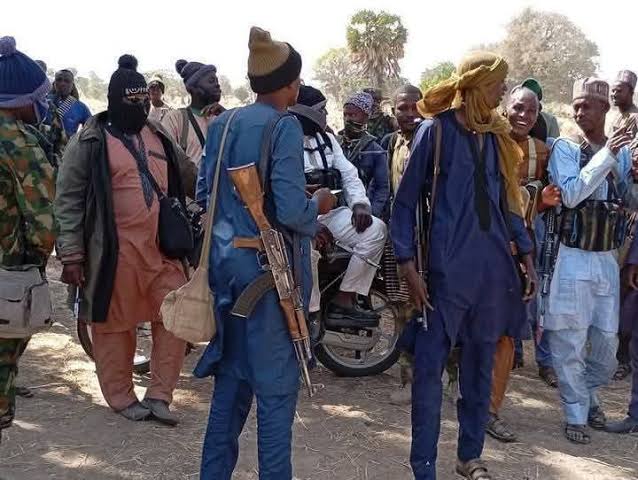
Recent upsurge in the spate of terrorism in many parts of the country point to one fact – the Nigerian security situation has become a conundrum, assuming new dimensions daily. This brazen upward swing of terrorist activities by ISWAP, Lakurawa, Boko Haram, among others, especially since the attacks in Yelwata, in Benue, Kebbi, Kwara, Niger and others with audacity attest to this fact.
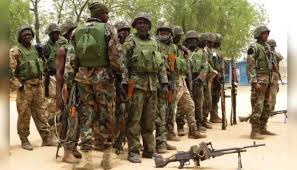
The gruesome and disgraceful murder of Brig-General Mohammed Uba and several gallant ground soldiers, when a combination of intelligence and aerial bombardments would have saved them and restored their confidence in the country never arrived.
The incident has since been described by some security experts as a shocking national disgrace. Worse still is the renewed attacks on soft targets schools and places of worship, especially churches. Since the Chibok attack of 2014, a recent media report states that about 2,946 children have been abducted an action which reinforces the central philosophy of the terrorists Western civilisation is a taboo.
Since security is a complex issue, journalists and indeed everyone have been circumspect about their reportage, for their personal safety and indeed national security. One incontrovertible fact, however, is that an altruistic, patriotic diagnostic analysis of the conundrum is indispensable if Nigeria must get out of this dilemma.
Hence, Senator Eyinnaya Abaribe captured it succinctly during the week when he quoted George Orwell’s statement: “In terms of universal deceit, telling the truth becomes a revolutionary act.” Not only has the increased manner of attacks been foreboding, but absurd, especially, when unproven allegations of compromise or professional negligence emerge after terror attacks.
From Benue to Kebbi, it has been alleged that soldiers deployed to volatile locations of impending attacks were often withdrawn abruptly on the orders of their superiors. The soldiers’ mysterious withdrawal from duty posts before penultimate Monday abduction of 25 schoolgirls at the Government Comprehensive Girls Secondary School, Maga, Danko Wasagu Local Government Area, leaves much to be desired.
The district head of Maga, Danko Wasagu Local Government Area, Muhammad Sani Dantani, said the attack came moments after, “the army officer in charge even sent a photograph taken with the students as proof of their presence.”
That some government officials and a handful of military men were complicit was further reinforced last week when the Katsina State Governor, Dikko Radda, lamented that banditry has become “a business venture for the criminals and a business venture for some people, who are in government and some people who are in the security outfits and some people who are responsible for the day-to-day activities of their people.”
The perplexing situation is comparable to development in Zamfara State, where some communities in the rural areas pay tax to bandits and terrorists. Expressing his near despondency recently, Governor Dauda Lawal, on Arise Television said: “We know these people, we know their parents, we know where they are.
But I’m constrained as a governor because neither the Army, Police and Civil Defence are under my control.”

Failed strategies
Over the years, the government has adopted several strategies kinetic and not-kinetic to address the terrorism in the country. Trillions of Naira have been allocated to defence of the country.
In 2021, Nigeria reportedly took delivery of six Light Attack United States A-29 Super Tucano Aircrafts, “to strengthen the country’s fight against terrorism.” These weapons were procured to give aerial support to the infantry and artillery of the nation’s soldiers.
Various weapons have since been procured and deployed to address the situation, albeit with minimal results. One General Olusegun Adeniyi, now retired, once expressed the commitment of the troops to defending the country, but his complaint about weapons inadequacy earned him trial, demotion and retirement.
The subterfuge immaterial, the troops’ weapon requirement has been confirmed by some retired officers, who disclosed that more high velocity and top calibre weapons like RPGs, mortars, precision guided drones and artillery with 20–30-kilometre capacity and ground-to-air armaments, will further enhance the capabilities of the troops to degrade enemies.
The deradicalization, rehabilitation and reintegration of former members of Boko Haram under the Operation Safe Corridor initiated by former President Buhari seemed to have become counter-productive. An estimated 1, 000 ‘repentant’ insurgents reportedly completed their programme.
Former Chairman, Senate Committee on the Army, Senator Ali Ndume, once registered his objection to the policy. Since then, facts have shown that a number of these individuals have infiltrated the security structure, returned to their crime, posing great threat to the Army and the nation.
Former Chief of Defence Staff, General Christopher Musa, expressed worries over these sometime ago, that papering and protecting the insurgent. “Boko Haram should have been nipped in the bud, but we failed to do so. The Lakurawas came in, we brought them in as our friends and family, until they started attacking us. The message here is when you grow a monster, it grows beyond you.”
Jonathan’s scar
This position resonated with former President Goodluck Jonathan last month, where he deplored the intractable nature and politicisation of the war on terror. At the public presentation of former Chief of Defence Staff, Lt General Leo Irabor’s, (rtd) book, “Scars and the Boko Haram Conundrum,” Jonathna reminisced on his tenure: “We tried to identify the causes of Boko Haram.
We tried different options, and I believe President Buhari also tried his best. In one of the committees we set up then, Boko Haram even nominated Buhari to represent them to discuss with the government. And when he took over, it would have been easy to speak with them and they would have handed over their guns. But it is still there today.”
Jonathan sought a different approach to the battle, but raised a fear. “Military services don’t play unnecessary politics.
While there is politics everywhere, they play their politics within the army, not the type we play. But after leaving service, I realised that quite a number of professionals in the security services play dirty politics. But General Irabor is one person that does not get into that.
His black is black and his white is white…” Jonathan couldn’t conceal the impact of the Chibok girls abduction on him.
“The Chibok Girls issue is one scar I will live and die with… As VP, we resolved the Niger Delta issue, and had a meeting with Niger Delta militants. I went to their location in the creeks, and we resolved the issues. It is therefore very disturbing that Boko Haram has become an anathema since 2009.
We need to approach it differently from our conventional approach.” The former President couldn’t but examine the terrorists’ firepower.

“If you look at and value the weapon and ammunition the Boko Haram people use, then you will know that these are not hungry people. Sometimes, they even have more ammunition than our soldiers. And where are these guns coming from? You will also know that external hands are involved, especially when I was President. So, it is very complex.”
The mineral war
Behind the war is the crucible of these terrorist attacks the illegal exploration of Nigeria’s solid mineral by both local and foreign criminals. Strategic areas like Kaduna, Zamfara, Kebbi, Nasarawa, Kwara and Osun states, with high deposit of solid minerals are all targets.
The illegal miners of Lithium, Gold and Rhodium which are in top demand outside the country, are partly responsible for insecurity in the areas. Senator Adams Oshiomhole recently accused some retired Generals of involvement in illegal mining.
“They (the minerals) are being mined by retired Generals, and we know them… I did a letter to former President Buhari, when I was National Chairman of APC, because somebody, a retired General, who I sent to conduct primary investigation somewhere reported back to me to tell me so.” Senator Oshiomhole said: “… Those involved in this illegal mining procure arms, use choppers to arm the bandits and to come and cart away the gold out of this country and make billions of US Dollars.
They have weaponised their operations, hired armed people to protect the Chinese and others in order to carry on this illegal mining, and they use the same weapon to carry out banditry.”
Asserting his point, Oshiomhole challenged the Chairman, Senate Committee on Defence to be bold enough to inform the Defence Minister of his findings, adding: “Until we tell the truth, this country cannot flourish.”
He accused the Federal Government of double standards, arguing “If we deploy JTF, comprising Air Force, Navy and soldiers to fight bunkering, why haven’t we done the same thing against illegal miners of solid minerals?”
Desperate political class
Oshiomhole, however, failed to trace the terrorist/ bandits’ attacks to the desperation of politicians believed to have imported them into the country for political gains, in the run off to the 2015 elections.
A segment of the political class is said to have empowered terror and even sought U.S. intervention in a morbid desire to unseat the then President Goodluck Jonathan.
The current increase in banditry and terrorism is also believed to have been aggravated by politicians as the nation gravitates towards the 2027 elections. Chairman of the Senate Committee on South -East Development Commission (SEDC), Senator Orji Uzor Kalu (APC, Abia North), in a recent interview said that bandits were mercenaries brought into Nigeria by politicians.
Kalu said: “People are being killed in Nigeria and you see people talk about the forthcoming 2027 elections, this and that. You can see that all is about politics.
These people (bandits) are partially mercenaries brought by politicians. These people are people brought by individuals. They are centred to destabilise the President, who is ready to revamp our economy.”
Name, shame terror sponsors
Over six years after some foreign countries assisted Nigeria with intelligence on the list of Boko Haram sponsors, none of them have been publicly named.
More intriguing, Navy Commodore Kunle Olawumi, (rtd), of military intelligence once said on national television that upon the arrest of some Boko Haram members in 2017, the suspects during interrogation, mentioned some of their sponsors, “some of whom were in government as governors, senators, ministers and even in the Aso Rock Villa.” More interesting was former President Muhammadu Buhari government’s promise to make the list public.
But even with the acquiescence, not a few Nigerians believe that terrorism in the country would persist until its sponsors are named and shamed. Emeritus Catholic Archbishop of Abuja, John Cardinal Onaiyekan, is one of such. Onaiyekan wants President Tinubu to name, shame and prosecute terror sponsors and stop fear of repercussions in the 2027 elections.
“It is time for the government to look at those who have been linked to and are behind the killings and not be worried about stepping on toes.” Former Minister of Education, Prof Tunde Adeniran, on his part asserted that this insecurity concerns everyone. “It is beyond the government right now and there is the need to tackle it with more seriousness, more commitment, and with more determination, without waiting until the nation is completely decimated.
“Partisan politics, religious, ethnic and all primordial sentiments must be put behind to face the problem headlong. We are facing a very serious problem and must attack it collectively.
We cannot afford to joke with the destiny of our country,” he said. Onayeikan and Adeniran warned the government against grandstanding, pretending to have things under control but seek partnership with other countries. “No country is an Island of its own.
The government should mobilise the support of all Nigerians and also welcome whatever external support that can assist us in areas where we lack capacity, particularly in the area of technology, because what we are facing is bigger than what we are admitting.”
The decimation of the country’s troops by the terrorist drew the angst of Adeniran, who described the military as a “special species,” and called for reduction in the level of attrition and retirement of Generals in the country, because that amounts to discarding them despite the sophisticated military training.
Following government’s failure to pursue the policy strategic level, Olawumi advocated military option as moral boosting of the troops, procurement of military equipment capable of flying up to 30,000 feet, static or mobile, and carry a lot of payloads…to give real time intelligence to identify the location where the terrorists converge after operations, and deal with them accordingly.
It could therefore be said that besides President Bola Tinubu’s order for the recruitment of about 50, 000 personnel into the Police, sincerity on the part of the political elite is vital for the war on terror and survival of the nation. Genuine and effective collaboration among the security agencies is indispensable.
The Nigerian Navy and the Air Force must genuinely collaborate with the Nigerian Army to fight the scourge. Nigerian Air Force (NAF) must patriotically provide air defence, air support, and aerial reconnaissance and support to the ground troops.
While the Department of State Services (DSS) supports intelligence gathering, counterterrorism, and protecting key officials, complemented by the National Intelligence Agency (NIA), and the. Defence Intelligence Agency (DIA) which handle external intelligence, international security interests, military intelligence and defence-related information gathering.
The Nigeria Customs Service border security and anti-smuggling operations, as well as the Nigeria Immigration Service (NIS) border control, passports, and migration security are of great importance because of the cross-border nature of terrorism.