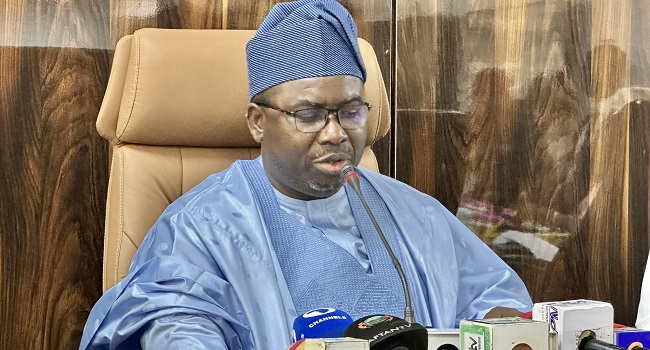
The Substantive Chairman of the Independent National Electoral Commission, Joash Amupitan, has assured Nigerians that the commission is committed to conducting free, fair, peaceful and inclusive elections during the forthcoming 2027 general polls.
Amupitan gave this assurance on Thursday while speaking during an Electoral Integrity Summit organised by Kimpact Development Initiative with support from the UK International Development in Abuja.
The summit, themed “The Triad of Trust: Strengthening the Pillars of Election Security, Financial Accountability, and Result Integrity, brought together stakeholders to examine ways of improving electoral transparency and public confidence in Nigeria’s electoral system.”
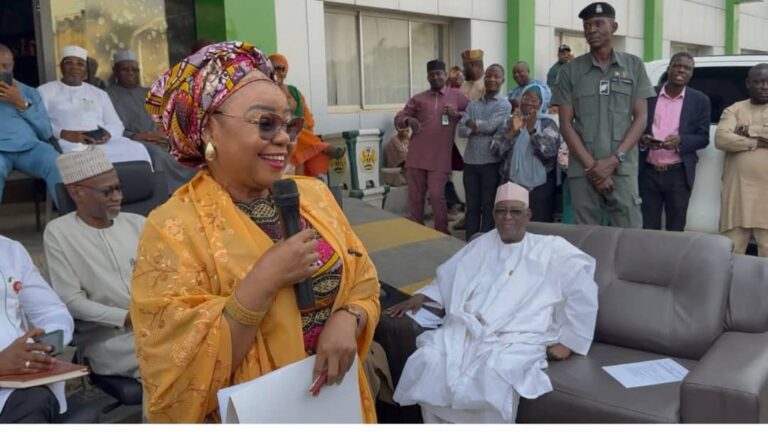
Represented by the Anambra State Resident Electoral Commissioner, Queen Elizabeth Agwu, Amupitan said the commission recognises the expectations Nigerians place on it because of its central role in the democratic process.
He noted that citizens expect the commission to deliver credible elections and emphasised that INEC remains capable of meeting those expectations through proper planning and collaboration with stakeholders.
READ ALSO:
“I want to say that INEC is excited to see the whole lot of people here seated backing us up. Because everything we talk about, no matter how we go about it, whether it is for commendation or for criticism, is actually working hard to make INEC perform better. Because to him, who much is given, much is expected.
“Nigerians want a lot from INEC because they are very sure of its pivotal role in elections in Nigeria. INEC is capable at the point of execution, take-off, and relationship with every person involved in an electoral activity.
“There is that confidence in the heart of Nigerians, there is that expectation, yearning in the heart of Nigerians that they want INEC to perform. We are here gathered to look at the various aspects of our responsibilities to Nigeria, INEC’s responsibility to Nigerians,” he added.
According to him, all stakeholders must work together to ensure credible polls in 2027, stressing that the electoral process involves multiple actors beyond the commission itself.
“We should not forget that INEC is just an integral part of the election. The police are part of it, the army is part of it, all these military and paramilitary people are part of it, and civil society is the number one part of it.
“Everybody, including the president, the politicians, and the people who are going to vote, is part of this electoral process,” he said.
Also speaking at the summit, Chairperson of the Africa Electoral Justice Network, Boosie Henry Mbha, urged Nigeria and other West African countries to strengthen their electoral institutions ahead of future elections.
Delivering a keynote address titled “Building an Ecosystem for Democratic Development: The Path towards Credible Elections in West Africa, Mbha stressed that elections should not merely be periodic political exercises but constitutional processes anchored on transparency, accountability and the rule of law.
“Elections are not solitary events. They are a delicate web where security, finance, and transparency must coexist,” he said.
Mbha argued that electoral credibility depends not only on the results declared but also on strict adherence to legal and constitutional frameworks guiding the entire process.
“If the process is not transparent, the result is not legitimate,” he added.
He pointed to reforms undertaken by the Electoral Commission of South Africa, particularly the adoption of coordinated security planning and improved regulation of political finance, as examples Nigeria could study.
Mbha also warned that democratic systems weaken gradually when institutions fail to uphold accountability and transparency.
“Democracy does not collapse in a single dramatic moment,” he said. “It erodes when systems weaken, when transparency fades, and when accountability becomes selective.”
The Executive Director of Kimpact Development Initiative, Bukola Idowu, expressed concerns about irregularities in campaign financing, election security and result management.
According to him, KDI’s review of election data revealed discrepancies between figures recorded at polling units and those uploaded on INEC’s Result Viewing Portal.
“When people download results and begin to see alterations or inconsistencies in addition, it casts a level of doubt on the election,” he said.
Idowu further noted that several political parties exceeded the spending limits set by law, urging regulatory bodies to enforce compliance and publish monitoring reports to improve transparency.
He emphasised that security during elections remains crucial to encouraging voter participation and maintaining confidence in the democratic process.
“If we can tackle these major aspects, we are likely going to have better elections,” he said.
The summit concluded with stakeholders calling for stronger collaboration between electoral authorities, security agencies and civil society organisations to safeguard the integrity of future elections in Nigeria.