


The Nigerian Safety Investigation Bureau has engaged the United Kingdom’s Rail Accident Investigation Branch in a high-level technical meeting focused on advancing the competence of Nigerian accident investigators and deepening institutional collaboration.
The engagement, held at the RAIB’s operational headquarters in Derby recently, marked a moment for Nigeria’s evolving multimodal safety framework, according to a statement made available by the bureau on Monday.
Rather than a ceremonial visit, the NSIB described the mission as a hands-on technical exchange designed to expose Nigerian investigators to global best practices in independent rail accident investigation.
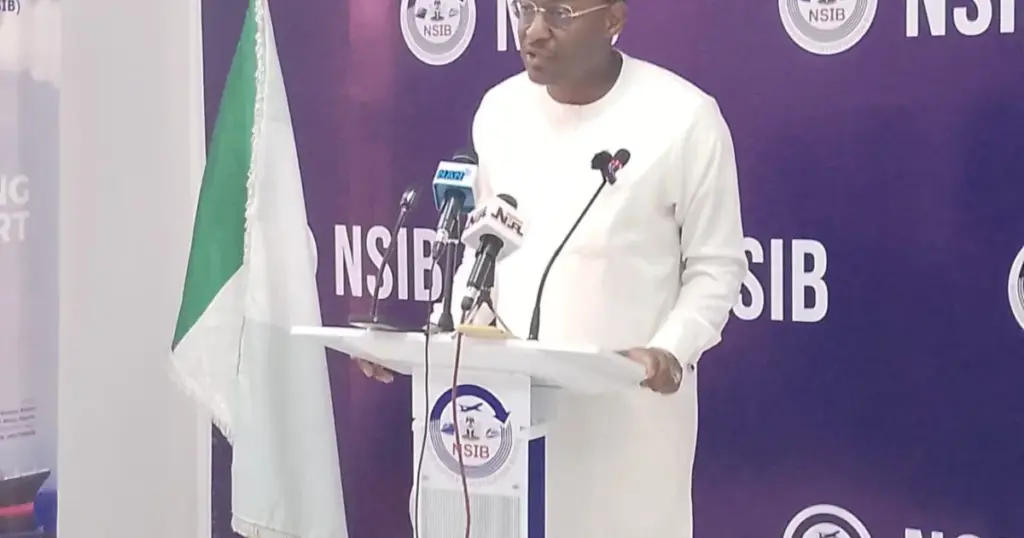
The Director-General of the NSIB, Alex Badeh Jr, said the visit reflects a deliberate effort to build credibility through professionalism and international cooperation.
“Institutional credibility in transportation safety is not proclaimed; it is built through systems, standards and sustained global engagement. Our goal is simple: to ensure that every investigation carried out in Nigeria meets global expectations and ultimately protects lives,” Badeh Jr said.
According to the Bureau, the UK body formally acknowledged the engagement through correspondence from its Derby Operational Centre, signalling the importance attached to Nigeria’s participation. The NSIB says that during the sessions, Nigerian investigators examined the RAIB’s operational structure, investigative methodology, and peer-review processes.
Officials further noted that the programme allowed Nigerian delegates to interrogate established systems, study real investigative models, and identify practical solutions adaptable to Nigeria’s rapidly expanding rail ecosystem.
Badeh Jr emphasised that modern accident investigation goes beyond identifying immediate causes. “What we are learning here is how investigations generate safety intelligence,” he explained.
“The purpose is not to apportion blame but to prevent recurrence by improving systems.”
Technical discussions also covered digital case-management platforms, quality assurance mechanisms, investigator competency frameworks, and structured training collaborations. Exposure to specialised investigative laboratories and technologies provided practical insights into building a technology-enabled investigative architecture capable of keeping pace with Nigeria’s ongoing rail modernisation.
The RAIB, established under the United Kingdom’s Railways and Transport Safety Act 2003, is widely regarded as one of the world’s leading independent rail accident investigation bodies. Its model, which focuses solely on safety improvement rather than liability determination, has become a global reference point for emerging investigation agencies.
The NSIB added that the engagement comes at a defining period following the expansion of its mandate under the NSIB Act 2022, which transformed the bureau from an aviation-focused body into a fully multimodal transport safety authority covering rail, marine, and other modes. Badeh Jr noted that strengthening rail investigation capability is essential as Nigeria invests heavily in new rail corridors and urban transit systems.
He said, “As our rail infrastructure grows, our responsibility to passengers also grows.” Strong investigation capability is preventive. Every credible investigation helps regulators refine policies, helps operators improve procedures, and ultimately reduces risk.”