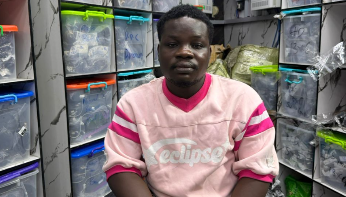



The immediate past president of the Stakeholders in Blockchain Technology Association of Nigeria, Obinna Iwuno, warns that Nigeria could lose about $2tn over its failure to harness the opportunities in the blockchain sector of the economy.
Iwuno said this in an exclusive interview with The PUNCH following his exit from the leadership of the premier virtual assets association in the country.
The PUNCH reports that virtual asset adoption in Nigeria is high, with the country ranking second in terms of cryptocurrency adoption as of 2024. The passage of the amended Investment and Securities Act in 2025 provided recognition for virtual assets and regulatory frameworks for their operations.
Speaking to The PUNCH, the former president, who declined seeking a second term in office, said that blockchain technology marked the fourth generation of the internet and was born right in front of Africans; hence, they cannot afford to be left behind.
Iwuno said Nigeria stands at a critical economic crossroads, facing the potential loss that he pegged at $2tn if the government fails to provide regulatory clarity and transition the country from consumers to producers of technology.
Iwuno noted that while the Federal Government is pursuing a $1tn economic agenda, the blockchain sector has the potential to deliver even greater value.
He said, “We are racing for a $1tn economy.
I dare to say that only this sector, once harnessed, can give Nigeria a $2tn economy because, I mean, what is $2tn to naira today? Just a little above $1bn, and we are looking at a sector that can produce $6bn for Nigeria if properly managed. Blockchain technology has given Africa the greatest opportunity to leapfrog and level up with the rest of the world. What we do with it is our own business now. Nobody’s coming to save us.
“This is the era of technology, and when that third generation happens, which is already happening, blockchain is the underlying infrastructure powering it. That is how huge blockchain is. So, every technological innovation and invention that you see today is going to be resting on blockchain. So blockchain will power the whole world. All right? And this is the technology that Nigeria takes the lead in in Africa. We are number one in Africa.
Over 60 per cent of what happens in Africa is in Nigeria alone. It makes sense that we are at the forefront of it in all ramifications, not just in titles.
“When you see the ranking last year, we were second globally in adoption; as of this year, we’ve dropped from that position, and the reason why we dropped from that position is our lack of strong commitment to regulatory clarity and industry structure, unlike what you see happening in other countries.”
Iwuno noted that a key focus of his leadership at SiBAN was securing regulatory acknowledgement for the blockchain and virtual assets sector, which was eventually achieved, saying, “All we’ve heard is one day when there was that SARS was arresting people who deal in crypto, and then the CBN governor will say, ‘Oh, don’t offer transactions to people dealing in crypto.’ The EFCC would arrest people, and when they see crypto, they label them scammers. There was such ignorance that existed. We have changed all that. That was one of the major focuses of my administration. I focused a lot on policy and regulation, creating the right relationship with government and regulators, demystifying the blockchain concept, and making it easy for people to understand and the relevant sectors.”
Iwuno criticised the government’s current posture, describing the push to tax the industry before providing a legal framework or funding as a “big contradiction”. He noted that while countries like South Africa have issued over 100 licences and Dubai has become a global crypto capital through clear policy and funding, Nigeria has yet to issue a single licence.
“Why is the government interested in taxing? Why are they moving so fast to tax an industry they have not properly structured?” Iwuno questioned, noting that any serious nation must provide tax holidays and innovation funding to leapfrog its economy. He further contrasted Nigeria’s “amended acts” with Ghana, which recently launched a National Virtual Asset Literacy Initiative and operates under a dedicated Virtual Asset Service Providers Act.
Nigeria’s position in the global blockchain landscape is reportedly slipping. After ranking second globally in adoption last year, Iwuno revealed the country has since fallen off because it focused on “speculation and consumerism” rather than building products.
“We cannot point to one blockchain solution from Nigeria that has gone global,” Iwuno stated, warning that if Nigeria does not start producing blockchain applications for sectors like agriculture, mineral extraction, and database management within the next 10 years, it will remain at the “bottom of the food chain” as the industry saturates.
Iwuno’s remarks come as he concludes a term credited with turning SiBAN from a “community-based association” into a formally registered professional body. Under his leadership, SiBAN achieved formal registration with the CAC and trademarking of the association; the establishment of a physical secretariat in Abuja with full-time staff; the creation of the industry’s first code of ethics for self-regulation; and strategic partnerships with government agencies, including the Securities and Exchange Commission, the National Information Technology Development Agency and the Nigerian Financial Intelligence Unit.
To reclaim its leadership position, Iwuno called for the government to move beyond mere recognition and implement a National Policy for Blockchain Adoption with a 10-to-20-year roadmap. He proposed the creation of a Blockchain Innovation Fund, similar to the petroleum fund, to support capacity development and institutional adoption.
Iwuno highlighted that blockchain could solve Nigeria’s fragmented database issues, where citizens must constantly update their BVN, NIN, and passports, by providing a transparent, unified system.
“The whole world is waiting to see what Nigeria will do,” Iwuno concluded. “But they are not sitting waiting for Nigeria. If Nigeria gets really delayed, it will be useless… because by that time other countries will have caught up.”
After stepping down, Iwuno will move into private practice through CBC Blockchain Services, where he plans to drive institutional adoption of blockchain solutions across Africa.