To improve transportation system in Nigeria, a complete systemic overhaul is the way out.
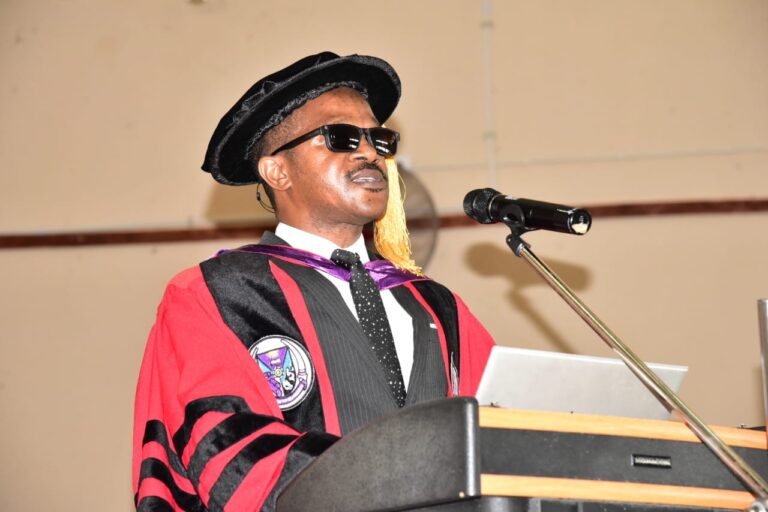
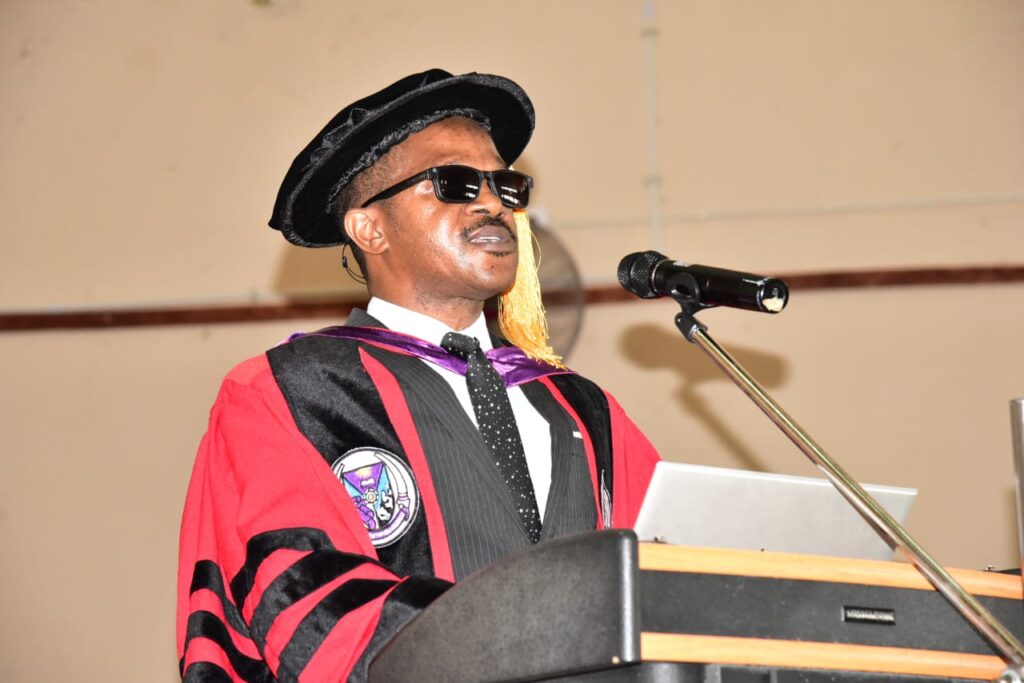
This is the position of Mobolaji Stephens, a Professor of Logistics and Transport at the Federal University of Technology, Akure (FUTA) while delivering the University’s 195th inaugural lecture at the Obafemi Awolowo Auditorium of the institution.
Stephens who titled his lecture, “Transportation Systems and Infrastructure in Nigeria: Transport Management Approach to Enhancing Efficiency, Safety and Sustainability,” examined the critical role of transportation in national development, stressing that inefficiencies in Nigeria’s transport infrastructure continue to hinder economic growth and compromise safety standards.
He highlighted persistent challenges such as poor infrastructure maintenance, inadequate policy implementation, traffic congestion, and safety lapses across road, rail, air, and maritime systems.
He further said that the current system faces significant inefficiencies, safety risks, and infrastructural deficits that hinder its full potential.” Classifying transport system in Nigeria, he said
“Nigeria’s transportation network comprises four major models: road, rail, air and maritime, each contributing uniquely to the economy but facing distinct operational challenges.”
He prescribed the adoption of a transport management approach—anchored on planning, coordination, monitoring, and data-driven decision-making— as the way out and surest mechanism to overhaul the transportation system in the country saying it remains essential to improving system performance.
He defined Transport Management as systematic planning, coordination, control, and optimization of transport infrastructure, services, and user behaviour to achieve efficiency, safety, sustainability, and economic productivity.
He added that it integrates logistics management, regulatory systems, intelligent transport system (ITS), and multimodal coordination to ensure effective mobility an approach that aligns with global emphasis on demand management, supply optimization, policy harmonization, and technology integration in public transport system.”
Proffering further solutions to the challenges he said “Transport management, a framework which promotes intermodal connectivity, ensuring that road, rail, maritime, aviation, and non-motorized transport (NMT) systems are seamlessly linked, is what we need.
Transport management provides a coordinated, data-driven and policy-anchored approach to remedy Nigeria’s persistent issues of inefficiency, safety deficits, poor intermodal connectivity, and sustainability gaps.
It integrates planning, regulation, technology, financing, and stakeholder governance across all models-road, rail, air, and maritime- to deliver measurable improvements in cost, time, reliability, safety, and environmental performance.”
Dwelling on technology adoption for transport management, he said “Technology enables automation, and user-centric systems. Nigeria is gradually adopting technology to improve transport efficiency, improves regulatory enforcement, and promotes safety on our roads, in seaports, and around our inland waterways and coastal and territorial waters.
Technology forms the backbone of modern transport management systems through its applications in congestion management, safety, automation, and sustainability.”
According to the professor, “Transportation is the backbone of economic development, facilitating trade, mobility, and social integration. In Nigeria, the transportation sector plays a critical role in connecting people, goods, and services across vast geographical regions.”
He therefore advocated for integrated transport policies that align infrastructure development with sustainable practices, noting that efficiency and safety must go hand-in-hand with environmental considerations.
Stephens called on management of FUTA to establish a Centre for Integrated Transport and Logistics Analytics (CITLA) to house a real-time transport data lab. He said with CILTA in place, FUTA can sign MoUs with Ondo State Ministry of Transportation, Federal Road Safety Commission (FRSC), Federal Airport Authority of Nigeria (FAAN), Nigerian Ports Authority (NPA) for data sharing and allied matters.
To the Federal government, Stephens called for issuance of a National Multimodal Integration Directive (NMID) asking the Federal Ministry of Transport (FMOT) to publish a directive mandating in all federally financed urban projects the followings: physical, operational, information, fare integration across modes; common data standards; and integrated ticketing.
He also called for the creation of a Federal Road Safety Performance Contracting framework and creation of a Transport Research and Implementation Grant (TRIG).
Similarly, the don advised Ondo state government to establish the Ondo Metropolitan Transport Authority (OMTA) patterned after the Lagos Metropolitan Transport Authority (LAMATA) for Akure-Ondo-Owo corridor to enhance planning, franchising and regulating multimodal services.
The Chairman at the event and Vice Chancellor, Professor Adenike Oladiji, represented by the Deputy Vice Chancellor, Development, Professor Sunday Oluyamo commended the brilliant delivery of the lecture which she described as one of Nigeria’s most pressing developmental challenges.
She described Professor Stephens as a shining star and a pillar in his department and the university who keep adding value to FUTA.