

The Federal Government has disclosed that Nigeria requires over $100bn in combined government and private sector investments across the power sector value chain to achieve a reliable, round-the-clock electricity supply.
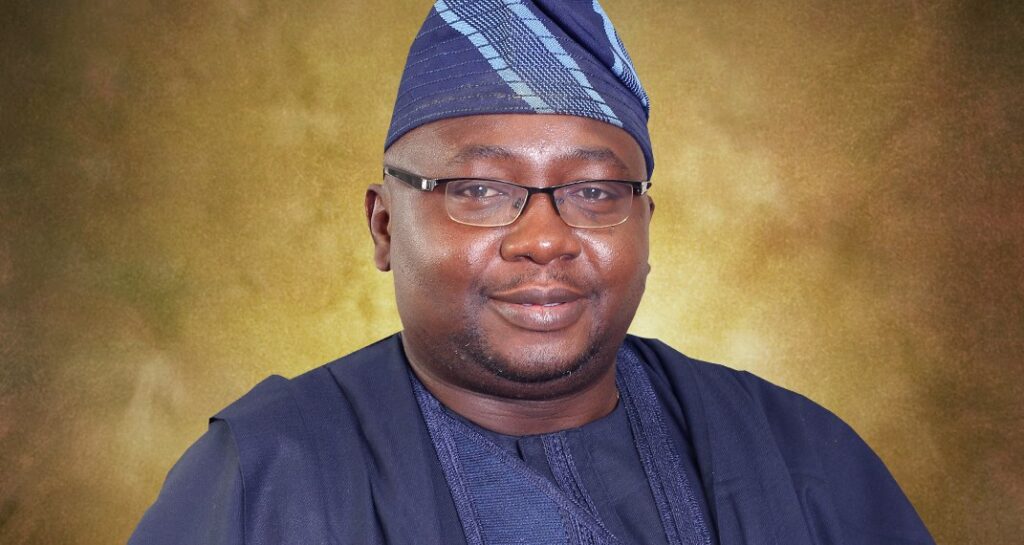
Speaking at a press conference in Abuja on Thursday to inform the public on developments and achievements in the power sector under the current administration, the Minister of Power, Adebayo Adelabu, acknowledged the recent drop in electricity supply nationwide, apologising to Nigerians while promising swift corrective measures.
“Put together, we are talking of over $100bn of investments in the upstream, midstream, and downstream of the power sector value chain,” Adelabu said. “This is not a figure to be underestimated, but it is achievable in phases, through a combination of government and private sector participation. Patience and consistent investment are key.”
According to the minister, the government has estimated that adding 20,000 megawatts of power generation would require approximately $30bn, assuming an average of $1.5bn per 1,000MW plant. Transmission infrastructure to evacuate this power would require $20bn, while distribution and gas pipeline investments would require roughly $25bn and $22bn, respectively.
Adelabu noted that while South Africa, with a population of about 60 million, contemplates a $25bn private sector investment in its power sector, Nigeria’s larger population of over 200 million necessitates proportionally higher investments.
Despite the current challenges, the minister highlighted significant milestones achieved since the administration assumed office in September 2023. “For the first time in Nigeria’s history, we achieved a generation peak of 6,001 megawatts in April 2025, and the highest transmission of 5,801 megawatts on March 2, 2025,” he said.
“This was made possible through completion of the Zungeru hydro power plant (700MW), rehabilitation of existing thermal plants, and expansion of renewable energy via mini-grids.”
Installed capacity rose from 13,000MW in 2023 to 14,400MW in 2025, while financial interventions included a N4tn debt restructuring to clear outstanding unpaid subsidies to power-generating companies, of which N501bn has already been raised from the bond market and disbursed.
The introduction of cost-reflective tariffs for a portion of consumers (about 15 per cent) has significantly boosted sector revenue. “Revenue grew from N1tn in 2023 to N2.3tn in 2025,” Adelabu said.
“This allowed payments to generation companies to increase from 9 per cent to between 35 per cent and 40 per cent of invoices, dramatically reducing government subsidy requirements.”
The minister emphasised that the phased approach ensures infrastructure upgrades across bonds A to E, gradually expanding the number of consumers enjoying 24-7 electricity. “By steadily migrating customers to upgraded infrastructure, we can achieve 60–70 per cent coverage within a few years,” he said.
Adelabu disclosed that Nigeria’s national grid can now wheel up to 8,500 megawatts, up from 5,000MW in 2023, with a target of 15,000MW within three years upon completion of ongoing projects, including the Presidential Power Initiative.
“Infrastructure upgrades have reduced grid collapses from an average of 12–15 per year to just four over the last two and a half years,” he said. “This demonstrates the tangible impact of our investments in transmission and substation upgrades.”
The minister further attributed recent power shortages to gas supply constraints affecting 75 per cent of Nigeria’s gas-fired plants.
“Even the best turbines cannot operate without raw materials,” he said. “Global gas shortages due to the Middle East crisis, local supply obligations, outstanding payments to gas suppliers, and pipeline repairs have all contributed to the recent decline in generation.”
Only two out of 32 power plants currently have firm gas supply contracts, he added, while the rest rely on irregular supplies on a best-effort basis. “We are appealing to all stakeholders for coordinated action to reverse this trend,” Adelabu said, calling for structured cooperation between the Ministries of Power, Petroleum, Water Resources, and Environment.
Nigeria’s electricity sector has long struggled with a mix of structural and operational challenges, including inadequate gas supply, ageing infrastructure, transmission bottlenecks, and persistent liquidity issues across the value chain.
Adelabu concluded by reiterating the ministry’s vision: “We see 24-7 electricity not as a destination, but as a journey. Through phased investments, coordination, and private sector engagement, Nigeria can attain a reliable electricity supply for all its citizens.”