

As the European Union formally winds down its €750,000 digital skills intervention in North-East Nigeria, communities in Borno and Yobe states are taking over the digital infrastructure, coordination structures and technical capacity built over three years, marking a transition from donor-led support to locally driven development.
The programme, implemented by ZOA International between 2023 and 2026, was designed to move beyond short-term training by embedding digital systems within community institutions, schools and state agencies in conflict-affected areas, ensuring sustainability after the project’s completion.
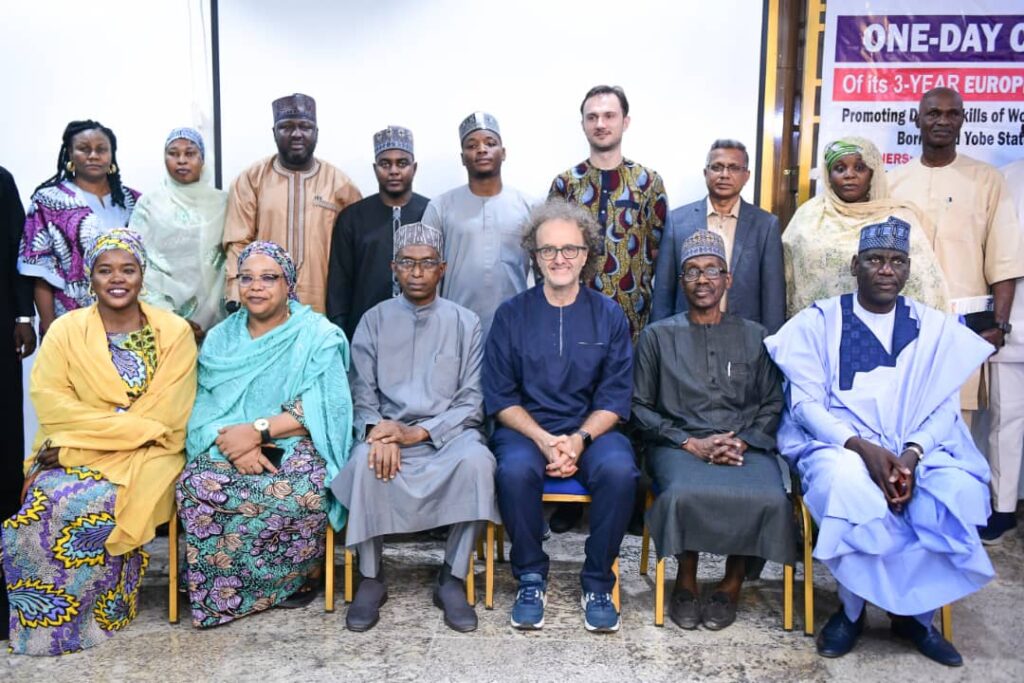
At the closing ceremony in Maiduguri, Head of Cooperation at the EU Delegation to Nigeria and ECOWAS, Massimo De Luca, said the initiative demonstrated the importance of building enduring systems rather than temporary interventions in fragile contexts.
He said: “This project shows how well-targeted digital investments can deliver lasting impact by empowering communities, strengthening local institutions, and supporting inclusive economic growth.
“Through the Global Gateway strategy, the European Union is backing practical, people-centred digital transformation that responds to local realities and leaves no one behind.”
De Luca stressed that digital inclusion remains central to recovery and stability in regions emerging from conflict, noting that access to digital skills enables participation in modern economic activity and long-term resilience.
“Digital inclusion is not a luxury; it is a necessity for resilience, innovation, and meaningful participation in today’s economy. For marginalised communities in conflict-affected regions, access to digital skills is essential to stability, opportunity, and long-term recovery,” he added.
The initiative delivered digital training, IT infrastructure and institutional support across 30 communities in Borno and Yobe states, reaching more than 18,000 women, hard-to-reach youth and persons with disabilities.
Providing an overview of outcomes, ZOA Programme Manager, Godwin Dominic, said the project laid the foundation for continuity by transferring operational capacity to local actors.
“Over the course of implementation, the programme trained 18,193 individuals, established 32 IT hubs, and supported the formation of a Digital Literacy Working Group to strengthen coordination and sustainability.”
Dominic added that six schools were also equipped with IT services, expanding access to digital learning and skills development beyond community hubs.
Representing the Borno State Government, Executive Secretary of the Borno Information and Communication Technology Development Agency (BICTDA), Engr. Mohammed Kabir Wanori, said the programme aligns with the state’s digital development priorities and provides tools for locally driven inclusion.
He said the responsibility now rests with state institutions and communities to integrate the inherited systems into development planning and ensure continued access for women and young people.
As the programme comes to an end, the EU, state governments and implementing partners reiterated their commitment to sustaining the digital infrastructure, skills base and coordination mechanisms developed under the initiative, with the broader goal of strengthening inclusive economic participation and community resilience across North-East Nigeria.