
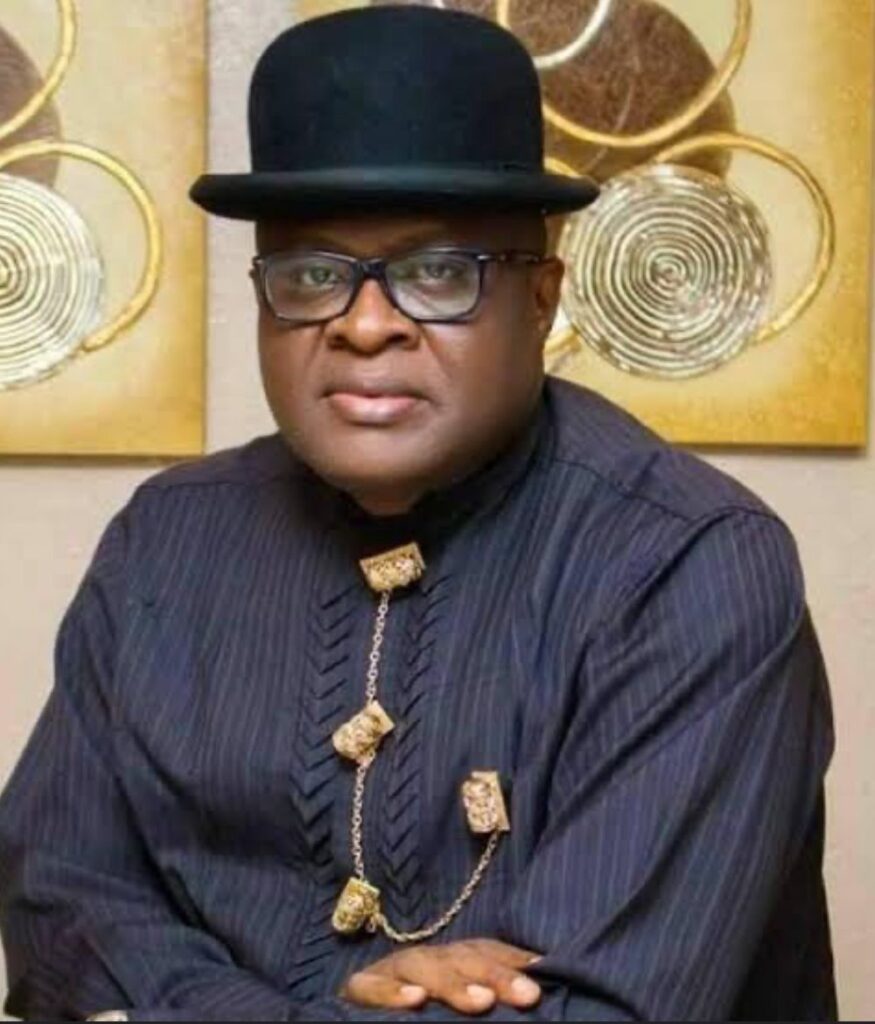
The President of Garden City Premier Business School, Prof. Silva Opuala-Charles, has emphasized that a successful clean-up of the Niger Delta is essential for Nigeria to unlock the potential of its blue economy.
Speaking as the Special Guest of Honour at the 2025 Rivers State Federated Correspondents’ Chapel Week in Port Harcourt, the former Bayelsa State Finance Commissioner and economics professor highlighted the dire state of the region’s polluted waters.
“Rivers State, with its 112 km coastline, deserves far better attention,” Opuala-Charles stated. “We talk about a blue economy, but what is blue about our water? The waters are dark, oily, and toxic.
The creeks are dead zones. Our fishermen return with nothing but tales of hardship. Before we can tap into the ocean economy, we must first clean up the mess.”
He noted that Nigeria’s blue economy—encompassing maritime, fisheries, aquaculture, and tourism—is valued at over $24 trillion domestically and $115 trillion globally.
However, he stressed that economic growth must translate into higher per capita income for citizens.
To achieve this, he advocated for the revival of historic city-states like Bonny, Nembe, and Buguma, which could serve as hubs for a thriving blue economy.
Citing United Nations estimates, Opuala-Charles revealed that cleaning up the Niger Delta would require approximately $12 billion, given the 13 million barrels of oil spilled in the region since 1958.
He lamented that decades of oil exploration and exploitation have left the seas devoid of fish and the environment severely degraded.
“You cannot talk of aquaculture when the fish stock is dead. You cannot speak of marine tourism when your waters reek of crude oil. Let’s be honest—this isn’t a blue economy; it’s a red economy soaked in pollution,” he declared.
The professor urged a practical approach to the issue, saying, “We shouldn’t start with policy documents and media launches. We must start with a mop.
Clean the rivers, clean the creeks, restore the mangroves—then we can talk about growth.” He called for a tailored Blue Economy policy framework for Rivers State, warning that relying solely on federal policies would overlook the region’s unique environmental and socio-economic challenges.
“Where is the policy? Where is the structure? Where is the funding plan? A Blue Economy agenda must not be a copy-and-paste from the federal level. We need a Rivers-specific approach that prioritizes clean-up and restoration,” he insisted.
Opuala-Charles identified pollution as a “poison” to the blue economy’s growth and highlighted the absence of adequate structures to support its development.
He argued that Nigeria must be fully prepared to harness the sector’s potential, emphasizing that sustainability depends on proper fiscal federalism.
Commending the Correspondents’ Chapel of the Nigeria Union of Journalists (NUJ) for its timely theme, ‘Blue Economy: Starting Steps for Rivers State’, he expressed optimism that with commitment and seriousness, the state could realize the vast endowment of its blue economy. “It is possible, but it requires us to act decisively,” he concluded.