
The Nigerian Content Development and Monitoring Board (NCDMB) has reaffirmed its commitment to raising local content participation in the oil and gas industry to 70 per cent by 2027, describing the sector as a critical driver of Nigeria’s industrialisation, job creation and economic diversification.
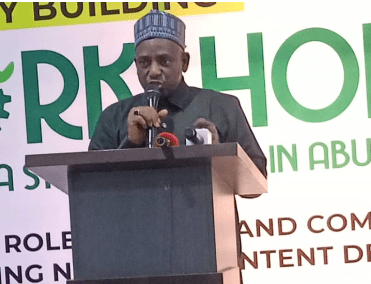
Speaking at a capacity-building workshop for media stakeholders on Monday in Abuja, the Director of Corporate Services, NCDMB, Dr Abdulmalik Halilu, said Nigeria has already made significant progress, moving from about 42 per cent local content a few years ago to 61 per cent as of October 2025, based on projects monitored by the board.
He said, “Local content is not a sprint; it is a marathon. As of today, we are at about 61 per cent, and our target remains 70 per cent by 2027. We are closing the gaps deliberately, particularly in manufacturing, which is our biggest challenge.”
Halilu stressed that Nigeria’s local content journey predates the enactment of the Nigerian Oil and Gas Industry Content Development (NOGICD) Act in 2010, noting that crude oil was discovered long before independence, with early legislation focusing mainly on revenue rather than value addition.
According to him, a diagnostic study conducted in the early 2000s revealed that Nigeria was exporting jobs, services and industrial opportunities by prioritising “first oil” over domestic capacity development.
“That philosophy was about revenue, revenue, revenue, with zero focus on country value addition. The decision was taken that oil and gas must be used as a tool for employment, industrialisation and reduction of capital flight.”
The NCDMB official explained that the 2010 Act institutionalised local content policy to ensure sustainability beyond political cycles, making it a permanent feature of Nigeria’s economic development model.
“Local content means that what can be produced in Nigeria must be produced in Nigeria, without compromising standards. It must be competitive and must meet the schedules and requirements of operators.”
He clarified that local content was neither indigenisation nor Nigerianisation, but “domestication anchored on global best practice and strategic partnerships.”
Outlining NCDMB’s mandate, Halilu said the board was uniquely empowered not only to enforce compliance with over 300 specific local content targets embedded in the Act, but also to actively build capacity across the industry.
“One of our core responsibilities is capacity building. But you cannot build capacity if you cannot enforce local content. That is why enforcement and development go hand in hand.”
He cited major project outcomes, including the NLNG Train 7 project, where over 1,400 vendors were engaged, pressure vessel fabrication was domiciled in-country, and Nigerian manufacturers supplied internationally certified safety boots, pumps and cables.
“These capacities are not just for oil and gas. Pressure vessels, cables and steel structures are also used in power and construction. What we build in oil and gas cascades into other sectors,” Halilu noted.
He also highlighted NCDMB’s legacy investment framework, which has enabled large-scale infrastructure such as the FPSO integration yard in Lagos, describing it as an investment that individual companies would ordinarily find too capital-intensive.
On funding, Halilu disclosed that the Nigerian Content Development Fund, financed by 1 per cent deductions from upstream contracts, had been deployed through intervention schemes offering single-digit interest loans of up to $10 million, with a non-performing loan ratio of less than five per cent.
“We partnered with the Bank of Industry to provide affordable financing for indigenous companies to execute contracts, acquire assets and build manufacturing capacity. Our NPL is below five per cent, which shows discipline and effectiveness.”
He added that NCDMB’s COVID-19 working capital intervention saved thousands of jobs by enabling service companies to retain staff during industry shutdowns.
Halilu further underscored the board’s data-driven approach, supported by its Joint Qualification System (JQS) and a robust monitoring and evaluation framework.
“What doesn’t get measured doesn’t get done. Every intervention is tied to a roadmap, a scorecard and clear performance indicators. That is why since 2010, no NCDMB project has been abandoned.”
Looking beyond Nigeria, Halilu said the board was championing local content across Africa, noting that Nigeria alone may not offer a sufficiently large market to attract certain high-end investments.
“Africa combined has about 125 billion barrels of crude oil and over 800 trillion cubic feet of gas. That is why we are working through the African Petroleum Producers’ Organisation to promote local content across the continent.”
He further disclosed that the Africa Energy Bank initiative and the adoption of the Brazzaville Accord on local content were direct outcomes of Nigeria’s leadership in this space.
Halilu called on the media to play a strategic role in deepening public understanding of local content policy, saying, “The media is the bridge between government and the people. By informing, educating and advocating, you help promote compliance, transparency and national development. Local content is not CSR; it is a business imperative for Nigeria’s economic growth.”