

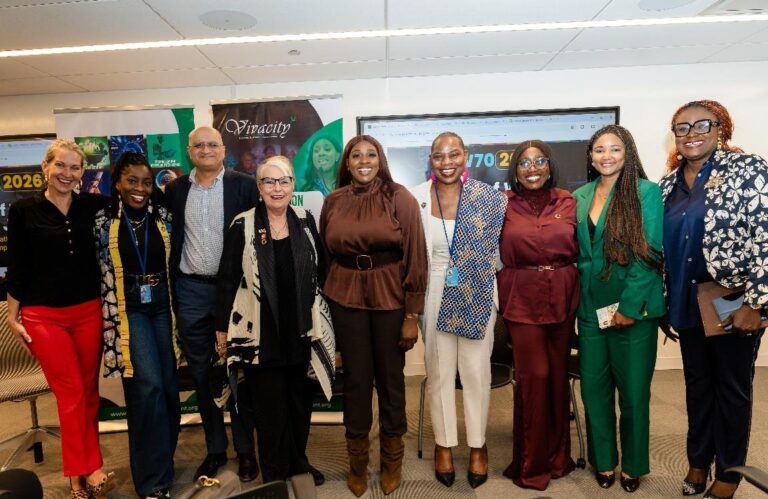


The Nigeria Association of Women Journalists (NAWOJ), Zone D, has called for a strategic partnership with the Agricultural Research Council of Nigeria to expand access to agricultural research information for women farmers and strengthen gender-responsive food security across the country.
The Vice President of NAWOJ Zone D and Deputy Editor of Blueprint Newspaper, Chizoba Ogbeche, made the call during a courtesy visit by women journalists to the Council’s headquarters in Abuja, where she outlined the association’s renewed focus on empowering women, vulnerable groups, and persons with disabilities.
Ogbeche said NAWOJ, initially formed to support women journalists, has broadened its mandate to amplify the voices of marginalised groups and address gender-related challenges, including advocacy for special legislative seats for women and campaigns against gender-based violence.
She noted that women constitute a large proportion of Nigeria’s farming population but remain largely confined to subsistence agriculture due to limited access to capital, training, and research-based information on improved farming methods.
“Many women farmers complain that despite farming, what they produce can barely feed their families. The information exists, but most of it is not accessible to them, especially in local languages and simple formats. NAWOJ plans to translate research outputs into local languages and non-academic formats to enhance understanding and adoption,” she said.
Ogbeche stressed that empowering women farmers would help Nigeria diversify its economy away from oil and strengthen agricultural productivity nationwide. She added that NAWOJ would soon submit a formal proposal to ARCN for collaboration on training, information dissemination, and capacity building.
Responding, the Director of Knowledge Management and Communications at ARCN, Dr. Nuhu Yusuf, who represented the Executive Secretary, Dr. Abubakar Adamu Dabban, described the initiative as timely and aligned with the Federal Government’s food security agenda under the Renewed Hope programme.
Yusuf said the Council was open to the partnership proposal and identified information dissemination as one of the major challenges facing agricultural research institutions.
“We have numerous research outputs and improved varieties, including more than 16 rice varieties, but awareness and adoption remain low. Collaboration with the media will help us reach farmers with simplified methodologies they can understand and apply,” he said.
He cited ARCN’s community demonstration farms and adopted villages in the Federal Capital Territory as examples of efforts to bridge the research-to-farmers gap, where farmers are shown the benefits of improved crop varieties compared with local varieties.
The Director of Plant Resources at ARCN, Dr. Oluwafemi Salako, also highlighted cultural and logistical barriers limiting women’s participation in agricultural programmes, noting that women often require permission to attend trainings and field activities, which reduces their visibility in extension interventions.
Salako urged NAWOJ to engage women-focused agricultural associations and collaborate with nutrition and food processing departments in research institutes to translate technical findings into local languages and practical guidance for rural communities.
An acting director in the agricultural extension department added that the low adoption of research innovations is largely due to lack of awareness and fear of risk, calling for intensified awareness campaigns and practical demonstrations to encourage farmers to embrace improved technologies.
Both NAWOJ and ARCN agreed to explore areas of collaboration, including media outreach, training, and community engagement, to improve research dissemination, increase women’s participation in agriculture, and enhance national food security.








