

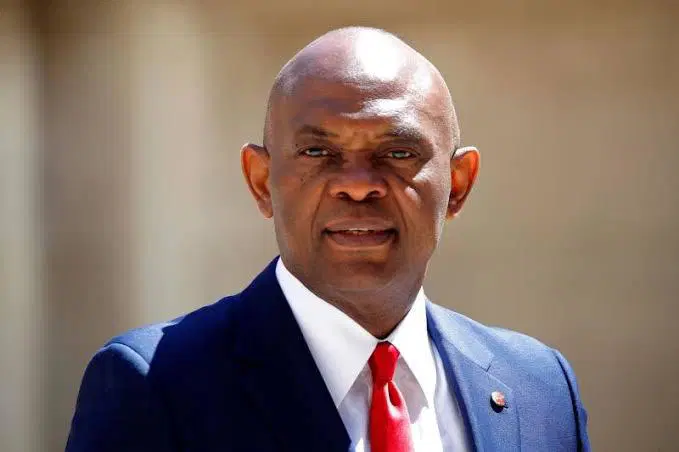

Dr Segun Musa is the Chairman of Global Transport Policy (GTP) as well as Chairman/Managing Director of Widescope Logistics International. In this interview with PAUL OGBUOKIRI, he speaks on what should expected from the multi-trillion-Naira National Single Window project and other issues in the Nigerian transport and logistics ecosystem.
What are your expectations from the National Single Window project which is slated to go live on March 27th, 2026?
I am not expecting anything, the project risks becoming “a shell without content” if all the agencies fail to fully commit to online processing of trade transactions. A resistance from even one agency could cripple the system, as consignments would not be able to leave the port without complete digital clearance.
Single Window is just a jamboree; it might end up becoming like the Deep Blue Sea project. If even one agency refuses to process documents online, consignments will not leave the port. What change will it bring? Nothing will change if the agencies inside that system are not competent and ready. You cannot put the cart before the horse and expect progress.
Digitisation alone cannot resolve deeprooted operational weaknesses, without performance standards and accountability mechanisms; the Single Window could amount to “just another jamboree. You must ensure the agents are ready before you start talking about digitisation.
Otherwise, it will remain a single window in name, while inefficiency continues behind it. You were reported to have criticised the Federal Government’s tax reforms.
You were specifically quoted as saying that industrialization, diversification, productive capacities are the keys to economic growth not taxation. With the new tax policy in place, do you still hold that position?
My position has not changed on that; the Federal Government should first think of how to diversify the economy rather than focus on internal revenue generation which is a major factor responsible for the scrambling and duplication of functions by government agencies in the Nigerian maritime sector.
You tax a booming system not a stressed economy like ours. This amounts to overkill. All these taxes government is creating in the maritime sector will find their way back to the economy and cost of living and make life more difficult for the people. So, a strongly believe that depending on the revenue from imports is dangerous for a developing country like Nigeria.
Revenue from imports is an indication that your economy has nosedived. It is also an indication that you have outsourced your production to foreign manufacturers who deploy their citizens to work on your behalf while your citizens are idle, hungry, nervous, agitated and disturbed because their tomorrow is as uncertain and as hopeless as their yesterday.
Check the records, while production and manufacturing is going down in Nigeria, importation is increasing, even the small gains we made in past years, we are losing because Nigeria is now importing and importing, while the government is collecting different import taxes.
More depressing is the fact that the tax revenue is more or less consumed. Revenue from imported items not invested into planned industrialization schemes and expansion of the production capacity of the country but shared for political exigencies is responsible for the widening infrastructure deficit and dearth of transport connectivity as the roads and rail lines are not as efficient, they should be.
Over the years, if accruing revenue had been invested into planned strategic industrialization programmes, we could have moved from where we are to a position of increased productive capacity which means decline in import revenue but unemployment and youth restiveness would give way to a robust economy with opportunities for citizens.
No country on planet earth has developed from taxation which is the laziest way to generate money. For a country to develop and grow economically there must be strategic industrialization plans for productivity and the requisite capacity to respond accordingly because industrialization, production and capacity are inseparably complimentary.
You are aware that year after year, Customs have been giver higher revenue targets to meet. How do Customs meet such revenue hikes if they do not increase their duty rates and other tariffs?
Have you noticed that Nigerians cannot afford used cars imported into the country? Are you aware that car dealers now resort to buying Nigerian used cars to repackage and resell?
Nigeria’s foreign and domestic total debt stock is over N150 trillion which may not be correct because there have been fresh borrowings by the Federal Government. What that simply means is that poverty is increasing daily in Nigeria and the people’s capacity to sustain a good life continues to evaporate by the day because the economy is unproductive.
Let’s be real. If revenue is increasing and unemployment rising, poverty gap widening and unrests and agitations are spreading and more intense, is it not time to have a rethink, review and retrace our steps from this pattern of doing the same things for years and expecting different results.
AfCFTA has taken off and Nigeria has recorded some exports under the scheme. How do you see it benefiting the transport and logistics value chain of the Nigerian economy?
The African Continental Free Trade Area (AfCFTA) would not deliver meaningful impact for Nigeria without clearly defined, holistic and measurable policies to drive its implementation. Nigeria’s participation in the scheme is ceremonial. There is no deeply thought policy of the government to take full advantage of the multi-billion trade.
Genuine participation under AfCFTA should reflect in export volumes and measurable benchmarks rather than media showcases of minimal shipments. If we were serious under this scheme, we should be talking about exporting 200,000 to 300,000 containers by now even up to a million.
Instead, we are celebrating one or two containers and gathering media houses to showcase them. Is that participation? It’s painful for a country of this size. Policy frameworks must be predictive and structured in a way that allows stakeholders to key into them with certainty of outcomes. A policy must be holistic. You should be able to key into it and predict what will happen. That is the essence of policy. What we are doing now is a waste of time and resources.
There are indications that Nigeria’s export volume is increasing in recent times. What is your take on that?
Compared to the said increasing trade in volume and value with very small countries in Europe or Asia, no serious trading economy focuses on volume and competitiveness rather than symbolic shipments. The point I was trying to make before this question is that without concrete benchmarks, coordinated institutional reforms and exportdriven strategies, Nigeria may struggle to maximise opportunities under AfCFTA.
So, there is a need for actionable policies, institutional competence and measurable targets to ensure that the continental trade agreement translates into tangible economic gains for the country rather than remaining a wasteful exercise.
As a transport expert, what do you suggest as a solution to the underperforming transport sector in Nigeria?
Simply, I think there is an urgent need for a unified transport policy that will address challenges of the transport sector. Such a policy will help the country save a lot of money. By doing that, all modes of transportation would complement one another, such that the transport system would be seamless and reduce the cost of movement of goods and commuters.
Whatever one is bringing from anywhere, it can use the mode of transportation that can serve it to the final destination minimally in terms of cost. Nigeria is facing the unfortunate circumstance of not having a National Transport Policy. The effect of not having a transport policy is that we are operating a litmus test where whoever is superintending as a commissioner or minister is operating based on journals or records that they acquired elsewhere.
They will be implementing a ‘trial and error’ system and that is why we have not achieved many results. The expectation of stakeholders is that the governments at the state and national level should engage critical actors to design a workable transport policy for the country. The policy would be appraised regularly and improved upon, with focus on national interest.
We have to use a blue print that is of national interest and that will help us to build a workable document that will aid the sector. This will enable everyone to know where to participate and also give investors the opportunity to participate very well. Without a national transport policy, all we are doing is blinking in the dark.








