



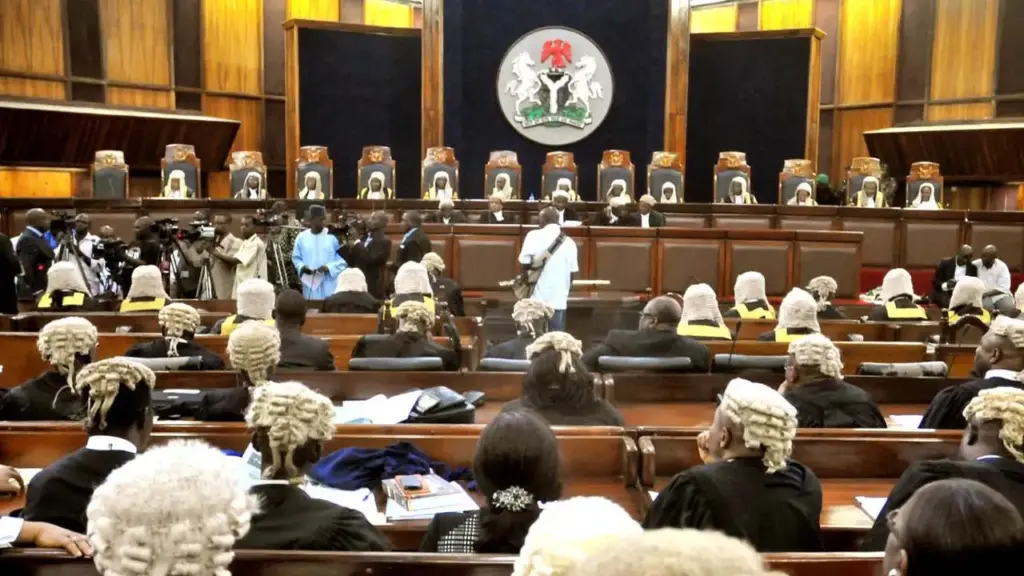
Lawyers have said that Mutineers can be prosecuted and executed under civilian rule. The Lawyers spoke on the backdrop of a Court Martial set up for officers alleged to have been involved in the October 2025 coup. Speaking on the legality of the trial, Public Interest Lawyer, Dr. Abdul Mahmud, said that, “mutineers can be tried under a civilian, constitutional order, but only through processes established by law.
“In Nigeria, mutiny is an offence under the Armed Forces Act, an Act of the National Assembly, and accused service members are tried by court martial constituted under that statute. Although a court- martial is a military tribunal, it operates within both the constitutional order and civilian legal framework.
It’s decisions are subject to appellate adjudication by the Court of Appeal and, ultimately, the Supreme Court. “Any punishment imposed, including the death penalty, must therefore satisfy constitutional standards of fair hearing and due process.
Extra-judicial measures or summary executions are unlawful and have no place under civilian rule.” Another lawyer, Emmanuel Ekwe, in his own reaction, said: “Under Nigeria’s civilian democratic system, alleged mutineers can be lawfully tried, but they cannot be executed arbitrarily or summarily.
“Although the Armed Forces Act provides for the trial of mutiny, including by courtmartial, its application is subject to the supremacy of the Constitution as guaranteed by Section 1(1) of the 1999 Constitution (as amended). Accordingly, any trial must comply with the requirements of due process and fair hearing under Section 36 of the Constitution.
“Execution, even where capital punishment is prescribed, can only occur after a valid conviction by a properly constituted tribunal, the exhaustion of appeal and review processes, and confirmation by the appropriate civilian authority.
“Any execution carried out outside these strict legal safeguards would constitute an extrajudicial killing, prohibited by Section 33 of the Constitution and by Nigeria’s international human rights obligations. Civilian rule does not abolish military discipline, but it firmly subordinates it to constitutional governance and the rule of law”.
Also reacting, another lawyer, Abiodun Olugbemide, submitted that, “we are simply dealing with the issue of Jurisdiction here, and by jurisdiction, we mean which competent court has the right to sit on a case. “It is necessary to know that any act of indiscipline within the military attracts court-martial, in which the constituted authority within the military ranks is formed to sit and handle the case.
In some situations, a soldier court-martialled may also be tried by a civil court, depending on what actually happened. But in the case at hand, this is not an issue of indiscipline among the military; it is a case of treasonable felony against the President of the Federal Republic of Nigeria. It is therefore necessary for such to be handled by the Federal High Court, and beyond.
“Another reason why this must be treated by a civil court is that it’s not the Armed Forces Act the soldiers wanted to dethrone; it was the Constitution of the Federal Republic of Nigeria. “If the coup had been successful, by now, the Constitution could have been set aside.
Therefore, the 16 soldiers must be tried by a civilian court. “Remember, using a military tribunal to try an offence against democratic order, undermines the Supremacy of the 1999 constitution”.
In his own reaction, another lawyer, Sola Adesina, said: “At its core, mutiny constitutes a profound breach of military hierarchy, codified under Section 52 of the AFA as any concerted action by two or more service members to subvert or defy lawful authority, including disobedience that erodes operational cohesion or incitement thereof.
“This offence is stratified by gravity, to wit, aggravated forms entailing violence, threats, or occurring amid hostilities warrant the death penalty upon conviction, whereas mitigated instances, such as inchoate or nonviolent mutinies, may attract life imprisonment or lesser sanctions, such as dismissal or fines (Sections 52-53).
“The AFA’s provisions, harmonised across the Army, Navy, and Air Force since its 2004 enactment, supplant antecedent service-specific statutes to foster uniform discipline. Ancillary offences, such as abetting mutiny or failing to report it, carry commensurate penalties, potentially including execution in egregious scenarios.
“Civilians complicit in such acts, if deemed subject to service law (for example, in operational theaters), may also be ensnared, though their adjudication often defaults to civilian fora. “Crucially, where mutiny intersects with civilian crimes like treason under Sections 37-41 of the Criminal Code Act, jurisdictional ambiguities arise.
Treason, as a constitutional assault on the state, arguably demands civilian adjudication to affirm democratic primacy, as evidenced in post-1999 cases such as the 2004 treason trial of Major Hamza Al-Mustapha in federal courts.
This duality reflects the AFA’s deference to the 1999 Constitution (as amended), which subordinates the military to civilian oversight via the President’s role as Commander-in-Chief (Section 218). “Nigeria’s democratic dispensation does not obviate the AFA’s empowerment of courts-martial to prosecute mutiny irrespective of regime type.
These bodies, convened by superior commands, encompass General Courts-Martial for capital offences like mutiny and Special Courts-Martial for subordinate infractions (Sections 131-133). Proceedings emphasise expediency while mandating fair trial tenets, including legal representation by Judge Advocates and rights to defence.
“Investigative precursors, per Sections 121-123, involve detentions, formal charges, and potential summary dispositions for trivial matters. Convictions necessitate ratification by hierarchical authorities, culminating in presidential confirmation for death sentences, affording opportunities for clemency or commutation. Historical application under civilian rule validates this continuity.
“Yet, evolving reforms challenge this paradigm. A Senate bill, passed for second reading in November 2025, proposes repealing the AFA to mandate civilian court trials for military offences, enhancing transparency, and aligning with constitutional rights.
Sponsored by Senator Abdulaziz Yar’Adua, it also introduces judicial review of tribunal decisions and raises enlistment age to 18, though as of January 2026, it remains pending further legislative action.
Absent enactment, courts-martial retain primacy for pure military breaches, but coup-related mutinies framed as treason could pivot to civilian jurisdictions, mitigating risks of perceived institutional bias. “The AFA unequivocally authorises execution for convicted mutineers in severe cases, a provision unaltered by civilian rule.”