


The Nigeria Customs Service, Lilypond Export Command, says it processed export goods valued at $858m in the fourth quarter of 2025 and recorded a drastic reduction in cases of export rejections, particularly for agricultural products.
Speaking during a media press briefing on Thursday, the Customs Area Controller in charge of the command, Samuel Ariyibi, said the Q4 export value represents a 9.5 per cent increase ($74.8m growth) over the $783m recorded within the same period in 2024.
“A breakdown of the monthly performance showed that export value rose from $212m in October 2024 to $230m in October 2025. In November 2025, $201m was recorded as against $330m within the same period of 2024, while $425m worth of exports was recorded in December 2025, reflecting a strong rebound from $240m recorded within the same period of 2024,” he said.
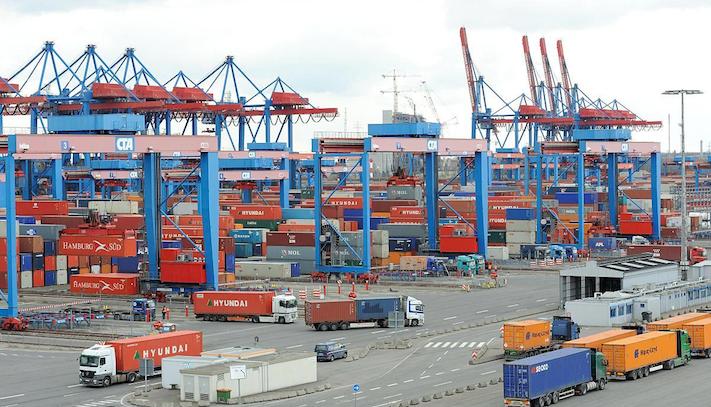
Ariyibi said export container throughput also improved, with 13,758 containers processed in the fourth quarter of 2025, representing an increase of 2,686 containers (24 per cent) over the 11,070 containers recorded in the corresponding period of 2024.
“Agricultural products accounted for the dominant export category, totalling $568m compared with $542m in Q4 2024,” Ariyibi stated.
He listed the agricultural produce to include cashew nuts, cassia seeds, sesame seeds, hibiscus flower, cocoa, cotton, tiger nuts, ginger, gum Arabic, rubber (processed), soya beans, charcoal, processed wood, and groundnut.
The Lilypond Customs boss stressed that manufactured goods include cigarettes, drinks and beverages, empty bottles, cosmetic products, food items, and float glass. He said they recorded the highest growth, rising to $240.4m in 2025 from $134.6m in 2024.
He added that solid and extractive minerals, however, declined to $35.5m from $87.5m in the corresponding quarter of 2024. Ariyibi attributed the drop to reduced output, market volatility, and operational challenges within the mining sector.
According to him, export surcharge collection increased to N208m in Q4 2025, up from N91.9m in 2024. Ariyibi attributed the growth to improved compliance by exporters, just as he highlighted the role of the Unified Customs Management System, also known as B’Odogwu, in streamlining export documentation and facilitating trade.
“We have engaged in continuous stakeholder sensitisation on export procedures and the result is a highly compliant export trader and a significant drop in export rejections,” he said.
The controller also noted that operational delays have reduced significantly, with documented containers now exiting the port within 24 hours.
He added that upon assumption of duty, “I initiated strategic engagements with critical stakeholders in line with the policy thrust and reform agenda of the Comptroller General of Customs, Adewale Adeniyi, with emphasis on value, volume, and seamless processes.”
Ariyibi urged all exporters operating within the command to continue to remain compliant, adhere strictly to export guidelines, and refrain from all forms of trade infractions. He assured stakeholders of the command’s continuous support, capacity building, and commitment to facilitating legitimate exports in line with national economic objectives.
Ariyibi also expressed appreciation to the Comptroller General of Customs for his support and policy direction, which he said continues to drive improved performance across all customs formations nationwide.
The Lilypond Export Command is a specialised operational unit of the NCS focused on facilitating and processing export cargo, particularly containerised non-oil exports through the Lagos ports in Nigeria. It plays a key role in supporting the country’s non-oil export strategy and broader economic diversification goals.