

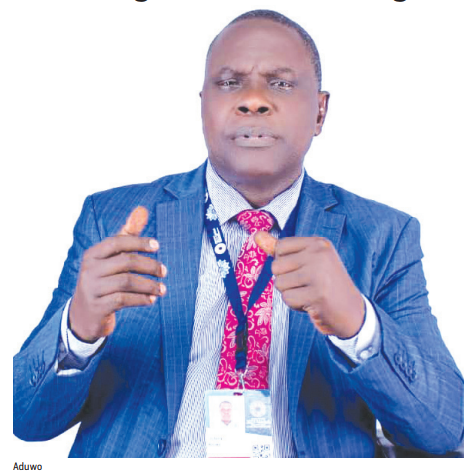
Mr Olufemi Aduwo is the Permanent Representative of Centre for Convention on Democratic Integrity (CCDI) to ECOSOC /United Nations and chairman, CSO-African Countries Group of World Bank, Civil Society Policy Forum (CSPF). In this interview, he speaks on achievements of Zamfara State Governor Dauda Lawal and his defection from the Peoples Democratic Party (PDP) to the All Progressives Congress (APC), FELIX NWANERI reports
Zamfara State has been one of the epicentre of banditry and insecurity in northern Nigeria. From your perspective as a peace and security advocate, what are the root causes of this persistent crisis?
The genesis of insecurity in Zamfara State differs significantly from that of Borno State although both crises have produced grave humanitarian consequences. Historically, Zamfara experienced some forms of rural banditry even before colonial administration, largely associated with cattle rustling, raids on agrarian communities and disputes between pastoralists and sedentary farmers. Such activities were sporadic and largely localised.
However, the contemporary wave of insecurity in Zamfara began to crystallise around 2009 and intensified after 2011, when organised criminal gangs emerged in the forests. These groups exploited longstanding tensions between herders and farmers, competition over land and water resources and to expand their operations.
The conflict escalated as armed groups transitioned from cattle rustling to largescale kidnapping, village raids and ransom extraction. Weak security presence, porous borders with neighbouring countries and the availability of small arms further enabled these groups to entrench themselves in forest enclaves across Zamfara and adjoining states. It has taken new dimension with involvement of politicians and illegal foreign miners in the state.
What specific strategies should state governments adopt to effectively curb banditry and restore confidence among rural communities?
Efforts to curb banditry and insurgency must combine local initiative with strong federal coordination. Under Nigeria’s constitutional structure, the command of the armed forces rests with the President as Commander-in-Chief. For example, the governor of Zamfara State cannot legally direct military operations.
Despite this limitation, Governor Dauda Lawal’s has demonstrated a commendable level of proactive engagement in supporting security efforts and restoring public confidence. One of the most practical steps undertaken by the state government has been the provision of logistical assistance to security agencies operating within the state.
Reports indicate that the administration has facilitated the acquisition of armoured vehicles, drones and surveillance equipment to enhance the mobility and operational capability of troops deployed to confront armed groups entrenched in forest enclaves across the region. Such interventions significantly strengthen the effectiveness of security forces on ground. So, the government should encourage stronger intelligence collaboration between local communities, traditional authorities and security agencies.
The National Security Adviser, on his part, should allow governors to know who to be enlisted as forest guards in their states. Empirical studies on rural insecurity in Northern Nigeria consistently show that community based intelligence often provides the earliest warning of bandits movement and planned attacks. Beyond security logistics, the administration of Governor Lawal has also shown awareness of the socio-economic drivers of banditry. Rural development initiatives and agricultural support programmes are essential in reducing the conditions that enable criminal recruitment among unemployed youth.
In light of these efforts, Governor Lawal deserves recognition for acting decisively within constitutional constraints. Nonetheless, a broader national security emergency framework empowering affected governors under national security emergency declared by the President would further strengthen the collective response to banditry and insurgency.
How important is collaboration between the Federal Government, neighbouring countries and local communities in tackling insecurity in the country?
Effective collaboration between the Federal Government, neighbouring countries and local communities is indispensable in combating banditry and insurgency in Nigeria. Empirical evidence demonstrates that armed groups exploit weak governance along border regions to establish safe havens, facilitate arms trafficking and orchestrate crossborder raids.
Unfortunately, many of such settlements have been neglected by successive administrations, leaving residents isolated and often reliant on armed groups for protection, livelihoods or survival and these cut across states in the North.
This long standing marginalisation fosters loyalty to criminals and undermines state authority. Integrating these communities into security planning, providing socio-economic support and empowering local governance structures is therefore critical.
Governor Lawal defected from the Peoples Democratic Party (PDP) to the All Progressives Congress (APC) just a few days ago. What do you think informed this move, and how significant is it for the politics of Zamfara State?
His defection from the PDP back to the APC is both strategically significant and emblematic of his entrenched political stature in Zamfara State. Historically, Governor Lawal was an active member of the APC before making a calculated move to the PDP, under whose banner he contested and defeated the incumbent governor in 2023.
This trajectory underscores his formidable political acumen and positions him as a true politicalfigure, whose influence and network profoundly shape the political landscape of Zamfara State. So, his decision to return to the APC appears informed by a combination of pragmatic considerations and evolving party dynamics.
Empirical observation of Nigerian politics indicates that the PDP has suffered internal fragmentation and leadership disputes which have undermined its coherence and electoral competitiveness. By contrast, the APC offers a more consolidated platform through which the governor can advance both governance objectives and political stability in the state.
From a broader perspective, any political party that accommodates Governor Lawal gains not merely a member but a strategic asset. His deep rooted connections, electoral popularity and record of administrative performance make him a critical actor capable of mobilising substantial voter support.
Governor Lawal is among few governors who have not accessed foreign loans for his state. In your view, what does this signal about his fiscal philosophy and economic management?
Governor Lawal’s resolute decision to eschew foreign loans since assuming office in 2023 exemplifies a commendably prudent and sagacious fiscal philosophy, one that prioritises self-reliance, transparency, and sustainable economic stewardship over the seductive allure of external indebtedness. In an era, when numerous Nigerian states have amassed substantial foreign borrowings often with scant tangible infrastructure or productive assets to demonstrate for such obligations, Governor Lawal’s administration stands as a paragon of fiscal rectitude.
Official clarifications from the Zamfara State government, reiterated across multiple media engagements and official statements, affirm that no domestic or international loans have been procured under his stewardship. Instead, his government has assiduously serviced legacy debts inherited from prior administrations, allocating significant budgetary provisions to interest and principal repayments, while eschewing fresh borrowing. This approach underscores a profound commitment to intergenerational equity, ensuring that future revenues are not encumbered by profligate commitments.
Foreign loans, when judiciously deployed for capital-intensive productive ventures such as critical infrastructure, industrialisation, or export-oriented agriculture can indeed catalyse development. Yet, empirical observation reveals that many states have squandered such facilities on recurrent expenditure, ostentatious projects, or mismanagement. This has left behind ballooning debt burdens, diminished fiscal space, and heightened vulnerability to currency fluctuations and global interest rate hikes.
But by contrast, Governor Lawal’s strategy signals astute economic management: bolstering Internally Generated Revenue, enforcing budgetary discipline, and fostering genuine transformation without mortgaging the state’s future. In Zamfara, a polity beleaguered by insecurity and historical fiscal profligacy, this restraint is not mere caution but visionary leadership, heralding a renaissance of accountable governance that merits unequivocal applause.
Do you believe avoiding foreign borrowing is sustainable for a state like Zamfara that faces significant development and security challenges?
Yes, I firmly believe that eschewing foreign borrowing is not only sustainable but indeed prudent for a state like Zamfara, beleaguered by profound developmental deficits and intractable security exigencies. T
his fiscal philosophy, epitomised by Governor Lawal’s administration, embodies sagacious stewardship, prioritising endogenous revenue mobilisation, budgetary austerity, and innovative resource allocation over the perilous allure of external debt. In the crucible of Nigeria’s Civil War (1967–1970), Chief Obafemi Awolowo, as Federal Commissioner for Finance, exemplified such prudence by staunchly discouraging governmental borrowing.
Despite wartime imperatives – funding of military operations, sustaining civilian welfare, and averting economic collapse – Awolowo advocated self-reliance through enhanced taxation, import substitution, and meticulous fiscal controls.
His stratagems preserved Nigeria’s sovereignty, obviating odious debts that could have enfeebled post-war reconstruction. Zamfara State can harness its agrarian potential, mineral endowments via regulated mining and federal allocations to fund infrastructure, agriculture and counter banditry initiatives without encumbering future generations.
This approach mitigates risks of debt traps, currency volatility, and conditionalities that often exacerbate inequalities. By fostering transparency and efficiency; it catalyses genuine progress as well as transforms challenges into opportunities for resilient, self-sustained development, a testament to visionary governance.