
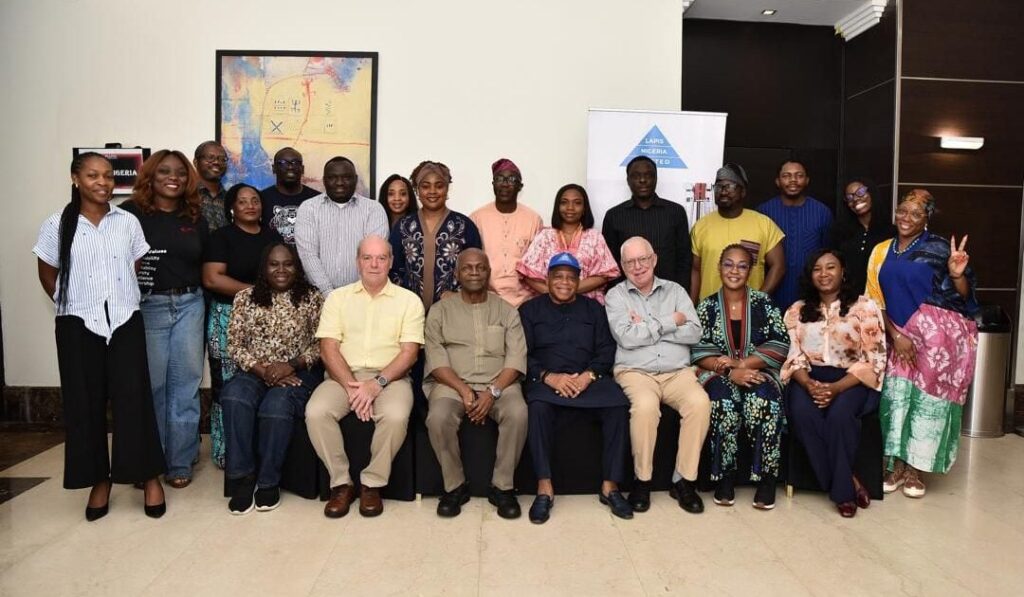
Indigenous oil firm Lapis Nigeria Limited ran a two-day course in Lagos this week to address the growing skills gap in the country’s oil and gas industry. The sessions, held in Lagos on Thursday and Friday, brought together engineers, executives, bankers, lawyers, and human-resources personnel from major operators and service firms.
The maiden programme, organised in partnership with Austrian firm Hoss Engineering and led by instructor Frank Jahn, offered a condensed but broad-based introduction to upstream development, processing, and downstream refinery and liquefied natural gas operations.
“The aim is straightforward: to give the new generation the kind of foundational training many of us received working for international oil companies but which is increasingly scarce and expensive today,” Chairman of Lapis Nigeria Limited, Dr Femi Bajomo, said in an interview with The PUNCH.
“We are not training people to become petroleum engineers in two days. We are equipping directors, lawyers, bankers, and HR professionals with enough technical understanding to ask the right questions and make better decisions,” the energy executive noted.
The training was split into two practical modules. Day one, Thursday, covered Module 1: “Overview of Upstream Oil & Gas Development,” including the field life cycle (exploration, appraisal, development, and abandonment), fiscal frameworks, volumetric estimation, PRMS (Petroleum Resources Management System), field development planning with HSE considerations, drilling and completions, risk and uncertainty, and petroleum economics.
Day two, Friday, focused on Module 2: “Upstream Oil & Gas Processing and Downstream Oil Refinery and LNG Process,” which examined primary production systems, oil, gas, and water treatment and separation, onshore storage and export terminals, offshore structures, and gas processing, including natural gas liquids and LPG extraction. Participants received certificates of attendance and completion at the end of the course.
Bajomo, a veteran of 45 years in the oil and gas business whose career began with Shell in 1980 and included senior roles in Namibia and other international groups, said the programme grew out of conversations with industry CEOs and executives who recognised the need for structured, affordable training for mid- and senior-level non-technical staff as well as young engineers.
“We designed two tracks,” he said. “A technical track, which is intensive and was run earlier as a two-week course in Port Harcourt with a field visit to Aradale Holdings’ Ogele field, and a fundamental track for non-technical professionals, which can run for five days or be condensed into two days depending on availability.”
Ogbele Field is the flagship upstream asset of Aradale Holdings. The field lies in Rivers State, within what was formerly part of onshore OML 54.
The Chairman of Aradale Holdings Plc, Osten Olorunsola, who addressed participants, urged industry players to adopt a longer-term perspective when planning and investing.
“I call them IOCs, because if there is one policy problem we have, it is our direction,” he told delegates. “We shouldn’t all be looking only at 2026 or 2027. Some of us should commit to looking at 2040 and 2050.”
Olorunsola recounted the evolution of the Nigerian oil industry in five phases: the rapid early development after the 1956 commercial discovery, the Petroleum Act of 1969, the rise of indigenous participation, the local content era from 2000, and the most recent phase beginning in 2021 following the passage of the Petroleum Industry Act, formerly the Petroleum Industry Bill.
He said the PIA marked a sea change in governance and asset ownership in favour of indigenous operators. “Someone told me a few days ago that the IOC, now referring to the indigenous operators, controls about 60-plus asset assignments in the industry. That is not small,” Olorunsola said, emphasising the need for sustained governance and long-term planning.
Trainers and organisers said the two-day format was intentional, allowing working professionals to participate without prolonged time away from their organisations while still covering essential topics.
Lapis Nigeria said it plans to run two to three such sessions annually, using participant feedback to refine course content and delivery. Dr Bajomo said the company will publish training evaluations on its website and brief CEOs on outcomes, stressing that the programme was intended to be iterative and responsive to industry needs.
“Training that allows bankers to assess investment risk, lawyers to better defend clients, and boards to scrutinise technical proposals will strengthen the entire ecosystem,” Bajomo said.
Organisers also noted that participants in the earlier technical track in Port Harcourt benefitted from hands-on exposure during a field visit to Aradale’s Obele field, where they observed drilling operations, flow station management, and gas plant processes, practical experiences organisers said reinforced classroom learning.
Certificates of completion were awarded at the close of the Lagos sessions, and Olorunsola invited participants to contribute to a white paper on sustaining governance and growth for indigenous operators under the PIA framework.