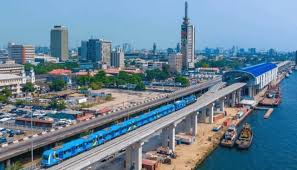
Lagos State Governor, Mr. Babajide SanwoOlu, has called for greater recognition of the role cities play in shaping economic and social transformation, describing Lagos as a “living testament to African possibility” and a practical example of how subnational governments can influence global development conversations.
According to a statement signed by his Special Adviser on Media and Publicity, Gboyega Akosile, SanwoOlu made the remarks on Friday while delivering a lecture at the closing ceremony of Africa Week 2026 organised by King’s College London at the African Leadership Centre in the United Kingdom.
His lecture was titled: “Exercising Agency beyond the Nation-State: Debating Change and Transformation in the Global City, Lagos.” Addressing scholars, policymakers and students, the governor said development discourse has historically focused heavily on national governments, often overlooking the growing influence of cities in shaping economic productivity, innovation and governance outcomes.
He noted that Lagos, despite occupying a small portion of Nigeria’s landmass, has grown into one of the continent’s most economically significant urban centres.
According to him, Lagos is now Africa’s second-largest city economy with an estimated Gross Domestic Product of about $259 billion on a purchasing power parity basis, while also serving as Nigeria’s primary commercial gateway and a major hub for capital, enterprise, talent and ideas.
Sanwo-Olu said the trajectory of Lagos demonstrated how strategic governance at the city level can produce outcomes that resonate beyond national borders. He said: “My own conviction, since assuming office in 2019, has been that Lagos must be governed not as a problem to be managed but as a platform to be unlocked.
That is the spirit behind our development philosophy in Lagos, captured in our THEMES+ agenda. We needed an operating system that could hold together the complexity of a megacity: transport and traffic management; health and environment; education and technology; making Lagos a 21st-century megacity; environment and tourism; security and governance; and, importantly, social inclusion, gender equality and youth.
“This framework became even more necessary because Lagos, like many global cities, has had to confront overlapping shocks in recent years: the COVID-19 pandemic, rapid population expansion, rising climate risks and a very substantial infrastructure financing gap.