


The Kwara State Government has called for sustained community engagements, as well as continuous investments, by Civil Society Organisations (CSOs), Development Partners and various Communities in order to put an end to the obnoxious practice of Female Genital Mutilation (FGM) in the State.
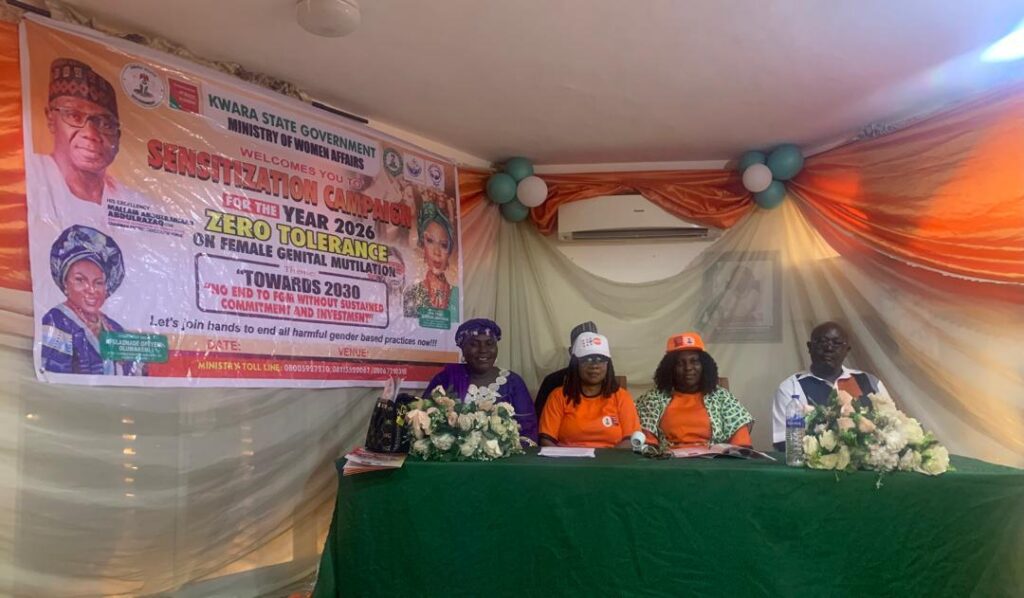
The Commissioner for Women Affairs, Chief (Mrs) Opeyemi Oluwakemi Afolashade, made this call in Ilorin, the state capital, during a community engagement and the inauguration of the State Task Force on FGM, in commemoration of the 2026 International Day of Zero Tolerance for Female Genital Mutilation (FGM), themed “Towards 2030: No End To Female Genital Mutilation Without Sustained Commitments and Investments.”
Members of the Task Force include representatives from Ministries of Women Affairs, Youth Development, Health, Education and Justice; Kwara State Primary Health Care Development Agency; Nigeria Police Force; Nigeria Security and Civil Defence Corps; Child Rights Implementation Committee Members; Traditional Rulers; Federation of Muslim Women Association of Nigeria; Women Wing of the Christian Association of Nigeria; Civil Society Organisations; Non-Governmental Organizations; Circumcisers; International Federation of Women Lawyers, among others.
The Commissioner said: “FGM remains a serious violation of the fundamental human rights of women with over 230 million women and girls undergoing FGM at some points in their lives, while about 4.5 million girls are at risk in 2026 alone.”
She stated that the global community aims to eliminate FGM by the year 2030, explaining that its consequences expose victims to severe physical and psychological complications, including infections, childbirth complications, trauma and sometimes death.
Chief Afolashade added that the state government, under the leadership of Governor AbdulRahman AbdulRazaq and the First Lady, Ambassador Prof. Olufolake AbdulRazaq, has shown its commitment to protecting women and children from harmful practices through strategic policies, community interventions and institutional support, promoting gender equality and safeguarding the rights of vulnerable groups, including people with disabilities.
During the inauguration, the Commissioner stressed the existence of legal frameworks such as the Violence Against Persons Prohibition Law (VAPP Law) which criminalizes various forms of violence against individuals and Child Rights Law that guarantees the dignity, protection and freedom from abuse, neglect and harmful cultural practices, encouraging the team to work together to ensure the eradication of FGM and other harmful practices in the state.
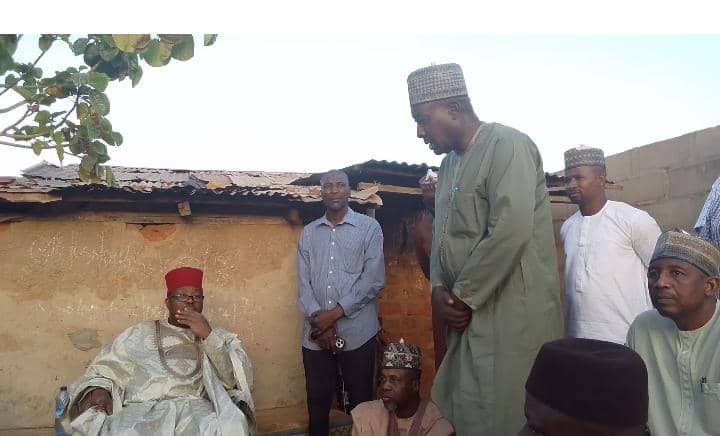
In his remarks, the Olojoku of Ojoku, His Royal Highness, Oba Abdulrazaq Adegboyega Afolabi, emphasised that continuous community sensitisation is key to ending FGM by 2030, claiming that many are still unaware of its harmful effects, while the Alangua Adewole, Alhaji Yakubu Yusuf, stressed the need to engage the traditional rulers in disseminating the information on FGM to the public.
The Kwara State Sexual Reproductive Health Specialist, United Nations Population Fund, Dr Gloria Enueze, identified the need to strengthen resistance to FGM through proper funding, continuous community engagement in high-prevalence areas and increased investment in girls’ education, saying these are the key steps to end FGM by 2030.
The Leader of the Circumcisers Association, Alhaji Salihu Salawu, also stated the importance of aligning with government policies on the circumcision of the girl child and highlighted the need for increased community enlightenment, revealing that many people do not fully understand the negative implications of the practice.