


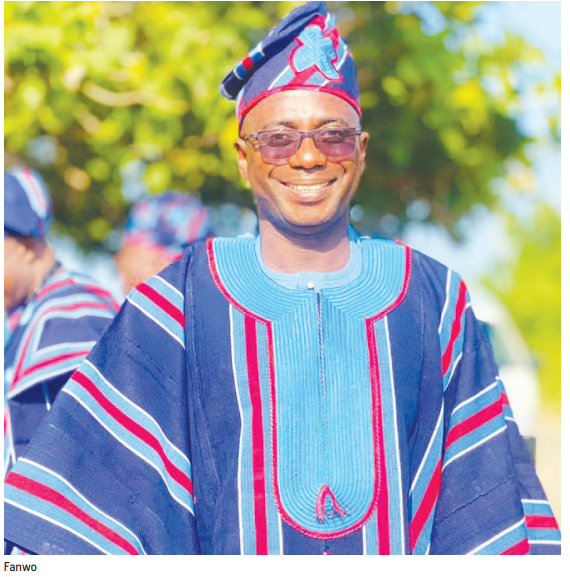
Kingsley Fanwo is the Commissioner for Information and Communications in Kogi State. In this interview, he speaks on the new tax law, why the state is one of the first states to domesticate its tax law. He hails President Bola Tinubu for the law, saying that it’s one of the best legacies he’ll be leaving behind, among other issues. ANAYO EZUGWU reports
The tax reforms kicked January 1, and Nigerians have been reacting to it from the point of apprehension and also hope. The concerns are particularly raised by politicians, political parties, student groups, civil society groups, that it might deepen the poverty bracket of Nigerians. Do you think that these tax reforms would actually do that? Or is this the succor we’ve been waiting for in that sector?
I would say this is going to be one of the best legacies that President Bola Ahmed Tinubu will be leaving behind. It’s a beautiful law. It’s the law that will unlock the potential of Nigeria. It’s the law that will enable the country to rake in the right revenues from taxes and be able to implement development projects.
It’s the law that has ensured equity, protects the poor, and is then able to galvanise development in the country. It’s one of the biggest and best legacies of President Bola Tinubu.
It’s normal to raise those concerns. I want to also commend the Tax Reforms Committee for the enlightenment that they’ve done across board so that Nigerians will properly understand what is actually happening. When you look at the structure of the new tax reforms of the Federal Government, you’ll agree with me that it protects low-income earners and even the middle-income earners pay so little.
So, those who pay something that is heavy are those who earn heavy. It’s about protecting the poor and the poor should celebrate this law and celebrate President Tinubu for bringing this beautiful law that is protecting the poor and generating huge revenue to be able to expand development across the nation.
Nigerians are pretty apprehensive that should they default, the authorities have a right to have direct access into their bank accounts and make deductions. Does this tax reform give the government leeway to have access to citizens’ accounts?
Law is what it is. A law is a law and the law is to be implemented. Law is to be obeyed and the law is to be executed. What we’re saying is that you have to pay your taxes.
No nation can be great without people paying taxes. It’s when you pay taxes that the government will be able to generate the required revenue for development. We want our nation to be what the United States is. We want our nation to be what the United Kingdom is, but we don’t want to pay the taxes that their citizens pay.
This is illogical. It’s something that we need to address. Our people should understand that it’s about their taxes, it’s about paying taxes to spark development. It’s when you pay taxes that you can hold the government to account. It’s a law and when you have a law, a law should be implemented.
If you’re owing someone, you’re expected to pay. This is what we owe our nation for development. It’s not that the nation is the one that is eating these taxes. They’re still going to use it to build roads, build hospitals, and build schools that we will attend and our children to attend. So, it’s about us.
The orientation needs to change from these very ridiculous concerns that we’re talking about. We need to step up enlightenment, which the Federal Government is doing. And a lot of states, including Kogi State, are already keying into this. We’ve already domesticated our tax law in line with that of the Federal Government. So, that shows that Kogi is 200% in support of what the Federal Government is doing.
We’ve seen the light at the end of the tunnel and we can see that this is going to spark development in the federation and we’re already trying to domesticate it into Kogi State and ensure that we also reap from these benefits.
Let’s look at the issue of accountability. One thing you did say is that these taxes are necessary to ensure development and expand infrastructure but there’s also the issue of accountability. Are there mechanisms in place, maybe at the state level, to ensure that these taxes are used for the benefit of the people?
Yes, one of the highlights of the new tax law by the Federal Government, the one in Kogi State was signed into law yesterday by the chief servant of Kogi State, His Excellency, Alhaji Ahmed Usman Ododo. And one of the highlights is the issue of transparency. I think we need to deal with the key highlights of the new tax law in our states, which is in line with what we have at the federal level.
The first thing is that, people who earn less than or N800,000 per annum are not expected to pay tax, what we call PAYE. And even businesses that generate less than N50 million a year are not expected to pay any VAT. This is to protect small businesses. It’s also protecting the poor.
Apart from that, you talk about the digitalisation of the entire tax processes. That brings about transparency. In Kogi State it’s criminal to collect taxes in cash. We already have digital platforms through which we’re going to collect these taxes.
That brings transparency and accountability. In Kogi State, for instance, we have the governor of the state who is an accountant and also a very celebrated auditor, a forensic auditor for that matter and a tax expert. All of these were put into consideration to ensure that Nigerians, as it affects the Federal Government and the people of Kogi State will be able to understand and know how much is being generated. This is where the question is going to start from. If we have generated, for instance, X, Y, then you can ask questions about it. That is your tax.
That’s why if you are in the U.K or U.S, you hear the citizens talking about their taxes. So, the moment we have what we call the taxpayers’ money, then the taxpayers can start asking questions as to the judicious application of this revenue for development. This is where we’re going to start from. Let’s start with this reform that is going to promote accountability, transparency, equity and protect small businesses. That’s how to build a nation.
A particular video went viral where the governor actually did say he has a working cabal in his government, which was approved by his predecessor and political godfather, Yahya Bello. The governor identified the leader of this cabal as Habibat Tijani, and he also mentioned other members of his cabal. This particular statement has continued to generate reaction as to what exactly he meant by the word cabal and if he’s truly running an inclusive government. I would also like to ask, are you a member of this cabal?
I think we still have to come back to talk about this new tax law. We talk about the administrative part of it, harmonizing the state existing laws with the national framework. I think we’ll need to come back to how Kogi has been able to transform that beautiful law at a federal level to what we have at a state level.
Going to the cabal issue, the governor has been doing a beautiful job with his team. And then you have various teams. You have what they call the economic team. You have what they call the information team.
You have teams working with the governor. The governor is working through all these teams. People are already saying that the people that are making things happen economically in the state are cabals. Because of that, the governor came out to say, “Oh, if you’re saying cabal, fantastic”
“This cabal that you’re calling, they’re doing beautifully well”. So that’s what brought about that. It’s not that the governor has built a cabal. It’s a team. It’s an economic team.
Would you say that his cabinet is an inclusive cabinet?
Quite inclusive and I would say the immediate past and the present administration at the state are the most inclusive. When you want to talk to the issue of giving people the opportunity to showcase what they can do. I’m here as the Commissioner for Information. The governor gives me the freedom to determine how we communicate government policies and programmes to the public.
How we inform the public. Are you going to call me a cabal too? What the governor was saying, simply, is that this economic team is advising him in the best of ways to be able to deliver on his mandate to the people. And you have to give it to the accountant general of the state, Dr. Habibat Tijani.
She’s doing a beautiful job, financial engineering, and ensuring that the state is able to deliver both to the civil servants and to the contractors, to policies, to projects and all of that. If you had given the governor an opportunity, he would have mentioned more people that are in his economic team.
So it’s inclusive. You can’t take inclusion away from the Ododo administration. It’s about the most inclusive administration in the history of the state. And that’s why it’s doing beautifully well.