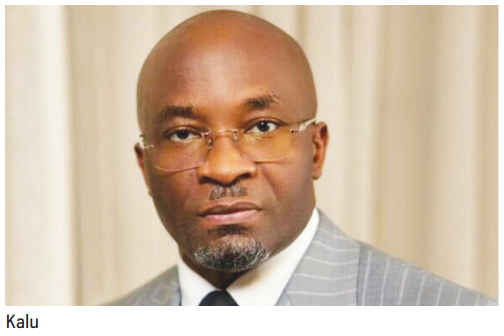
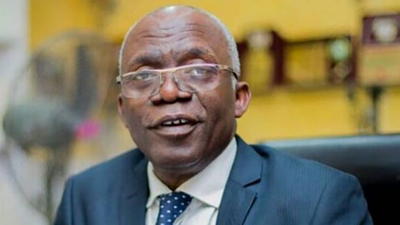
Human rights lawyer Femi Falana and the Aare Ona Kakanfo of Yorubaland, Gani Adams, have cautioned that Nigeria risks producing a single presidential candidate in the 2027 elections if judicial interference in party affairs persists.
They made the remarks on Thursday at the fifth Comrade Yinka Odumakin Memorial Lecture held at Airport Hotel in Lagos, where political figures, labour leaders and civil society actors gathered to discuss the state of the nation’s democracy.
Among those present were the President of the Nigeria Labour Congress, Joe Ajaero; activist and publisher Omoyele Sowore; and Senior Advocate of Nigeria Olumide Fusika.
READ ALSO:
Delivering the keynote lecture, Falana warned that conflicting court rulings and legal manoeuvres were being used to destabilise political parties, potentially paving the way for a situation where only one party fields a presidential candidate.
“Through the manipulation of Nigerian courts and senior lawyers, you may have only one candidate contesting the presidential election in this country.
If that happens, Nigeria may not even need to spend money on a presidential election.”
He linked his concerns to recent developments involving the Independent National Electoral Commission and the leadership crisis within the African Democratic Congress, where the electoral body cited a court ruling in its decision to withdraw recognition from rival factions.
Falana criticised what he described as judicial intrusion into the internal workings of political parties, arguing that such actions contradict provisions of the Electoral Act.
He also warned that undermining democratic processes could trigger unrest if citizens feel deprived of genuine electoral choices, urging civil society groups and labour unions to organise in defence of democracy.
“We must stop agonising and start organising in the interest of our people and democracy,” he said.
Speaking in a similar vein, Adams expressed concern that Nigeria was gradually drifting toward a one-party system, alleging that those in power were using the judiciary to weaken opposition forces.
“We are moving towards a one-party system. Those in power are using the judiciary to suppress the will of the people. We may end up having only one presidential candidate in Nigeria if care is not taken,” he said.
Adams likened the situation to political repression experienced during military rule and urged Nigerians to speak out against injustice regardless of ethnic or political affiliations.
In his lecture titled “Can Nigeria’s Democracy Work without Restructuring?”, Falana argued that although restructuring has been discussed widely, its implementation has largely benefited the political elite.
He noted that Nigeria operated a more decentralised system during the First Republic, while the current constitutional framework concentrates significant powers at the centre.
“In 1963, there were about 45 items on the Exclusive List, but today we have about 68 items. Practically everything is controlled by Abuja. What we have now is more of a unitary system than a federal system.”
Falana added that despite calls for restructuring, many states have not utilised powers already devolved to them in areas such as electricity, railways and correctional services.
“Some of those who shout restructuring don’t believe in it. Electricity, railways and prisons were removed from the Exclusive List, but how many states have generated electricity, built rail lines or established prisons? None.”
On the issue of state policing, he cautioned that such a system could be abused by governors to target political opponents, citing experiences from the First Republic.
Other speakers at the event also weighed in on the country’s political direction. Fusika warned of growing instability, while activist Richard Akinola criticised what he described as a close relationship between the executive and the judiciary.
Ajaero argued that Nigeria’s current structure favours a small group of elites and reiterated calls for devolution of powers and restructuring.
Meanwhile, Sowore said current political developments could trigger a mass uprising, attributing rising tensions to the policies of President Bola Tinubu.
“These are revolutionary times if we take advantage of them. I predicted, when President Bola Tinubu came to power, that he was the one who would lead us to a revolution in Nigeria. It is up to the Nigerian people to take charge of the moment and the opportunity he has provided for the revolution.
“Tinubu is on a highway driving you to a revolution, and you still have not got the message. But he will make it happen because this country cannot escape a revolution.
“Tinubu’s most important duty as President is to drive this country in a revolutionary direction where he, the rest of his colleagues, ministers, and friends will be strangers to the system that they think they brought about, where they think everybody is foolish and in need of handouts.”
The speakers collectively urged Nigerians to remain vigilant and actively defend democratic values amid growing concerns about the country’s political trajectory.