

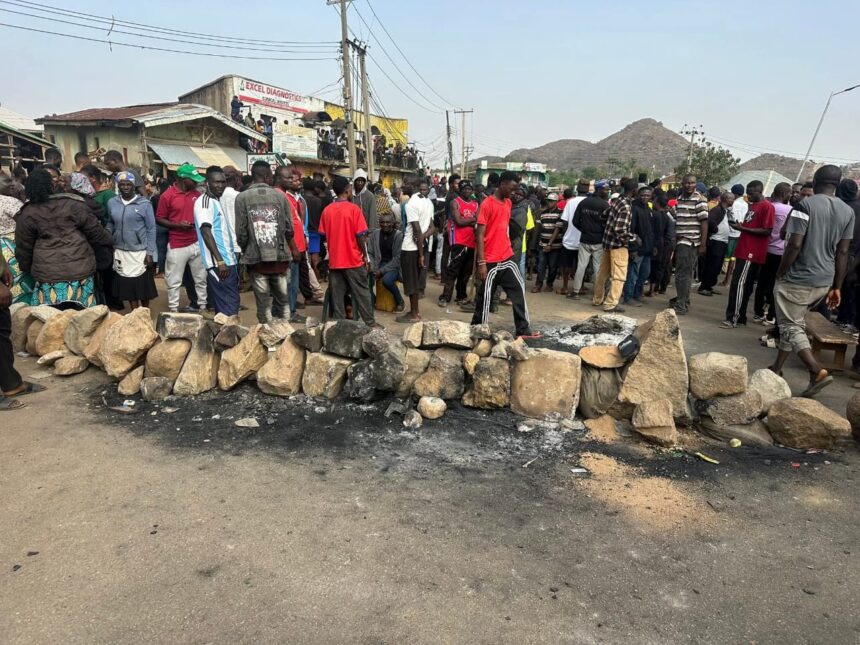
In the quiet wards of the University of Jos Teaching Hospital, the echoes of gunfire still ring loudly not in sound, but in memory. Here, survivors of the recent Palm Sunday attack on the Angwan Rukuba community lay in pain, their bodies bearing wounds and their voices carrying haunting accounts of a night that turned a sacred day into one of blood and grief.
Many of the victims, while narrating their ordeal at the Jos University Teaching Hospital to the Sunday Telegraph, said survival itself feels like a fragile miracle. 21-year-old Janet Isaiah, while speaking, said: “I didn’t even know when I was shot.” Isaiah is grappling with trauma she never imagined.
A gunshot wound to her hand has left her weak but alive. Recounting her ordeal, she said she had only stepped out briefly to see off a friend near the Legislative Quarters. “We saw them dressed in black, with gloves. Before we could understand what was happening, they started shooting,” she said in a trembling voice.
“I didn’t even realise immediately that I had been hit.” Her story reflects the suddenness of the attack- no warning, no chance to prepare only instinct to run. Also, for Umar Sabiu, it was a routine ride that turned tragic. “I was on my bike heading to meet a friend when they came out from an ash-coloured Sharon bus and started shooting,” he recounted. He tried to flee, but bullets caught up with him.
“I was shot in my back and hand,” he said quietly, his voice weighed down by both pain and disbelief. Unlike many others, 53-year-old Tayo Johnson was not even from Plateau State. Travelling from Kogi to visit family, his journey was cut short at Bauchi Junction. “There were about seven or eight of them.
At first, they didn’t stop us but suddenly, the driver had to halt. They attacked me,” he said, recalling how he was injured during the encounter. His experience underscores a chilling reality: victims were not just residents, but also unsuspecting travellers caught in the violence. For 50-year-old Jeremiah Mambok, escape proved nearly impossible.
“We saw them bring people out of a vehicle and start shooting. Everyone ran,” he said. Seeking refuge in a nearby shop offered no safety. “They followed us inside and continued shooting, revealing the relentless nature of the attackers.” Shot in the body, Mambok considers himself fortunate that his family members escaped unharmed.
Ufialas Daniel had stepped out for something as ordinary as buying bread. Moments later, he was lying on the ground, wounded. “I heard gunshots at the junction. I didn’t even see them. When I was shot in the leg, I just laid down; I survived like many others, depending on quick instinct and sheer luck.”
Another victim, Isaac Kallamu,48, told our correspondent that the attacker looked him in his eye before he shot him, “He looked me in the eye before shooting. “We were sitting when people started running, saying drug enforcement officers were coming, but what followed was far from any official operation.
“I saw one of them face to face. I even asked what was happening, and then he shot me.” Troubled history of violence in Plateau The attack on Angwan Rukuba is not an isolated incident. Plateau State, particularly Jos and its environs, has long grappled with cycles of violence rooted in ethno-religious tensions, land disputes, and reprisal attacks.
From the early 2000s, Jos witnessed repeated outbreaks of communal clashes that claimed hundreds of lives and displaced thousands. Despite periods of relative calm, the state has continued to experience sporadic attacks, often sudden, coordinated, and devastating.
Communities such as Barkin Ladi, Riyom, Bokkos and Bassa have repeatedly come under siege over the years, with residents living under the constant shadow of uncertainty. Security interventions, curfews, and peace dialogues have provided temporary relief, but lasting peace has remained elusive.
Back at the hospital, beyond the pain and trauma, there is also resilience. Families hover around bedsides, offering comfort. Medical personnel work tirelessly to stabilise victims. And amid the sorrow, prayers rise for healing, for justice, and for an end to the violence.
For survivors like Janet, Umar, and Isaac, the scars may never fully fade. But their voices, raw, vivid, and courageous, stand as powerful testimonies to a tragedy that must not be forgotten. As Plateau mourns yet another dark chapter, the question lingers: how many more stories like these must be told before peace finally takes hold?