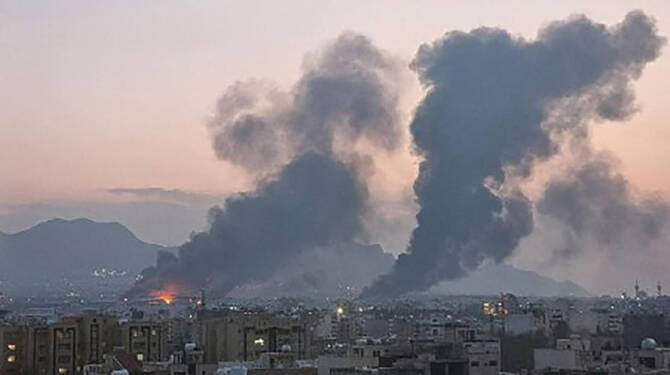
As the face-off between the US/Israel and Iran enters its 20th day, Israel has upped the ante by bombing the world’s largest gas field – Iran’s South Pars gas field. South Pars is part of the world’s largest natural gas field, with both Qatar and Iran operating facilities in the area.
According to reports, the strike was carried out by Israel with the consent of the United States, although the Israeli military had yet to officially comment on it as of press time.
Iranian authorities confirmed that parts of the facility, including gas tanks and sections of a refinery, were struck, forcing the evacuaion of workers as emergency crews battled a fire. Iranian media said no-one was injured in the attack, but Qatar condemned the attack and called it “dangerous and irresponsible.” It also described it as a dangerous escalation with implications for global energy stability.
Authorities of the Persian state vowed retaliation adding that they will take “decisive action.” They also warned regional players, an indication of a potential escalation of the conflict beyond its current scope on the Gulf States. Iranian state media quoted officials as saying; “These centres have become direct and legitimate targets and will be targeted in the coming hours. Therefore, all citizens, residents, and employees are requested to immediately leave these areas and move to a safe distance without any delay.”
Late reports indicated that Iran had fired missiles and drones at Israel killing two people in the process, while Britain’s Ministry of Defence said there were no casualties or damage to property after Iran struck a military base in the United Arab Emirates that is home to British and Australian officers. Meanwhile, Israel has said its strikes in Beirut overnight – which Lebanon says killed at least 10 people and injured another 27 – were targeting the financial arm of Hezbollah. On its part Iran has continued to fire missiles and launch drones at Israel and the Gulf States ensuring it is still disrupting normal life in the region.
According to the BBC, one Israeli blast flattened a building in the city centre, which is not the so-called Hezbollah heartland of southern Beirut, but an area surrounded by businesses and hotels. But the Israel Defence Forces (IDF) insists it hit the assets of al-Quard al-Hasan, which it claims funds Hezbollah’s military and payroll. It also said its air force and navy carried out overnight attacks on “command centres” in southern Lebanon.
Meanwhile, the US military says it has used powerful “deep penetrator” bombs to hit Iranian missile sites along the Strait of Hormuz; the vital waterway for transporting oil has been effectively blocked by Iran since the war began. This is clearly an effort to keep the strait open in the wake of the refusal of US allies to take part in the exercise largely because they are not in sync with the operation against Iran.
In the meantime Iran’s army chief has warned of a “decisive” response after Israel killed security chief Ali Larijani, the most senior official to be killed since Supreme Leader Ali Khamenei Retaliatory strikes by Iran and its allied militia groups have also continued – in Israel, two people are killed in Tel Aviv, with blasts and drone interceptions reported in Dubai, Qatar, Kuwait, Iraq, Bahrain and Saudi Arabia.
The UAE said it had intercepted a number of missiles over Dubai, while Iraqi officials said they have shot down three drones targeting the diplomatic area in Baghdad. However, the falling debris still caused fires. Meanwhile, Iran has confirmed that Intelligence Minister, Esmail Khatib, was killed in the latest attack by Israel on the country’s senior leadership.
However, in spite of this, the US intelligence community has assessed the Tehran regime “to be intact, but largely degraded,” intel chief, Tulsi Gabbard, said yesterday. And in another development, a former UK diplomat, Lord Peter Ricketts has said President Donald Trump has ‘completely misunderstood’ NATO.
Lord Peter Ricketts, a former Permanent Representative to NATO and ex-chair of the UK’s National Security Council, told BBC Radio 5 Live yesterday morning that Trump has “completely misunderstood NATO”, which was “set up as a defensive alliance”. “[This] a war of US choosing. We were not consulted on it. And it was never part of the NATO deal that allies had to follow America into any war that it chose to undertake.”
He added: “What he means, of course, is that if we are going to support NATO countries in your area, then we expect your support everywhere else.” This is “a wake-up call to all European countries” to work more closely together. On Tuesday Trump had accused NATO members of making a “foolish mistake” by refusing to help secure the Strait of Hormuz, through which about one-fifth of the world’s oil passed pre-war.
Speaking in the Oval Office, the US President said he had been informed by most allies that they did not want to get involved in the conflict. “We don’t need any help” from NATO, but “they should’ve been there”, he said, calling their reluctance to send mine-sweeping vessels to the Gulf “unfair”. Meanwhile, NATO is discussing with its allies how to reopen the Strait of Hormuz, as US President Donald Trump suggested that they should take sole responsibility for policing the waterway if the US causes the Iranian regime to collapse