


Lead Partner, Zera Advisory & Consulting, Joe Nwakwue, has urged the Federal Government under President Bola Tinubu to activate a scheme to address the rising fuel and diesel pump prices in Nigeria, as a result of the ongoing Middle East Crisis.
He stated that the FG should implement a price reduction or modulation strategy, or a subsidy to ensure that Nigerians do not buy fuel at N2,000 per litre.
Nwakwue, a seasoned petroleum engineer and policy expert with over three decades of diverse experience in the oil and gas industry, noted that the high cost of energy is injurious to economic growth and the well-being of the residents.
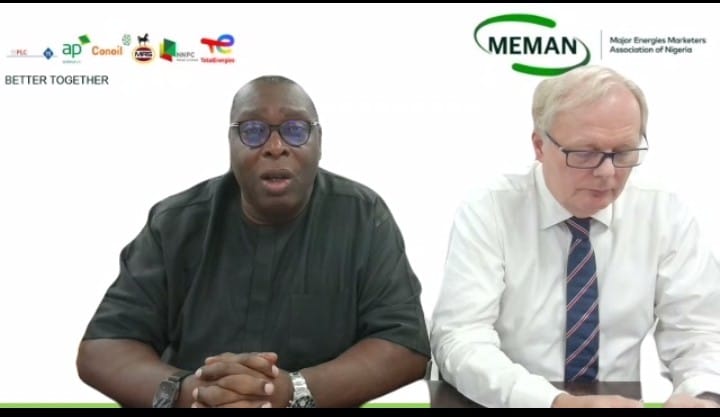
He spoke during the first quarterly webinar and engagement of the Major Energies Marketers Association of Nigeria (MEMAN) on Tuesday. The title of the webinar was: “West African market resilience in the face of the geopolitical situation.”
Fuel pump prices range between 1,230 and N1,400 in some states of the country, while the price of diesel has also skyrocketed.
Nwakwue said, “Fuel is central to the economy of Nigeria. The government should be looking at what price we have to intervene. If fuel finds its way into the N2,000 per litre is going to affect economic growth. So the government should have an interest in ensuring that Nigerians don’t have to pay N2,000 per litre.
“So somebody needs to model that and know what that threshold is. Then the government needs to design, I don’t want to call it a subsidy, but that’s what it is, ultimately.
“But it is a temporary measure that does not allow prices to hit the roof, which will destroy the economy. I think it’s important that we have that. It’s not for you and me. The government needs to be able to say that. There are ways and means this can be delivered.
“So rather than what we were doing before, in which they didn’t even have a sunset clause, we can have a limited intervention with clear guidance on how it will stop.
“So you know that this is a limited intervention, okay, if the oil price gets to N2,000 per litre, the government should keep it there. How do we do it? Do we want to give a bigger discount to the local refiner, to ensure that we keep it there?
“So it’s something that the Crude-For-Naira can be revamped to say, okay, we’re going to give you, if we’re giving you 10% now, we’re going to give you X%, but you’ll ensure that at no time will the price reach N2,000 per litre. So there are things that can be worked around to ensure that we do not destroy the economy.
“Personally, I think fuel is so central for today. It’s not just for transportation. And that’s what we miss. So the artisans, the hairdressers, the welders, there are a lot of people who are dependent on fuel because the public power situation is terrible. So they are dependent on this.”
He added: “If I were advising the government, I would say, you have to, at this point, know clearly at what point you have to intervene, but it has to be well-designed. And with a clear exit clause, a provision that allows it, that once this challenge is over, you don’t have to do anything to exit the scheme.
“What made our situation difficult the last time was that the program was not properly designed. Nobody knew what it was intended for. And basically, it distorted the entire system.
“I think we can design something that is very clear, and with clear exit provisions that sunset when this danger has gone away. So clearly, I would say at some point, yes, the government needs to do it. In fact, even for diesel. Manufacturing today, the last numbers I saw, 60 per cent of power generation is diesel-generated.
“So if that is the case, should the government not be asking itself at what point or at what price of diesel should we intervene to ensure that manufacturing does not shut down? So there’s, there’s a need. I’m not a great fan of subsidies, but I believe they are necessary when they, when the situation calls for it.
“But you must be, it was very well designed. It must have very clear set objectives, and it must have clear sunset clauses embedded in it. If we do that, I think we’ll be fine.”
Chairman, MEMAN, Huub Stokman, said the Dangote refinery is a blessing to Nigeria and the African continent. He stated that the refinery has helped Nigeria not to have the same level of shock some other countries have experienced because of the Middle East crisis and the consequent volatility of petroleum prices.
He, however, stated that it is important to ensure that frequent fuel price increments are reduced.
He stated that the importation of petroleum products is necessary to prevent arbitrary increases in prices to the consumers.
Stokman, who is also Managing Director, Nigerian National Petroleum Company Retail Limited, said the company will continue to ensure price stability and availability of petroleum products.
He said, “We all know that in the Petroleum Industry Act (PIA), imports can happen. But I think what the Nigerian Midstream and Downstream Petroleum Regulatory Authority (NMDPRA) does at the moment is very good if they do it on a needs basis. And I think that’s a very good approach.
“And looking at the market, what is needed? And the latest status of the NMDPRA in the crisis at the beginning of March, the country had over 30 days, I think 31 days of stock availability of PMS, which is actually in a situation like this quite a good position to be in from a supply security point of view. So I think these kinds of things are quite important to understand for markets. We don’t live in isolation. But we also have some benefits as a country.
“Always, prices go up faster than they go down. But I think, actually, this is not unusual. Maybe the fuel is one of the most visible products that does it. But if you go to other fast-moving consumer goods, it’s almost the same.
“And some people forget what happens when prices go up, especially rapidly. And the dealers need to quickly generate the working capital to buy the next truck. And then you only do that by reflecting the price increases at the pump.
‘And then when it eases off, what you try to do also is not to go as quickly down again, necessarily. But you might sometimes ease it down a little bit, especially if you don’t have the high stocks, to create what they call a parachute, so that you don’t go up, go down, go up, go down.
So you’re trying to ease it down. In a situation like the Middle East, where it’s all a bit more volatile, that always looks a little bit different. But I think, in that sense, because you’ve got a shock, normally you see it in any other fast-moving consumer goods. Fuel prices are just, because of its international nature, a little bit more transparent than many other products.
But I think, all in all, I’m impressed, and that sounds as a more personal note, how Nigeria is dealing with the shock or the volatility that’s caused by the Middle East crisis. I think the market is responding very fast and very disciplined.
“I think the refinery, the NMDPRA, and the marketplace are all very disciplined in the way we do it. And I think that’s a testament of the transition that the market is doing and the maturity that is getting slowly into the market post the deregulation.”








